
Pseudemoia rawlinsoni
Pseudemoia rawlinsoni, also known as the glossy grass skink, is a species of lizard native to southeastern Australia. It inhabits grasslands and freshwater wetlands and is viviparous, meaning it gives birth to live young. The species is named in honor of Australian herpetologist Peter Alan Rawlinson.
Key Facts
- ›Endemic to southeastern Australia, including New South Wales, South Australia, Tasmania, and Victoria.
- ›Inhabits natural environments such as grasslands and freshwater wetlands.
- ›Reproduction is viviparous, with females giving birth to live young.
- ›The specific name 'rawlinsoni' honors herpetologist Peter Alan Rawlinson.
- ›Also commonly known as the glossy grass skink.
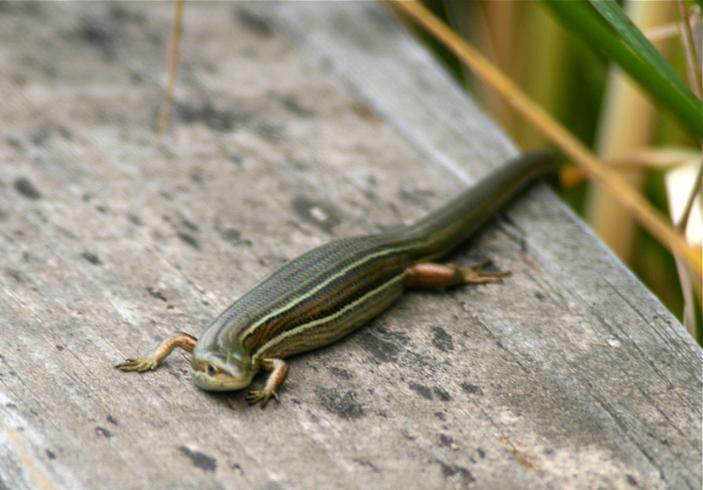
Glossy Grass Skink, Rawlinson's Window-Eyed Skink
Australia
About Pseudemoia rawlinsoni
Pseudemoia rawlinsoni, also recognized by its common name the glossy grass skink, is a species of lizard belonging to the family Scincidae. This lizard is endemic to Australia, with its native range specifically encompassing southeastern Australia. Its preferred natural habitats are grasslands and freshwater wetlands, where it finds suitable conditions for survival and reproduction.
Etymology and Taxonomy
The specific epithet, rawlinsoni, was chosen to honor the Australian herpetologist Peter Alan Rawlinson, who was active in the field from 1942 to 1991. The species is classified within the genus Pseudemoia and the family Scincidae.
Geographic Distribution and Habitat
Pseudemoia rawlinsoni is found across several Australian states, including New South Wales, South Australia, Tasmania, and Victoria. Its ecological niche is primarily within open grassy areas and riparian zones associated with freshwater wetlands. These habitats likely provide essential resources such as food, shelter, and breeding grounds.
Reproduction
A notable characteristic of Pseudemoia rawlinsoni is its reproductive strategy. The species is viviparous, which means that females give birth to live young rather than laying eggs. This reproductive mode is a significant adaptation found in various lizard species, allowing for greater control over offspring development and survival rates.
Source: Wikipedia ↗
Frequently Asked Questions
What is Pseudemoia rawlinsoni commonly called?
Pseudemoia rawlinsoni is commonly known as the glossy grass skink. It is also sometimes referred to as Rawlinson's window-eyed skink.
Where is Pseudemoia rawlinsoni found?
This species is native to southeastern Australia. Its geographic range includes New South Wales, South Australia, Tasmania, and Victoria.
What type of habitat does Pseudemoia rawlinsoni prefer?
Pseudemoia rawlinsoni prefers natural habitats that include grasslands and freshwater wetlands. These environments provide suitable conditions for its survival and reproduction.
How does Pseudemoia rawlinsoni reproduce?
Pseudemoia rawlinsoni is viviparous. This means that the females give birth to live young, rather than laying eggs.
Who is the species named after?
The specific name, rawlinsoni, was given in honor of the Australian herpetologist Peter Alan Rawlinson, who lived from 1942 to 1991.
Related Lizards

Trachylepis boettgeri
Trachylepis boettgeri, commonly known as Boettger's mabuya, is a species of skink found in Madagascar. This terrestrial and diurnal lizard inhabits grasslands, shrublands, and freshwater wetlands.

Anan's rock agama
Anan's rock agama is a species of lizard found exclusively in Tibet, preferring rocky environments and freshwater wetlands at high altitudes. It is characterized by its distinct coloration and a tail that is longer than its body.

Asian water monitor
The Asian water monitor (Varanus salvator) is a large lizard native to South and Southeast Asia, recognized as the second-largest lizard species after the Komodo dragon. These semiaquatic reptiles are excellent swimmers and inhabit riparian areas, adapting well to environments near human civilization. They are carnivorous, with a diverse diet, and play a role in ecosystems by consuming carrion.