
Pseudotrapelus sinaitus
The Sinai agama (Pseudotrapelus sinaitus) is a small lizard native to arid regions of the Sinai Peninsula, Israel, Jordan, and Syria. Known for its long legs and slender tail, males exhibit a striking blue coloration during the breeding season to attract females, while females and juveniles are typically brownish-grey. This diurnal species is an active hunter of insects and also consumes plants, utilizing its agility for climbing and running.
Key Facts
- ›Males turn bright blue during the breeding season to attract mates.
- ›Females and juveniles are typically greyish-brown with red spots on their sides.
- ›They are capable climbers and runners due to their long, slender limbs and tail.
- ›The diet consists of insects, arthropods, and plants, with a significant portion being ants.
- ›During cooler temperatures, their metabolism slows, and they may stand their ground against aggressors.
- ›Females lay clutches of five to nine eggs.

Sinai Agama
Egypt, Israel, Jordan, Syria
Arid Regions, Cliffs, Boulders, Piles of Stone
- Small Lizard With Long Legs Giving An Upright Stance.
- Total Length Up To 18 cm , With Tail Accounting For Up To Two-Thirds of the Length.
- Long, Slender Tail, Approximately 1.5 Times the Length of the Body.
- Long Head With Eyes Near the Front and A Pair of Ear Openings Behind.
- Generally Dull Brown Coloration.
- Males Turn Bright Blue During the Breeding Season, Sometimes Only the Head and Throat.
- Females and Juveniles Are Greyish-Brown, Often With Crescent-Shaped Red Patches On the Sides.
- Dorsal Scales Are Small, Uniformly Overlapping, and Slightly Keeled.
- Mid-Back Scales Are Slightly Larger Than Elsewhere.
- Tail Scales Are Larger Than Back Scales.
- Third Toe Is the Longest, Unlike In the Genus Agama Where the Fourth Toe Is Longest.
Insects, Arthropods, Plants, Ants
- Active During the Daytime .
- Hunts For Insects.
- Territorial During Breeding Season.
- Males Display By Head Bobbing, Eye Movements, and Push-Ups.
- Ectothermic, Basking In the Sun.
- Dashes Off At Great Speed When Alarmed.
- In Cooler Temperatures, Metabolism Is Lowered, and They May Stand Their Ground and Attack.
About Pseudotrapelus sinaitus
The Sinai Agama: A Striking Desert Dweller
The Sinai agama, scientifically known as Pseudotrapelus sinaitus, is a small, agile lizard native to the arid landscapes of the Middle East and northeastern Africa. Its natural range includes the Sinai Peninsula in Egypt, as well as Israel, Jordan, and Syria. Physically, it is characterized by its long legs and a slender tail that extends to about one and a half times its body length, contributing to a total length of up to 18 cm. This morphology allows for excellent climbing and running capabilities across its rocky habitats.
Description and Appearance
Generally, the Sinai agama presents a dull brown coloration, which serves as camouflage in its environment. However, a remarkable transformation occurs during the breeding season when males don a vibrant, bright blue hue, an adaptation to attract females. This striking coloration can sometimes be limited to the head and throat, with the rest of the body remaining brown. Females and juveniles typically retain a greyish-brown appearance year-round, although females often display distinctive crescent-shaped red patches on their sides just behind the forelimbs.
Habitat and Behavior
This diurnal species is commonly found basking on boulders, cliffs, and stone piles, utilizing the sun's warmth to regulate its body temperature. Its diet is varied, consisting of insects, arthropods, and plants, with ants being a significant component. When threatened or alarmed in warmer conditions, the Sinai agama exhibits impressive speed, darting away from danger. Conversely, in cooler temperatures, their metabolism slows, and they may adopt a defensive stance, choosing to confront a perceived threat rather than flee.
Reproduction
Breeding activity intensifies in the spring and early summer, a period when both males and females become territorial. Males engage in elaborate courtship rituals, including head bobbing, eye movements, and push-ups, to attract mates. Following successful mating, females lay clutches of five to nine eggs, each measuring approximately 1.5 cm in length.
Source: Wikipedia ↗
Frequently Asked Questions
What is the size of a Sinai agama?
The Sinai agama is a small lizard that grows to a total length of about 18 cm (7 inches), including a long, slender tail which makes up approximately two-thirds of its total length.
What colors does the Sinai agama turn?
Generally, the Sinai agama is a dull brown. However, during the breeding season, males transform into a striking bright blue, sometimes with only the head and throat changing color while the rest of the body remains brown.
What do Sinai agamas eat?
The Sinai agama is an active hunter that feeds on insects and other arthropods, with ants forming a large part of its diet. They also consume plants.
Where can the Sinai agama be found?
This species is found in arid regions across the Sinai Peninsula in Egypt, as well as in Israel, Jordan, and Syria.
How do Sinai agamas behave when threatened?
When temperatures are warm and their metabolism is high, they tend to dash away at high speed. However, in cooler temperatures, their metabolism slows, and they may stand their ground and attack aggressors.
How do male Sinai agamas attract females?
During the breeding season, males become territorial and use various displays to attract females. These include bobbing their heads, using eye movements, and performing push-ups with their front limbs from prominent spots.
How many eggs do female Sinai agamas lay?
After mating, the female Sinai agama lays a clutch of approximately five to nine eggs, which are about 1.5 cm (0.6 inches) long.
Related Lizards

Sharp-snouted rock lizard
The sharp-snouted rock lizard, scientifically known as *Dalmatolacerta oxycephala*, is a slender, flattened lizard characterized by its pointed snout and distinctive hind toes. It inhabits diverse rocky and shrubby environments across the Balkans, exhibiting color variations adapted to its specific altitude and locale. This hardy species is well-camouflaged and known for its climbing abilities.
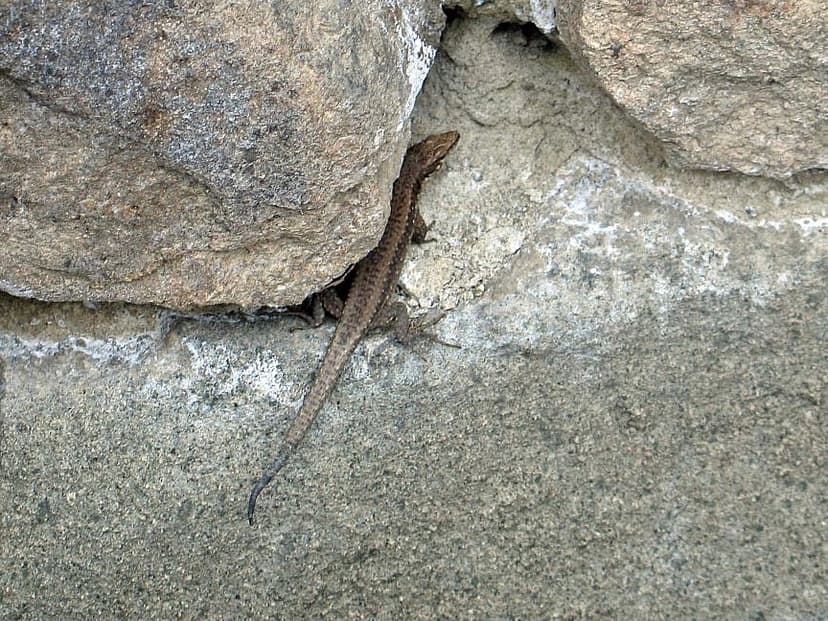
Anatolian rock lizard
The Anatolian rock lizard, scientifically known as Anatololacerta anatolica, is a common lizard species found in western Anatolia and adjacent Greek islands. This lizard inhabits temperate forests and rocky environments, characterized by its flattened body and variable markings, often featuring pale spots on a dark olive-brown base.

Euleptes europaea
The European leaf-toed gecko (Euleptes europaea) is a small lizard distinguished by adhesive pads on its toes and tail, enabling it to climb exceptionally well. Its coloration varies from yellowish-brown to greyish-brown, often with blotchy patterns. Primarily found in rocky coastal regions and Mediterranean islands, this gecko is mostly nocturnal and feeds on insects and other small invertebrates.