
Radde's lizard
Darevskia raddei·Lacertidae
Radde's lizard, also known as the Azerbaijan lizard, is a species of lizard belonging to the family Lacertidae. It is found across Eurasia, inhabiting diverse environments from forests to rocky areas at significant altitudes. This species is known for its presence in regions spanning Armenia, Azerbaijan, Georgia, Iran, and Turkey.
Key Facts
- ›Radde's lizard is a species within the Lacertidae family.
- ›It is naturally found in Armenia, Azerbaijan, Georgia, Iran, and Turkey.
- ›The lizard inhabits a range of environments including forests, shrublands, grasslands, and rocky areas.
- ›It can be found at altitudes between 600 and 2,500 meters.
- ›Three subspecies of Radde's lizard are recognized: D. r. chaldoranensis, D. r. raddei, and D. r. vanensis.
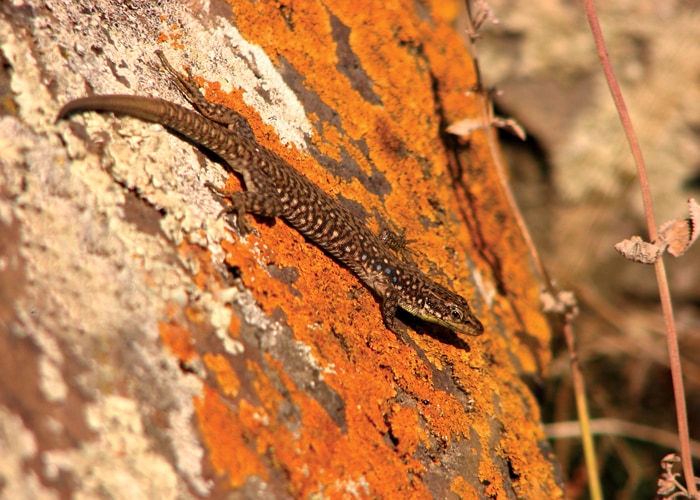
Azerbaijan Lizard
Armenia, Azerbaijan, Georgia, Iran, Turkey
About Radde's lizard
Radde's lizard, scientifically known as Darevskia raddei and commonly referred to as the Azerbaijan lizard, is a species of lizard native to Eurasia. It belongs to the family Lacertidae, a group of agile and often ground-dwelling lizards.
Distribution and Habitat
This species is found across a range of countries, including Armenia, Azerbaijan, Georgia, Iran, and Turkey. Radde's lizard inhabits diverse environments, thriving in forests, shrublands, grasslands, and rocky areas. It is known to exist at considerable altitudes, typically between 600 and 2,500 meters (approximately 2,000 to 8,200 feet) above sea level.
Subspecies
Three distinct subspecies of Darevskia raddei are recognized. These include the nominotypical subspecies, Darevskia raddei raddei, along with Darevskia raddei chaldoranensis and Darevskia raddei vanensis. The naming of the specific subspecies often reflects the geographical areas where they were first identified or studied.
Source: Wikipedia ↗
Frequently Asked Questions
What is Radde's lizard commonly known as?
Radde's lizard is commonly known as the Azerbaijan lizard. This name reflects one of the primary regions where the species is found.
Where is Radde's lizard found geographically?
The geographic distribution of Radde's lizard includes Armenia, Azerbaijan, Georgia, Iran, and Turkey. It is considered endemic to these Eurasian regions.
What types of habitats does Radde's lizard prefer?
Radde's lizard inhabits a variety of environments. These include forests, shrublands, grasslands, and rocky areas, often at considerable altitudes.
Are there different subspecies of Radde's lizard?
Yes, there are three recognized subspecies of Radde's lizard. These include the nominotypical subspecies, Darevskia raddei raddei, along with Darevskia raddei chaldoranensis and Darevskia raddei vanensis.
What is the scientific family of Radde's lizard?
Radde's lizard belongs to the scientific family Lacertidae. This family comprises many species of agile lizards.
Related Lizards

Delma fraseri
Fraser's delma (Delma fraseri), also known as Fraser's scalyfoot, is a species of legless lizard found in Western Australia. It inhabits diverse environments including forests, shrublands, grasslands, and rocky areas. This oviparous species is named in honor of botanist Charles Fraser.
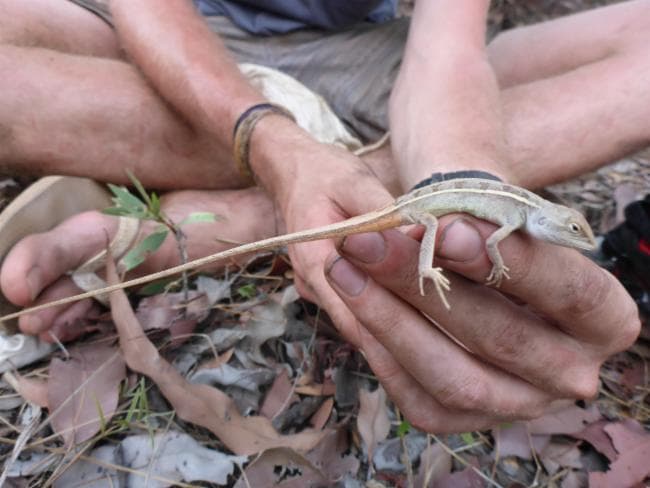
Diporiphora lalliae
Diporiphora lalliae, also known as Lally's two-line dragon, is a species of lizard endemic to northern Australia. This agamid lizard is characterized by its long tail, a gular fold, and strongly keeled dorsal scales. It inhabits a variety of environments including forests, shrublands, grasslands, and rocky areas.

Lygodactylus pauliani
Lygodactylus pauliani is a species of gecko endemic to Madagascar, found in its southeastern forests, grasslands, rocky areas, and shrublands. Named in honor of entomologist Renaud Paulian, this lizard belongs to the Gekkonidae family. It is oviparous, meaning it reproduces by laying eggs.