
Regal horned lizard
The regal horned lizard (Phrynosoma solare) is a small, flat lizard native to the southwestern United States and Mexico. Characterized by spikes along its sides and the ability to squirt blood from its eyes as a defense mechanism, it inhabits arid desert environments with sparse vegetation. Its diet consists primarily of harvester ants.
Key Facts
- ›Native to Mexico and the Southwest United States.
- ›Possesses spikes along its lateral body surface.
- ›Can squirt blood from its eyes to deter predators.
- ›Diet is almost exclusively harvester ants, consuming up to 2500 in one meal.
- ›Oviparous, laying 7-30 eggs per clutch.
- ›Active year-round, with peak activity from April to September.

Regal Horned-Lizard
Mexico, United States
Desert, Arid Environments, Openly Spaced Desert Vegetation
- Small, Flat Lizard About the Size of A Human Palm.
- Spikes All Around the Lateral Surface of the Body.
- Adult Length Is 3–4 Inches From Nose To Tail.
- Coloration Ranges From Pale Grey To Yellow-Brown Or Reddish.
- Features Dark Blotches Alongside the Body and Back.
- Each of Its Four Legs Has Five Toes With A Claw On Each Toe.
Harvester Ants, Other Insects, Spiders
- Slow Runners, Relying On Camouflage.
- Sedentary Creatures.
- Bask In the Sun With Only Their Head Out of the Sand To Warm Blood.
- Dig Holes In the Ground For Shelter and Nests.
- Protective of Their Nests.
- Squirt Blood From Their Eyes As A Defense Mechanism.
- May Gulp Air and Poke With Horns When Threatened.
- Active Year-Round, With Peak Activity In Warmer Months.
- May Hibernate In Winter.
About Regal horned lizard
The regal horned lizard, scientifically known as Phrynosoma solare, is a distinctive species of lizard native to the arid regions of Mexico and the southwestern United States. This small, flat-bodied reptile is easily recognized by the prominent spikes adorning its lateral surfaces and its remarkable defense mechanism of squirting blood from its eyes when threatened.
Habitat and Distribution
This species thrives in desert environments characterized by level or gently sloping terrain with sparse vegetation, such as mesquite, creosote bush, and saguaro cactus. They are commonly found in hot and dry climates, often with ground cover of limestone dust. Their range includes southeastern Arizona, parts of Texas, southern California, and New Mexico, as well as specific transition zones in Mexico's central mountain regions. The regal horned lizard typically maintains a relatively small home range, estimated to be around 160 yards.
Diet and Behavior
The diet of the regal horned lizard consists almost exclusively of harvester ants, with individuals observed consuming as many as 2500 ants in a single feeding. They are slow eaters, adapting to the intense desert heat. While primarily insectivorous, they may also consume other insects and spiders. These lizards are generally sedentary and exhibit a sedentariness reflected in their morphology, often displaying coloration that matches their environment for camouflage. They are active year-round but show peak activity between April and September. During winter, their activity is limited to warmer days, and they may hibernate from late September through October. A unique behavior involves basking with only their head protruding from the sand to warm blood, which is then circulated via a specialized chamber in the head. They construct nests by digging holes in the ground and are known to be protective of these sites. Their primary defense is camouflage, but when this fails, they can eject blood from their eyes, which may deter predators with its taste and the physical act of squirting it towards their attacker's face.
Reproduction
Regal horned lizards are oviparous, reproducing through sexual reproduction with internal fertilization. Mating behavior may involve head bopping, push-ups, and head nodding. Females typically ovulate and lay eggs between June and August. A clutch can contain anywhere from 7 to 30 eggs, and females usually lay only one clutch per year. The eggs are deposited in semicircular tunnels dug at an angle to provide shade. Hatchlings receive no parental care upon hatching and immediately bury themselves in the sand to begin their independent lives of foraging and survival.
Source: Wikipedia ↗
Frequently Asked Questions
What is the scientific name for the regal horned lizard?
The scientific name for the regal horned lizard is Phrynosoma solare. This binomial nomenclature helps in its precise identification within the scientific community.
Where can regal horned lizards be found?
Regal horned lizards are found in southeastern Arizona and along the southern transition zone of central mountain regions in Mexico. They also inhabit parts of Texas, southern California, and New Mexico, preferring arid desert environments.
What do regal horned lizards eat?
Their diet consists almost exclusively of harvester ants, and they are capable of consuming up to 2500 ants in a single meal. They may also consume some other insects and spiders.
How do regal horned lizards defend themselves?
Regal horned lizards primarily use camouflage to escape predators. If threatened or captured, their most distinctive defense is the ability to squirt blood from their eyes, which can have a deterrent taste and is aimed at the predator's mouth and eyes.
What is the reproductive method of the regal horned lizard?
Regal horned lizards are oviparous, meaning they reproduce by laying eggs. Females lay clutches of 7 to 30 eggs, typically once annually, in nests dug into moist fine silt or sand.
When are regal horned lizards most active?
Adult regal horned lizards are active year-round, but their peak activity occurs from April to September, primarily during the morning hours between 6:00 and 9:00 a.m. They may hibernate in winter, with activity restricted to warmer days.
Related Lizards

Sauromalus ater
The common chuckwalla (Sauromalus ater) is a large, flat-bodied lizard found in the deserts of the Southwestern United States and northwestern Mexico. Known for its unique defense mechanism of inflating its body to wedge itself into rock crevices, this herbivorous reptile is diurnal and well-adapted to arid environments. Coloration varies significantly between sexes and ages, with adult males often displaying black on their head and shoulders, while females are typically brownish with red spots.
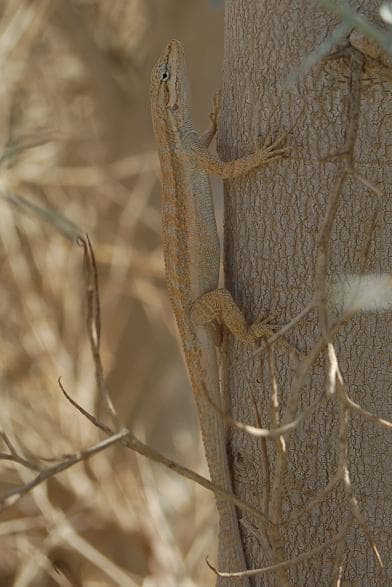
Urosaurus graciosus
The western long-tailed brush lizard (Urosaurus graciosus) is a species of lizard found in the southwestern United States and northern Mexico, inhabiting desert environments. It is distinguished by its exceptionally long tail, which can be more than twice its body length, and its habit of perching on branches rather than burying itself at night. Its coloration provides camouflage against shrubbery where it hunts for insects.

Przewalski's toadhead agama
Przewalski's toadhead agama is a species of agamid lizard native to the desert habitats of northwestern China and Mongolia. Adults typically measure around 61 mm in snout-to-vent length and have a sand or gray coloration with a white underside, often featuring sparse black speckling that is more prominent in males. This diurnal species is insectivorous and prefers low-moisture environments with good vegetation cover.