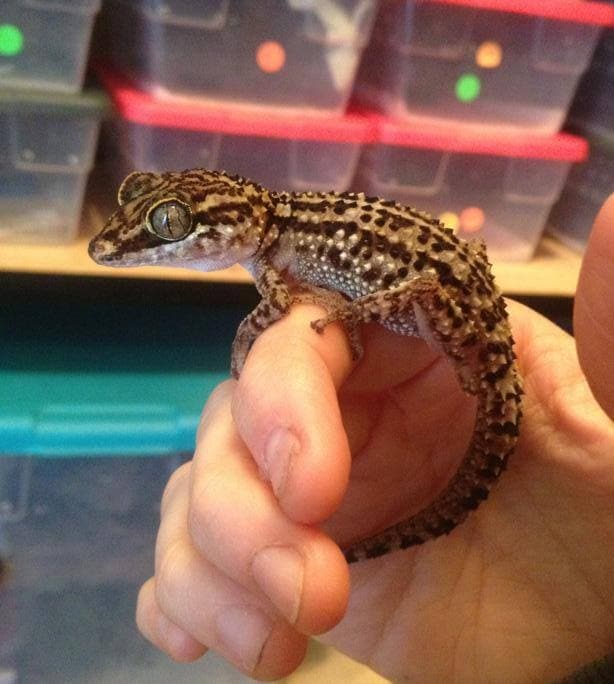
Satara gecko
On decline·Oviparous (inferred from breeding more than once per year)
The Satara gecko is a species of gecko endemic to the Western Ghats of India, specifically described from Chalkewadi in Maharashtra. It inhabits lateritic rock outcrops, often found under boulders in areas with significant windmill and tourism activity. A distinctive characteristic of the Satara gecko is its 'S'-shaped body posture.
Key Facts
- ›Endemic to the Western Ghats, India.
- ›Inhabits lateritic rock outcrops.
- ›Known for retaining an 'S'-shaped body posture.
- ›Faces population decline due to habitat alteration and extraction.
- ›Morphologically distinguished by its large size and specific scale patterns.
- ›Breeds more than once per year.

India
Lateritic Rock Outcrop, Boulder Habitats
Retains An 's'-Shaped Body Posture., Large Size., Possesses Specific Scale Patterns and Colors.
Known To Retain An 's'-Shaped Body Posture.
Rock Extraction, Wind Farm Development, Fragmentation By Roads, Climate Change
About Satara gecko
The Satara gecko, scientifically known as Hemidactylus sataraensis, is a species of gecko endemic to the Western Ghats of India. It was first described in 2008, with specimens originating from Chalkewadi in Maharashtra. This species is particularly found in habitats characterized by lateritic rock outcrops, often sheltering under boulders. These environments are frequently situated in landscapes dominated by windmills and subject to significant tourism activities.
Physical Characteristics and Behavior
A notable behavioral trait observed in the Satara gecko is its tendency to maintain an 'S'-shaped body posture. Morphologically, it is distinguished from similar species by its larger size and a unique combination of scale patterns and coloration. The Satara gecko shares similarities with its sister species, Hemidactylus albofasciatus, in many morphological and behavioral aspects, though it differs ecologically, particularly in elevation.
Habitat and Threats
The typical habitat of the Satara gecko consists of lateritic rock outcrops, which experience extreme climatic conditions during monsoon and summer periods in Western India. Other species found in its habitat include Hemidactylus cf. brookii, Echis carinatus, and Sarada superba, alongside various predatory arthropods. Unfortunately, assessments indicate that the population of the Satara gecko is on the decline. This decline is attributed to several anthropogenic factors, including rock extraction for various purposes, the development of wind farms, habitat fragmentation caused by road construction, and the potential impacts of climate change.
Source: Wikipedia ↗
Frequently Asked Questions
Where is the Satara gecko found?
The Satara gecko is endemic to the Western Ghats region of India. Specifically, it was described from Chalkewadi in Maharashtra.
What kind of habitat does the Satara gecko prefer?
This gecko inhabits lateritic rock outcrops. These areas are characterized by extreme climatic conditions and are often found under boulders in landscapes with significant windmill and tourism activity.
What is a distinctive physical characteristic of the Satara gecko?
One notable characteristic of the Satara gecko is its tendency to retain an 'S'-shaped body posture. Morphologically, it is also distinguished by its large size and a unique set of scale patterns and colors.
What are the threats to the Satara gecko population?
The Satara gecko population is on the decline due to several factors. These include rock extraction, wind farm development, habitat fragmentation by roads, and potentially climate change.
How does the Satara gecko differ from its sister species, Hemidactylus albofasciatus?
While sharing many similarities, the Satara gecko differs from Hemidactylus albofasciatus in ecological parameters such as elevation. Morphologically, it can be distinguished by its larger size and specific scale patterns and coloration.