
Sceloporus magister
The Sceloporus magister, commonly known as the desert spiny lizard, is a species found in the Chihuahuan and Sonoran Deserts of North America. Adult males display striking blue/violet patches on their underside, while females and juveniles have less vibrant coloring. This lizard is primarily arboreal and known for its thermoregulatory behavior of changing skin color.
Key Facts
- ›Native to the Chihuahuan and Sonoran Deserts of North America.
- ›Adult males have blue/violet belly and throat patches; females and juveniles lack this coloration.
- ›Changes skin color to regulate body temperature, becoming darker in cooler weather and lighter in warmer weather.
- ›Primarily arboreal, often found in trees like cottonwood and Joshua trees.
- ›Feeds on insects, spiders, centipedes, and small lizards.

Desert Spiny Lizard
United States, Mexico
Desertscrub, Grassland, Chaparral, Woodlands, Arboreal Environments
- Adult Males Have Conspicuous Blue/Violet Patches On the Belly and Throat.
- Adult Males May Have Green/Blue Coloring On Tails and Sides.
- Females and Juveniles Have Large Combined Dark Spots On Their Back and Belly Areas.
- Females and Juveniles Lack the Blue/Violet and Green/Blue Coloring.
- Both Sexes Have Brownish/Yellow Triangular Spots On Their Shoulders.
- Can Reach A Body Length of Up To 5.6 Inches.
- Changes To Darker Colors In Winter and Lighter Colors In Summer For Thermoregulation.
Ants, Beetles, Caterpillars, Spiders, Centipedes, Small Lizards
- Adjusts Internal Temperature By Changing Color.
- Uses Camouflage For Predator Avoidance.
- Basks In the Sun On Rocks Or Hard Surfaces In the Morning.
- Seeks Shelter Underground Or In Shade During the Hottest Part of the Day.
- Hibernates In Late Fall and Winter.
- Performs Push-Ups As A Form of Territorial Display.
About Sceloporus magister
The Sceloporus magister, commonly referred to as the desert spiny lizard, is a species of lizard native to the arid regions of North America, specifically the Chihuahuan and Sonoran Deserts. This species is recognized for its adaptability to desert environments and its distinctive physical characteristics.
Description and Identification
Adult male desert spiny lizards are notable for their striking coloration, often displaying conspicuous blue or violet patches on their belly and throat, with green or blue hues appearing on their tails and sides. In contrast, females and juveniles are less vibrantly colored, featuring large, combined dark spots on their back and belly areas, and lack the pronounced blue and violet tones of the males. Both sexes share characteristic brownish-yellow triangular spots on their shoulders. A fully grown desert spiny lizard typically reaches a body length of up to 5.6 inches.
Habitat and Distribution
The geographic range of Sceloporus magister extends across several southwestern United States, including Arizona, California, Texas, New Mexico, Nevada, and Utah, as well as into northern Mexico, encompassing states like Sonora, Baja California, Chihuahua, Coahuila, and Durango. They are found in diverse desert habitats, from near sea level along the Colorado River to elevations of approximately 5,000 feet. Their preferred environments include Sonoran Desertscrub, Great Basin Desertscrub, Semidesert Grassland, Interior Chaparral, and various woodlands. These lizards are often observed on lower slopes, bajadas, plains, and low valleys, frequently inhabiting the branches of trees or dwelling near ground cover such as wood piles, rock piles, and pack rat nests. They exhibit a preference for arboreal settings, often found in cottonwood, yucca, Joshua trees, and ironwood.
Behavior and Diet
Desert spiny lizards are well-adapted to their desert environment, employing behavioral strategies for thermoregulation. They adjust their body temperature by changing skin color, becoming darker to absorb more heat during cooler periods and lighter to reflect solar radiation during warmer times. This species is primarily diurnal, often seen basking in the sun on rocks or hard surfaces during morning hours. During the hottest parts of the day in summer, they seek shelter in burrows or shaded areas to escape the heat. They also exhibit camouflage to avoid predators. Behaviorally, they are known to perform push-ups, a display often used to assert territorial dominance. The desert spiny lizard hibernates during the late fall and winter months, becoming active again in the spring. Their diet consists of a variety of insects, including ants, beetles, and caterpillars, supplemented by spiders, centipedes, and occasionally smaller lizards.
Reproduction
Female desert spiny lizards lay eggs, typically between 4 and 24, during the summertime.
Source: Wikipedia ↗
Frequently Asked Questions
Where is the desert spiny lizard found?
The desert spiny lizard is native to the Chihuahuan Desert and Sonoran Desert regions of North America. In the United States, it inhabits states such as Arizona, California, Texas, New Mexico, Nevada, and Utah. It is also found in several Mexican states, including Sonora, Baja California, Chihuahua, Coahuila, and Durango.
What are the distinguishing physical characteristics of the desert spiny lizard?
Adult males are notable for their conspicuous blue or violet patches on their belly and throat, and often have green or blue coloring on their tails and sides. Females and juveniles display large, combined dark spots on their backs and bellies, lacking the vibrant blue and green hues. Both sexes share brownish-yellow triangular spots on their shoulders.
How does the desert spiny lizard regulate its body temperature?
Like many desert reptiles, the desert spiny lizard adjusts its internal temperature by changing its skin color. It becomes darker during cooler periods to absorb more heat from the sun and lighter during warmer times to reflect solar radiation.
What is the typical habitat of the Sceloporus magister?
This lizard inhabits biotic communities such as Sonoran Desertscrub, Great Basin Desertscrub, Semidesert Grassland, Interior Chaparral, and woodlands. It is commonly found on lower slopes, bajadas, plains, and low valleys, often in the branches of trees or near ground cover like wood piles and rock piles. They show a preference for cottonwood, yucca, Joshua trees, and ironwood.
What does the desert spiny lizard eat?
The diet of the desert spiny lizard is varied and includes a range of insects such as ants, beetles, and caterpillars. They also consume spiders, centipedes, and occasionally small lizards.
What is the typical size of an adult desert spiny lizard?
A fully grown desert spiny lizard can reach a body length of up to 5.6 inches.
Does the desert spiny lizard exhibit any unique behaviors?
Yes, the desert spiny lizard is frequently observed performing push-ups, which is a form of territorial display. They also utilize camouflage to avoid detection by predators and adjust their activity patterns by seeking shade during the hottest parts of the day.
Related Lizards
Varanus timorensis
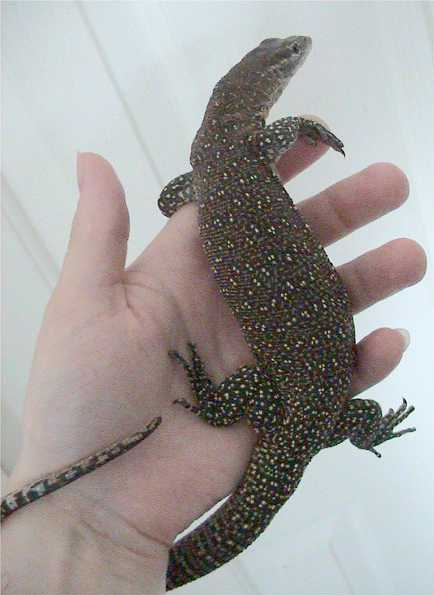
The Timor monitor (Varanus timorensis), also known as the spotted tree monitor, is a small monitor lizard found on Timor and surrounding islands in Indonesia and Timor-Leste. It is characterized by its dark greenish-gray to black body with bright gold-yellow or bluish spots, a prehensile tail, and sharp claws, making it well-adapted for an arboreal lifestyle. This diurnal species inhabits woodlands, dry forests, and rainforests, where it feeds on a variety of invertebrates and smaller reptiles.

Green iguana
The green iguana is a large, arboreal, and primarily herbivorous lizard native to Central and South America, and the Caribbean. Known for its distinctive dorsal spines, dewlap, and vibrant coloration that can vary by region, it is also a popular but demanding pet. This species plays a significant ecological role and has become notably invasive in various subtropical and tropical regions globally.
Hemiphyllodactylus typus
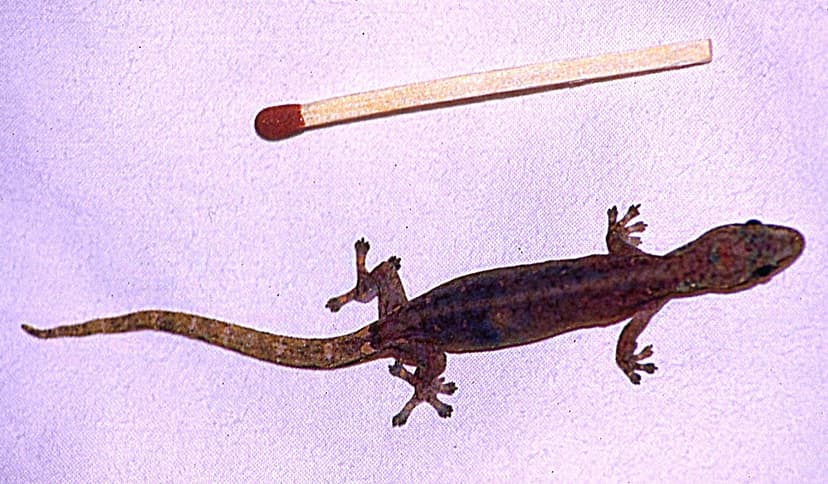
Hemiphyllodactylus typus, commonly known as the Indopacific tree gecko or common dwarf gecko, is a widespread gecko species found across South Asia, Southeast Asia, East Asia, and various islands in the Indian and Pacific Oceans. It is a small, slender lizard adapted to arboreal life, inhabiting diverse environments from forests to human settlements.