
Sceloporus uniformis
Sceloporus uniformis·Phrynosomatidae·Not specified in text
Sceloporus uniformis, commonly known as the yellow-backed spiny lizard, is a robust reptile native to the deserts of the southwestern United States. It is characterized by its brown or tan coloration, often featuring yellow and black dorsal stripes or mottling, and a distinctive black collar. This species inhabits arid and semi-arid environments, including desert flats, plains, and low mountain slopes.
Key Facts
- ›Native to the Mojave, Great Basin, and San Joaquin desert regions of the United States.
- ›Adults can reach up to 5.5 inches in body length, with a tail that is slightly longer than the body.
- ›Diet consists primarily of small invertebrates like ants, beetles, and grasshoppers, occasionally supplemented with small vertebrates, leaves, flowers, and berries.
- ›Males are distinguished from females by their larger size, swollen tail base, enlarged postanal scales and femoral pores, and bluish markings on the throat and belly.
- ›Basks in the morning sun and seeks shelter underground during the hottest parts of the day.
- ›Hibernates during the late fall and winter months.

Yellow-Backed Spiny Lizard
United States, California, Nevada, Utah, Arizona
Desert Flats, Semiarid Plains, Low Mountain Slopes, Riparian Woods
- Large, Robust Lizard.
- Adults Grow To 5.5 Inches In Body Length .
- Tail Is Slightly Longer Than the Body.
- Coloration Is Brown Or Tan With Yellow and Black Dorsal Stripes Or Mottling.
- Possesses A Black Collar On the Sides of the Neck.
- Males Are Larger Than Females.
- Males Have A Swollen Tail Base, Enlarged Postanal Scales, and Femoral Pores.
- Males Have Bluish Markings On the Throat and Belly.
- Females Have A Pale Throat and Underbelly With Faint Or No Blue Markings.
- Female's Head May Be Orange Or Reddish During the Breeding Season.
Small Invertebrates, Ants, Beetles, Grasshoppers, Spiders, Centipedes, Caterpillars, Small Lizards, Nestling Birds, Leaves, Flowers, Berries
- Basks In the Morning Sun On Rocks Or Hard Surfaces.
- Seeks Shelter Underground In Burrows During the Hottest Part of the Day.
- Hibernates In Late Fall and Winter.
- Re-Emerges In Spring.
- Primarily An Ambush Predator, But Will Actively Forage On Occasion.
About Sceloporus uniformis
Sceloporus uniformis: The Yellow-Backed Spiny Lizard
Sceloporus uniformis, commonly known as the yellow-backed spiny lizard, is a notable reptile belonging to the family Phrynosomatidae. This species is a resident of the arid and semi-arid landscapes of the southwestern United States, specifically found in the Mojave, Great Basin, and San Joaquin desert regions. Its native range encompasses parts of California, Nevada, Utah, and Arizona.
Description and Identification
The yellow-backed spiny lizard is a large and robust species. Adults typically measure up to 5.5 inches in body length (snout-to-vent), with a tail that is slightly longer than the body. Their coloration is generally brown or tan, often adorned with distinctive yellow and black dorsal stripes or mottling. A characteristic feature is a black collar present on the sides of the neck. Males are distinguishable from females by their larger size, a swollen tail base, enlarged postanal scales, and prominent femoral pores. They also exhibit bluish markings on their throat and belly, while females possess a pale throat and underbelly with less pronounced or absent blue coloration. During the breeding season, a female's head may develop an orange or reddish hue.
Habitat and Diet
Sceloporus uniformis thrives in a variety of desert environments, including desert flats, semiarid plains, low mountain slopes, and riparian woods. While primarily an ambush predator, it will also actively forage for its food. Its diet consists mainly of small invertebrates such as ants, beetles, grasshoppers, spiders, centipedes, and caterpillars. Occasionally, its diet is supplemented with small lizards, nestling birds, leaves, flowers, and berries.
Behavior and Life Cycle
As adapted to its desert habitat, Sceloporus uniformis engages in basking behavior, typically on rocks or other hard surfaces exposed to direct sunlight during the morning. To escape the extreme heat of the day, especially in summer, it seeks refuge underground in burrows. The species undergoes a period of hibernation, usually from late fall through the cold winter months, re-emerging in the spring. Genetic studies have confirmed its distinct species status, separating it from its former classification as a subspecies of Sceloporus magister.
Source: Wikipedia ↗
Frequently Asked Questions
What is the scientific name for the yellow-backed spiny lizard?
The scientific name for the yellow-backed spiny lizard is Sceloporus uniformis. It was formerly considered a subspecies of Sceloporus magister but was reclassified as a distinct species in 2006 based on genetic analysis.
Where is Sceloporus uniformis found?
Sceloporus uniformis is native to the United States, specifically found in the Mojave, Great Basin, and San Joaquin desert regions. Its range includes parts of California, Nevada, Utah, and Arizona.
What does Sceloporus uniformis eat?
This lizard is primarily an ambush predator with a diet that includes a variety of small invertebrates such as ants, beetles, grasshoppers, spiders, centipedes, and caterpillars. It has also been observed to occasionally consume small lizards, nestling birds, leaves, flowers, and berries.
How can I tell the difference between male and female Sceloporus uniformis?
Male Sceloporus uniformis are generally larger than females and possess a swollen tail base, enlarged postanal scales, and femoral pores. They also exhibit bluish markings on their throat and belly, whereas females have a pale throat and underbelly with faint or no blue coloration.
What kind of habitat does the yellow-backed spiny lizard prefer?
Sceloporus uniformis inhabits desert environments, including desert flats, semiarid plains, low mountain slopes, and riparian woods. They are well-adapted to arid conditions and can be found in areas with direct sunlight for basking.
What are the behavior patterns of Sceloporus uniformis?
Like many desert species, Sceloporus uniformis basks in the morning sun on surfaces like rocks. During the hottest parts of the day, it retreats to shelter, typically in underground burrows. The lizard also hibernates through the late fall and winter months.
Related Lizards
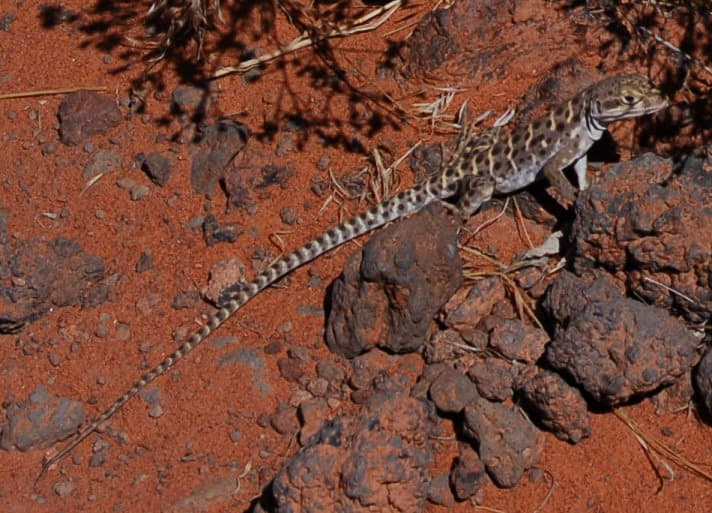
Gambelia wislizenii
The long-nosed leopard lizard (Gambelia wislizenii) is a relatively large North American lizard characterized by its long nose, long round tail, and granular scales that can be white, cream, or gray with irregular dark spots. It inhabits arid and semiarid plains across the western United States and northern Mexico, preferring open, flat areas with scattered low plants. This diurnal species is known for its speed, agility, and unique "freeze" defense mechanism.
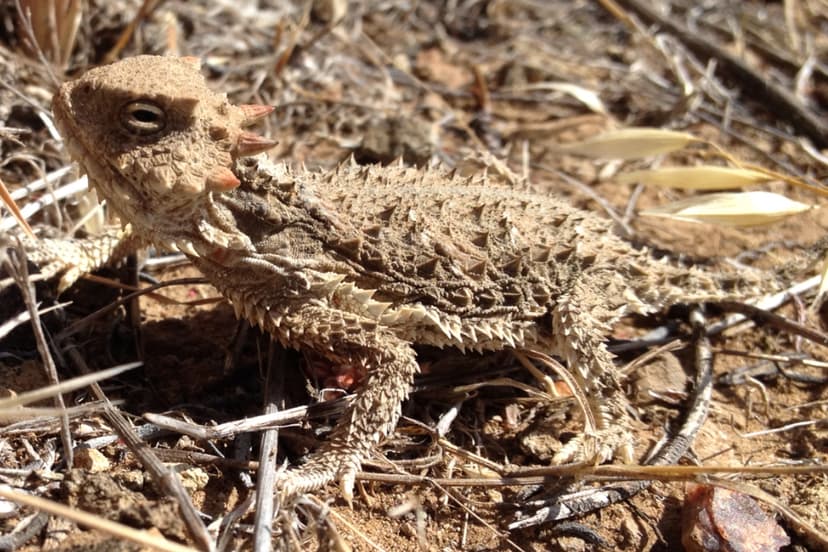
Phrynosoma platyrhinos
The desert horned lizard (Phrynosoma platyrhinos) is a medium-sized lizard native to western North America, characterized by its flat body, fringe scales, and distinctive "horns" formed by large, pointed cranial scales. They inhabit desert climates and arid to semiarid plains, preferring areas with shrub cover and loose soil for burrowing. Primarily feeding on invertebrates, especially ants, these lizards are known for their camouflage and unique defensive behaviors.

Agama agama
The common agama, also known as the red-headed rock agama, is a widespread lizard species native to sub-Saharan Africa and introduced to Florida. It is characterized by its distinct coloration, with males exhibiting blue bodies and yellow tails, while females and subordinates have olive green heads. These lizards are diurnal, territorial, and primarily insectivorous, playing an important role in their ecosystems.