
Gambelia wislizenii
The long-nosed leopard lizard (Gambelia wislizenii) is a relatively large North American lizard characterized by its long nose, long round tail, and granular scales that can be white, cream, or gray with irregular dark spots. It inhabits arid and semiarid plains across the western United States and northern Mexico, preferring open, flat areas with scattered low plants. This diurnal species is known for its speed, agility, and unique "freeze" defense mechanism.
Key Facts
- ›Ranges in snout-to-vent length from 8.3 to 14.6 cm.
- ›Inhabits arid and semiarid plains with scattered low vegetation and open spaces.
- ›Active during the day (diurnal) and hunts using stalking and ambush techniques.
- ›Defensive behaviors include "freeze" and caudal autotomy (tail shedding).
- ›Diet consists of small lizards, insects, and occasionally rodents, with cannibalism also observed.
- ›Breeding season is may to June, with females laying 5-6 eggs per clutch.
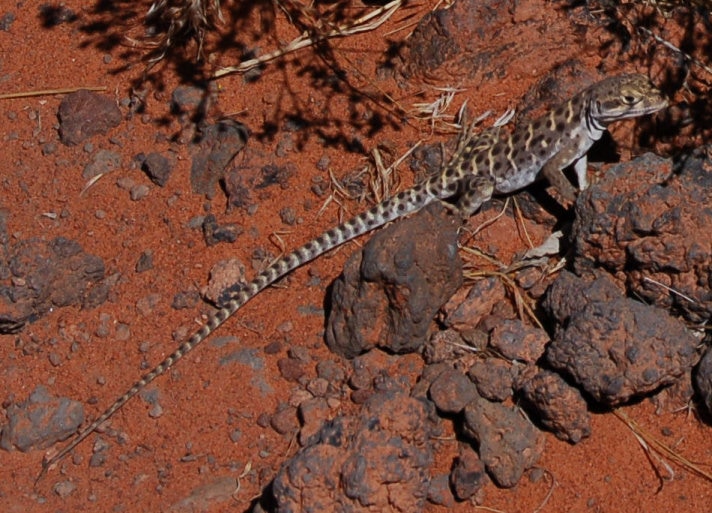
Long-Nosed Leopard Lizard
Western United States, Northern Mexico
Arid Plains, Semiarid Plains, Desert Flats, Lower Foothills
- Snout-To-Vent Length Ranges From 8.3 To 14.6 cm.
- Large Head, Long Nose, and A Long, Round Tail That Can Be Longer Than the Body.
- Granular Dorsal Scales, Typically White, Cream, Or Gray, With Irregular Brown Or Dark Gray Spots.
- May Have Dark Bars Across the Body and Tail.
- Juveniles Have More Contrasted Markings, Sometimes With Rusty Coloring and Bright Red Spots, and Yellow On Thighs and Under the Tail.
- Males and Females Can Change Color Markedly; A Dark Phase Hides Spots, While A Light Phase Emphasizes Them.
- Gravid Females Develop Reddish-Orange Spots and Bars On Their Sides and Under the Tail.
- Males May Develop A Pink Or Rusty Throat and Chest Wash During Breeding Season.
Small Lizards, Insects, Rodents, Smaller Leopard Lizards
- Diurnal, Active Throughout Mild To Warm Days.
- Prefers Direct Sunlight For Basking.
- Uses "Freeze" Behavior As A Defense Mechanism.
- Capable of Caudal Autotomy .
- Runs With Forelimbs Raised At Rapid Speeds.
- Utilizes Stalking and Ambush Hunting Techniques.
- Can Jump Up To Two Feet To Catch Prey.
Carnivore, Insectivore, Lizardivore
Birds, Snakes, Coyotes, Badgers, Kit Fox
Habitat Destruction
About Gambelia wislizenii
The Long-Nosed Leopard Lizard (Gambelia wislizenii)
The long-nosed leopard lizard, scientifically known as Gambelia wislizenii, is a striking reptile native to the arid and semiarid regions of western North America. This species is recognized for its distinctive physical characteristics, including a notably long snout, an elongated round tail that can surpass its body length, and granular scales that are typically pale with irregular dark spots. Its coloration can vary, with juveniles often displaying more vibrant patterns and adults capable of significant color changes depending on their phase, from a dark phase where spots are obscured to a light phase where they are more prominent.
Habitat and Distribution
Gambelia wislizenii thrives in open, flat landscapes characterized by scattered low vegetation such as bunch grass, alkali bush, and sagebrush. They are found across a wide range stretching from Oregon and Idaho in the United States south into northern Mexico, including Baja California, Sonora, Coahuila, and Zacatecas. They inhabit desert flats and lower foothills, often utilizing rocks for basking and avoiding densely vegetated areas.
Behavior and Diet
This lizard is diurnal, meaning it is active during the day, often seen basking in direct sunlight. When hunting, Gambelia wislizenii employs stalking and ambush techniques, utilizing its speed and agility to capture prey. Its diet is primarily carnivorous, consisting of smaller lizards, insects, and occasionally rodents. Cannibalism, including the consumption of younger or smaller leopard lizards, is also documented behavior. When threatened, the long-nosed leopard lizard exhibits a "freeze" response and can also shed its tail as a defense mechanism.
Reproduction and Conservation
The breeding season for Gambelia wislizenii typically occurs from May to June, with females laying clutches of 5 to 6 eggs. In warmer regions, females may produce up to two clutches per year. The eggs hatch in late summer, with the timing of juvenile emergence often coinciding with the decline of adult activity, which may help reduce cannibalism. While habitat destruction poses a threat, Gambelia wislizenii is currently classified as "least concern" by conservation organizations, unlike its endangered relative, the blunt-nosed leopard lizard (Gambelia sila).
Source: Wikipedia ↗
Frequently Asked Questions
What is the scientific name of the long-nosed leopard lizard?
The scientific name of the long-nosed leopard lizard is Gambelia wislizenii. It was once considered part of the genus Crotaphytus.
What does the long-nosed leopard lizard look like?
Gambelia wislizenii has granular scales, typically white, cream, or gray, adorned with irregular brown or dark gray spots. It possesses a large head, a distinctively long nose, and a long, round tail that can exceed its body length. Juveniles exhibit more vibrant markings, sometimes including rusty coloring and bright red spots.
Where does the long-nosed leopard lizard live?
This lizard is found in arid and semiarid plains across the western United States, from Oregon and Idaho in the north to northern Mexico in Baja California, Sonora, Coahuila, and Zacatecas. It also occurs in Casa Grande, Arizona, and east of the Peninsula Ranges in San Diego County's Lower Colorado Desert. It favors flat areas with open spaces, such as bunch grass, alkali bush, and sagebrush environments.
What does the long-nosed leopard lizard eat?
Its diet primarily includes small lizards, insects, and sometimes rodents. Notably, Gambelia wislizenii is also cannibalistic, occasionally consuming smaller or younger leopard lizards.
How does the long-nosed leopard lizard defend itself?
When threatened, it employs a "freeze" behavior, running under cover, flattening against the ground, and remaining motionless until the danger passes. In extreme situations, it can shed its tail (caudal autotomy) to escape capture.
When do long-nosed leopard lizards reproduce?
The breeding season for Gambelia wislizenii typically spans from May to June. Females lay a single clutch of 5–6 eggs, usually in June or July, which then hatch in late summer. In warmer southern climates, females may lay up to two clutches annually.
What is the conservation status of the long-nosed leopard lizard?
Unlike its close relative, the blunt-nosed leopard lizard (Gambelia sila), which is endangered, the long-nosed leopard lizard (Gambelia wislizenii) is categorized as "least concern." While habitat destruction is a pressure, there are no specific conservation concerns currently documented for this species.
Related Lizards

Sceloporus uniformis
Sceloporus uniformis, commonly known as the yellow-backed spiny lizard, is a robust reptile native to the deserts of the southwestern United States. It is characterized by its brown or tan coloration, often featuring yellow and black dorsal stripes or mottling, and a distinctive black collar. This species inhabits arid and semi-arid environments, including desert flats, plains, and low mountain slopes.
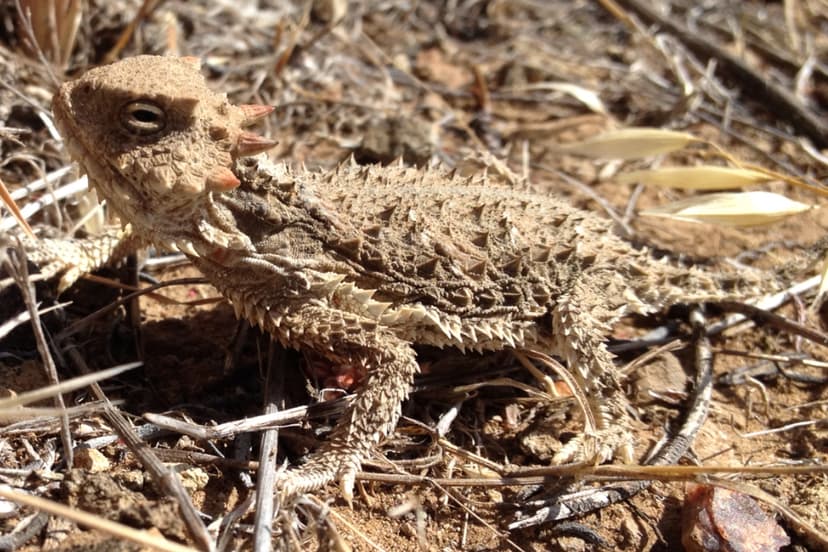
Phrynosoma platyrhinos
The desert horned lizard (Phrynosoma platyrhinos) is a medium-sized lizard native to western North America, characterized by its flat body, fringe scales, and distinctive "horns" formed by large, pointed cranial scales. They inhabit desert climates and arid to semiarid plains, preferring areas with shrub cover and loose soil for burrowing. Primarily feeding on invertebrates, especially ants, these lizards are known for their camouflage and unique defensive behaviors.
Desert horned lizard
The desert horned lizard (Phrynosoma platyrhinos) is a medium-sized lizard native to western North America, known for its flat, broad body and distinctive cranial spines that give it a "horned" appearance. Primarily found in desert climates, they are often found near ant hills, which form a significant part of their diet. These lizards are generally gentle but possess unique defense mechanisms, including puffing up their bodies and, rarely, squirting blood from their eyes.