
Scincus scincus
Scincus scincus, commonly known as the sandfish skink, is a desert-dwelling lizard native to the Sahara Desert and Arabian Peninsula, renowned for its remarkable ability to "swim" through sand. Its physical adaptations, including a wedge-shaped snout, smooth scales, and shovel-like feet, allow it to burrow and move efficiently beneath the surface to escape heat and predators.
Key Facts
- ›Native to the Sahara Desert and Arabian Peninsula.
- ›Can move through sand as if swimming, using an undulatory gait.
- ›Possesses a wedge-shaped snout, countersunk lower jaw, and shovel-like feet for burrowing.
- ›Coloration is yellow-caramel with brown-black cross bands.
- ›Primarily an insectivore, detecting prey through vibrations.
- ›Can breathe while submerged in sand by utilizing air pockets between grains.
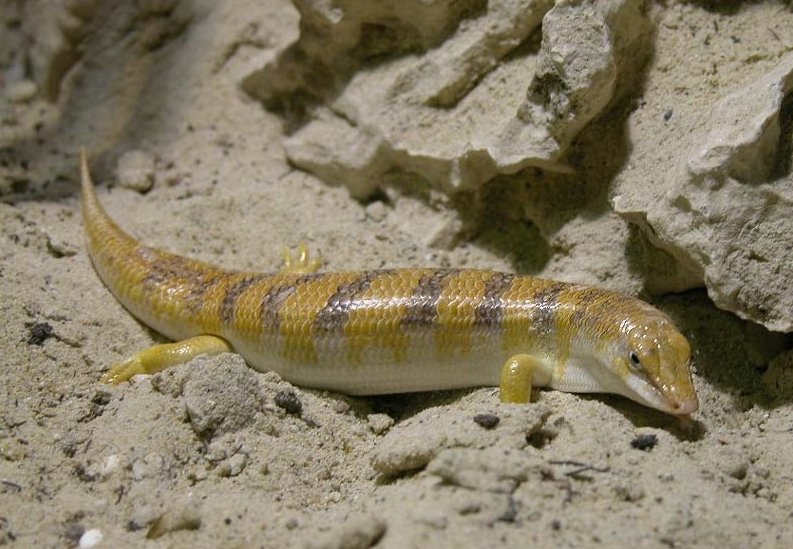
Sandfish Skink, Common Sandfish, Common Skink, Algerian Sandfish
Sahara Desert, Arabian Peninsula, West Coast of Africa
- Adult Length Typically Around 20 cm Including the Short Tail.
- Long, Wedge-Shaped Snout With A Countersunk Lower Jaw.
- Compact, Tapered Body Covered With Smooth, Shiny Scales.
- Short, Sturdy Legs With Long, Flattened, Fringed, Shovel-Like Feet.
- Short Tail Tapering To A Fine Point.
- Coloration Is Yellow-Caramel With Brown-Black Cross Bands.
- Bead-Like Eyes That Can Be Closed To Exclude Sand.
- Very Small Nostrils To Prevent Sand Inhalation.
Dubias, Crickets, Mealworms
- Burrows Or 'Swims' Through Loose Sand.
- Uses Undulatory Gait With Limbs Tucked To Move Through Sand.
- Can Dive Into Sand To Escape Heat and Predators.
- Detects Insect Prey Through Vibrations.
- Can Breathe While Submerged In Sand.
Saharan Sand Viper
About Scincus scincus
Scincus scincus: The Sandfish Skink
The Scincus scincus, more commonly recognized as the sandfish skink, common sandfish, or common skink, is a fascinating reptile native to the arid landscapes of the Sahara Desert and the Arabian Peninsula. Its most distinctive feature is its extraordinary ability to move through loose sand as if it were swimming, a behavior that has earned it the "sandfish" moniker. This adaptation allows it to efficiently navigate its desert habitat, escape extreme temperatures, and evade predators.
Physical Adaptations for a Sandy Life
The sandfish skink possesses a suite of specialized physical traits that enable its unique lifestyle. Its head is marked by a long, wedge-shaped snout and a lower jaw that is countersunk, aiding in its burrowing. The body is compact and covered in smooth, shiny scales, which can appear oily. Its legs are short but sturdy, equipped with long, flattened, and fringed feet that function much like shovels for digging. The lizard's eyes are bead-like and can be closed to prevent sand intrusion, while its nostrils are exceptionally small to keep sand out of its respiratory system. The coloration typically presents as yellow-caramel with distinctive brown-black cross bands.
Behavior and Ecology
Adult sandfish skinks generally reach about 20 cm (7.9 inches) in length. They are adept at diving into soft sand to regulate their body temperature, which can withstand extreme desert conditions ranging from 32 to 54 °C (90 to 130 °F). Their sand-swimming technique involves an undulatory gait with limbs tucked, a method studied for its efficiency. Remarkably, they can breathe while fully submerged in sand by utilizing air pockets between sand grains, with a specialized respiratory tract that filters inhaled particles before they reach the lungs.
The sandfish skink is an insectivore, preying on insects such as dubias, crickets, and mealworms. It has the ability to detect the vibrations created by nearby insects, which it uses to locate and ambush its prey. While its natural predators include reptiles like the Saharan sand viper, its sand-diving ability is a primary defense mechanism.
Source: Wikipedia ↗
Frequently Asked Questions
What is the common name for Scincus scincus?
Scincus scincus is commonly known as the sandfish skink, common sandfish, or common skink. It is also sometimes referred to as the Algerian sandfish due to its unique sand-swimming behavior.
How does the sandfish skink move through sand?
The sandfish skink moves through sand using an undulatory gait, tucking its limbs against its sides and swimming like a snake. This method uses an optimal waveform for minimal energetic cost.
What are the physical adaptations of the sandfish skink for desert life?
It has a long, wedge-shaped snout with a countersunk lower jaw, compact body with smooth scales, short sturdy legs with long, flattened, shovel-like feet, and bead-like eyes and small nostrils to keep sand out.
What does the sandfish skink eat?
The sandfish skink is an insectivore. It primarily feeds on insects like dubias, crickets, and mealworms, which it locates by detecting vibrations.
What is the typical size of an adult sandfish skink?
Adult common skinks usually reach about 20 cm (7.9 inches) in length, including their short tail.
Can sandfish skinks breathe when buried in sand?
Yes, sandfish skinks can breathe even when completely submerged in sand. They utilize the small pockets of air between sand grains and have a specialized respiratory tract to filter out particles.
What are the natural predators of Scincus scincus?
One of its potential predators mentioned is the Saharan sand viper (Cerastes vipera). The skink's ability to dive into sand serves as a primary defense mechanism.
Related Lizards

East Iberian sand racer
The East Iberian sand racer is a species of lizard belonging to the Lacertidae family. It is native to Spain and France and is recognized for its adaptation to sandy environments. Little specific detail is widely documented about its unique characteristics or behaviors.
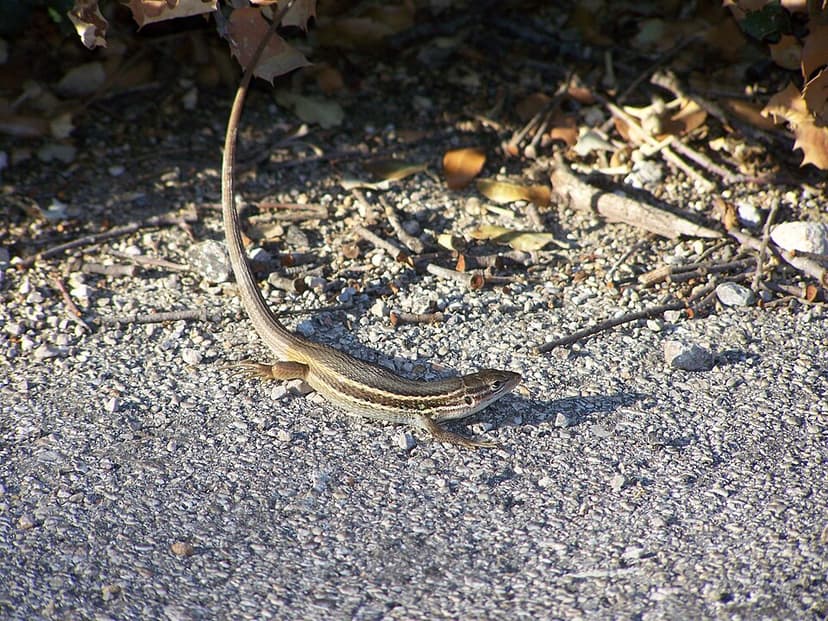
Psammodromus
Psammodromus is a small genus of sand lizards belonging to the family Lacertidae. These lizards are characterized by their association with sandy environments and are found across various European and North African countries bordering the Mediterranean Sea. The genus includes six recognized species, each adapted to its specific regional habitat.

Crotaphytidae
The Crotaphytidae, commonly known as collared lizards, are a family of fast-moving, desert-dwelling reptiles native to the southwestern United States and northern Mexico. These lizards are characterized by their long limbs and tails, with some species capable of running on two legs at high speeds. Their diet primarily consists of insects and smaller lizards.