
Sirenoscincus mobydick
Sirenoscincus mobydick, also known as the Moby Dick mermaid skink, is a unique lizard species characterized by its complete absence of hind limbs, possessing only flipper-shaped forelimbs. This pale, pigment-less skink is endemic to the Sofia Region of Madagascar. Its scientific name draws a parallel to the whale Moby-Dick, highlighting its limbless form and lack of coloration.
Key Facts
- ›Lacks hind limbs, possessing only flipper-shaped forelimbs.
- ›Endemic to the Sofia Region of Madagascar.
- ›Characterized by a pale, pigment-less body, assumed to be pinkish in live animals.
- ›The scientific name "mobydick" references the limbless whale from Herman Melville's novel.
- ›Type specimens measured between 67–71 mm snout-to-vent length.
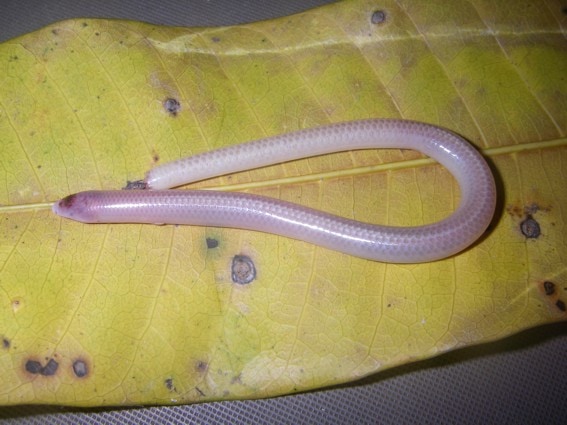
Moby Dick Mermaid Skink
Madagascar
- Lacks Hind Limbs, Possesses Only Forelimbs Shaped Like Flippers.
- Entirely Pale, Pigment-Less Body, Assumed To Be Pinkish In Live Animals.
- Eyes Visible As Dark Spots In Preserved Specimens.
- Body Is About 4 mm Wide At Midbody.
- Snout-To-Vent Length of Type Specimens Ranged From 67–71 mm.
About Sirenoscincus mobydick
Sirenoscincus mobydick, commonly known as the Moby Dick mermaid skink, is a distinctive lizard species belonging to the family Scincidae. This species is immediately recognizable for its unique morphology: it possesses only forelimbs, which are shaped like flippers, and completely lacks hind limbs, a characteristic that earns it the "mermaid skink" moniker. The scientific name, "mobydick," was chosen to reflect this limbless, whale-like form and its lack of pigmentation, drawing a parallel to Herman Melville's iconic white sperm whale.
Geographic Distribution and Habitat
This species is endemic to Madagascar, found specifically within the Sofia Region. The type locality, where the initial specimens were documented, is the urban commune of Boriziny. While specific habitat details beyond its occurrence in an urban commune are sparse, its limbless, likely burrowing or cryptic lifestyle is inferred from its morphology.
Description and Taxonomy
In preserved specimens, Sirenoscincus mobydick exhibits an entirely pale body with eyes appearing as dark spots. It is presumed that live individuals are a pinkish hue. The body is notably slender, measuring approximately 4 mm wide at its midsection. The type series specimens recorded a snout-to-vent length ranging from 67 to 71 mm. First described in 2012, the species was later reassigned to the genus Voeltzkowia in 2015 by herpetologists Aurélien Miralles and colleagues.
Notable Features
The most striking feature of Sirenoscincus mobydick is the absence of hind limbs, a trait shared with the whale it is named after. This adaptation likely relates to its mode of locomotion and life in its environment. Like the whale Moby-Dick, the skink also lacks natural coloration, contributing to its unusual appearance among lizards.
Source: Wikipedia ↗
Frequently Asked Questions
What are the defining physical characteristics of Sirenoscincus mobydick?
Sirenoscincus mobydick is distinguished by its lack of hind limbs, having only forelimbs that are shaped like flippers. It also lacks pigmentation, appearing entirely pale with dark spots for eyes in preserved specimens, and is assumed to be pinkish when alive.
Where is Sirenoscincus mobydick found?
This species is endemic to Madagascar, specifically within the Sofia Region. The type locality, where the initial specimens were found, is the urban commune of Boriziny.
Why is this lizard called the Moby Dick mermaid skink?
The common name "mermaid skink" refers to its limbless appearance, similar to a mermaid. The scientific name "mobydick" was chosen because, like the whale Moby-Dick, this skink has no hind limbs and lacks coloration.
What is the size of Sirenoscincus mobydick?
The type series of Sirenoscincus mobydick consisted of two specimens. These measured between 67 and 71 mm (2.6 to 2.8 inches) in snout-to-vent length. The body is notably thin, approximately 4 mm wide at its midsection.
What is the scientific classification of Sirenoscincus mobydick?
Sirenoscincus mobydick belongs to the family Scincidae, commonly known as skinks. It was first described in 2012 and later reassigned to the genus Voeltzkowia in 2015.
Related Lizards
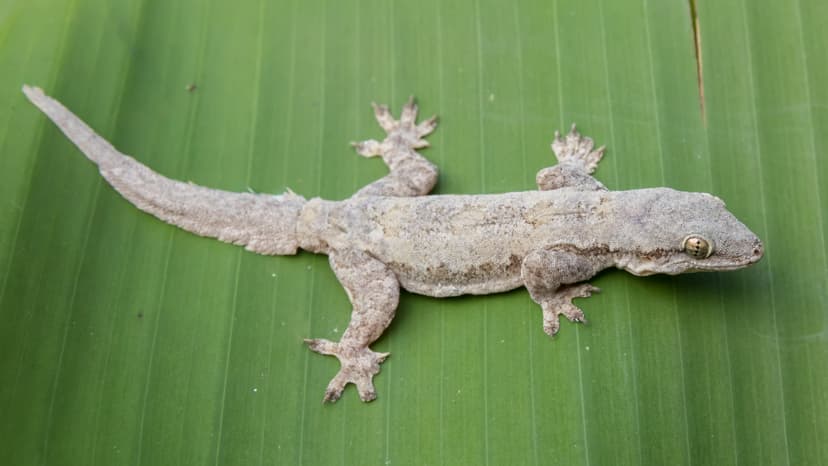
Cosymbotus platyurus
The flat-tailed house gecko, also known as the frilled house gecko or Asian house gecko, is a species native to southeastern and southern Asia, sometimes classified under the genus Cosymbotus. It is characterized by patagia, or skin flaps, on its trunk, tail, and hind legs, which aid in gliding. This gecko is often found in the pet trade and is identifiable by these distinctive skin folds, resembling a miniature flying gecko.

Flat-tailed house gecko
The flat-tailed house gecko, also known as the frilled house gecko or Asian house gecko, is a species native to southeastern and southern Asia. It is characterized by patagia, or flaps of skin, along its trunk, tail, and hind limbs, which aid in gliding. This gecko is often found in the pet trade and is easily identified by these distinctive skin flaps.

Hemidactylus mabouia
The tropical house gecko (Hemidactylus mabouia) is a small lizard native to sub-Saharan Africa, now widespread in the Americas and Caribbean due to human introduction. Characterized by its ability to change color based on temperature and light, it possesses specialized toe lamellae for climbing vertical surfaces. This nocturnal hunter primarily inhabits urban environments, preying on a variety of insects and small invertebrates.