
Stellion
The Stellion, also known as the starred agama or roughtail rock agama, is a species of agamid lizard found in Greece and Turkey. It can reach up to 35 cm in length and is characterized by its ability to change color to express mood. This shy lizard typically inhabits rocky areas, where it basks on stone walls, rocks, and trees, and quickly hides in crevices when startled.
Key Facts
- ›Commonly known as the starred agama or roughtail rock agama.
- ›Found in Greece and Turkey.
- ›Can grow to a total length of approximately 35 cm (14 inches).
- ›Possesses the ability to change its color to communicate mood.
- ›Inhabits rocky environments and is known for its shy nature.
- ›Traditionally, its excrement was used as an eye medicine and cosmetic.

Starred Agama, Roughtail Rock Agama, Dikenli Keler, Hardim, Hardun, Kourkoutas, Kourkoutavlos, Painted Dragon, Short-Toed Rock Agama, Sling-Tailed Agama, Star Lizard, Stellion
Greece, Turkey
- May Attain A Total Length of 35 cm Or Slightly Longer.
- Can Change Its Color To Express Its Mood.
- Can Change Color To Express Mood.
- Basks On Stone Walls, Rocks, and Trees.
- Shy and Ready To Dive Into Cracks To Hide From Predators.
About Stellion
The Stellion
The Stellion, scientifically known as Laudakia stellio, is a species of agamid lizard recognized by several common names, including the starred agama and the roughtail rock agama. This reptile is primarily found in the rocky terrains of Greece and Turkey.
Physical Characteristics and Habitat
Adult Stellions can reach a total length of approximately 35 cm (14 inches). A notable behavioral trait is their ability to alter their coloration, which is used to communicate their mood. They are commonly observed basking on stone walls, rocks, and trees within their preferred rocky habitats. The Stellion is known for its shy disposition, quickly retreating into crevices and cracks when it perceives a potential threat from predators.
Etymology and Mythology
The common name "stellion" is derived from the Latin word "stellio," which is linked to "stella," meaning star. This name may have historically referred to any lizard with a spotted appearance. The species also holds a place in classical mythology, notably appearing in Ovid's Metamorphoses. In one account, a boy who rudely mocked the goddess Ceres was transformed into a Stellio, an etiological myth explaining the lizard's characteristic spotted skin.
Traditional Uses
Historically, the excrement of the Stellion held significance in traditional medicine and cosmetics within parts of Europe and the Middle East. It was utilized as a popular remedy for eye ailments, used to improve eyesight, alleviate itching, and treat cataracts. This substance was known by various names, including cordylea, crocodilea, and stercus lacerti, and was even imported to European pharmacies from the Levant.
Source: Wikipedia ↗
Frequently Asked Questions
What are the common names for Laudakia stellio?
Laudakia stellio is known by several common names, including dikenli keler, hardim, hardun, kourkoutas, kourkoutavlos, painted dragon, roughtail rock agama, short-toed rock agama, sling-tailed agama, star lizard, starred agama, and stellion.
Where is the Stellion found geographically?
The Stellion is naturally found in Greece and Turkey. Other species within its complex may be recorded in different locations.
What is the typical size of a Stellion?
A Stellion can reach a total length, including its tail, of around 35 cm (14 inches), and sometimes slightly more.
What is the habitat of the Stellion?
The Stellion is typically found in rocky habitats. It is often seen basking on stone walls, rocks, and trees within these environments.
How does the Stellion behave?
Like many agamids, the Stellion can alter its color to express its mood. It is a shy species that readily retreats into cracks and crevices to escape potential predators.
What is the etymology of the name 'stellion'?
The common name 'stellion' originates from the Latin word 'stellio,' which itself derives from 'stella,' meaning star. Historically, it may have been used to refer to any spotted lizard.
Is there any mythological significance associated with the Stellion?
Yes, the Stellion is mentioned in Ovid's Metamorphoses. In the myth, a boy who mocks the goddess Ceres is transformed into a Stellio or starred agama as punishment, explaining its spotted appearance.
Were there any traditional uses for the Stellion?
Traditionally, the excrement of the Stellion was used by indigenous peoples in Europe and the Middle East as a medicinal treatment for the eyes. It was also employed as a cosmetic and was known by names such as cordylea, crocodilea, or stercus lacerti.
Related Lizards

Laudakia stellio
The Laudakia stellio, also known as the starred agama or roughtail rock agama, is a species of agamid lizard reaching up to 35 cm in length. It inhabits rocky areas in Greece and Turkey, where it basks on stone walls and rocks. This shy lizard can change its color to express its mood and is known for its spotted skin, which is linked to ancient mythology.

Cyrtopodion kotschyi
Kotschy's gecko is a slender lizard native to southeastern Europe and the Middle East, distinguished by its variable coloration and distinct W-shaped dorsal bands. It typically inhabits rocky areas, scrub, and the walls of buildings, often being nocturnal. This species lays two eggs which take a considerable time to hatch, with individuals reaching maturity in about two years and a lifespan of up to nine years in captivity.
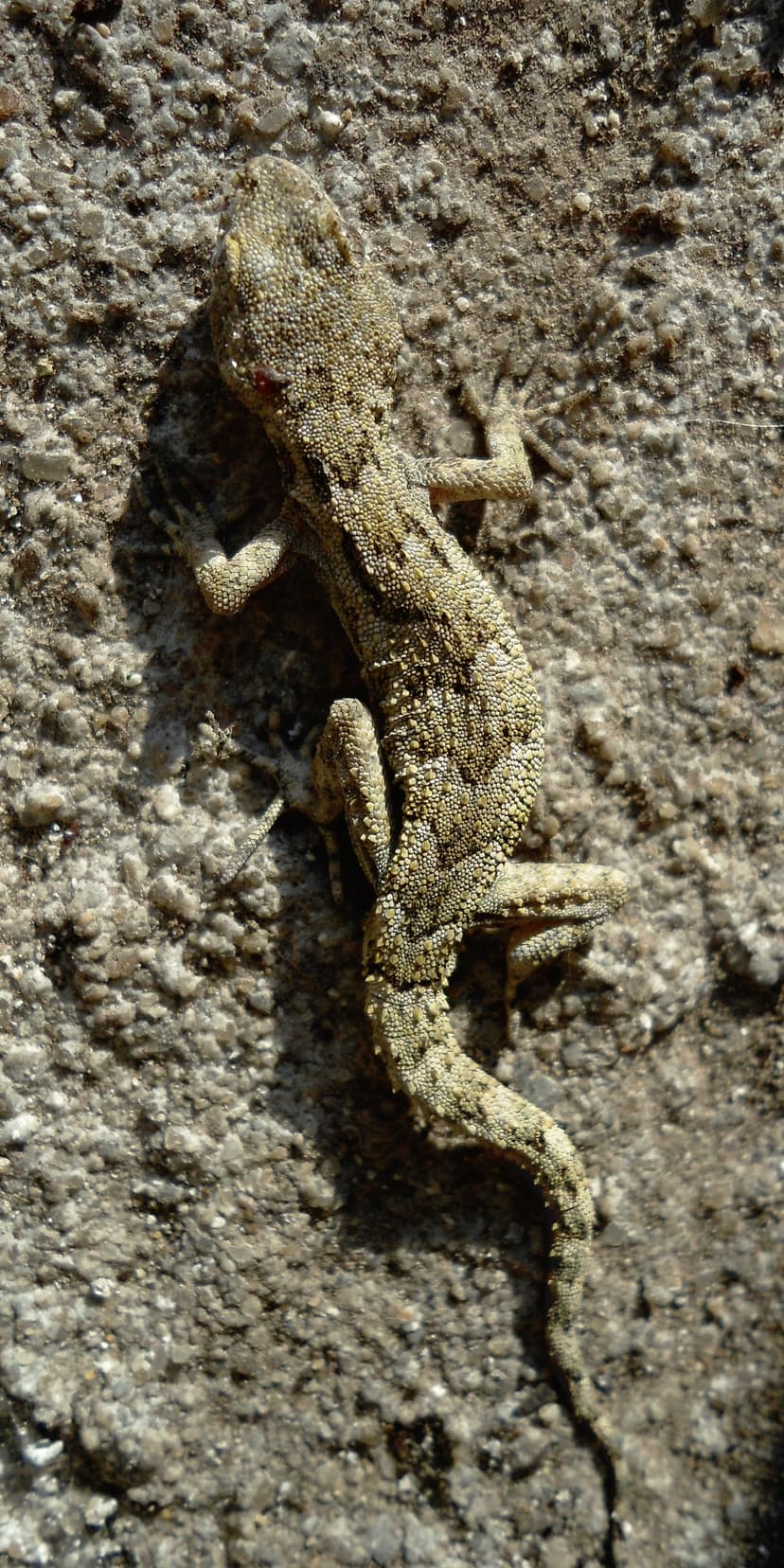
Kotschy's gecko
Kotschy's gecko is a slender lizard native to southeastern Europe and the Middle East, characterized by its variable coloration and W-shaped dorsal bands. It inhabits a range of environments from coastal cliffs to building walls, displaying primarily nocturnal behavior. This species is known for its distinctive high-pitched "chick" call and lays two eggs that hatch into juveniles approximately 2 cm long.