
Tarentola delalandii
The Tenerife gecko, scientifically known as Tarentola delalandii, is a species of lizard native to the Canary Islands. It inhabits a diverse range of environments, from coastlines to high altitudes, and is characterized by its oviparous reproduction, laying eggs under rocks. This species faces threats primarily from habitat loss.
Key Facts
- ›Native to Tenerife and La Palma in the Canary Islands, Spain.
- ›Inhabits a wide range of habitats including forests, shrubland, rocky areas, and urban environments.
- ›Reproduces by laying eggs under rocks.
- ›Faces threats from habitat loss.
- ›Named in honor of French naturalist Pierre Antoine Delalande.
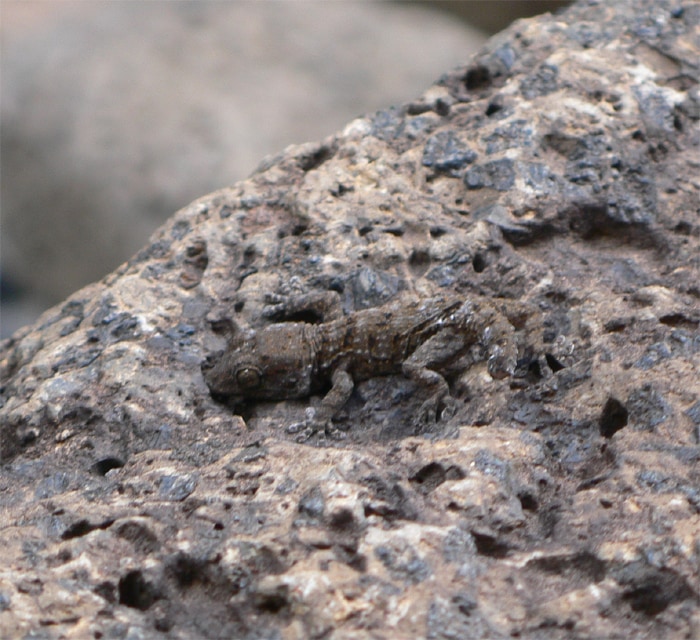
Delalande's Gecko, Tenerife Wall Gecko
Tenerife, La Palma, Canary Islands, Spain
Habitat Loss
About Tarentola delalandii
Tarentola delalandii, commonly known as the Tenerife gecko or Delalande's gecko, is a species of lizard belonging to the family Phyllodactylidae. This gecko is an endemic resident of the Canary Islands, specifically found on the islands of Tenerife and La Palma.
Habitat and Distribution
The natural habitats of Tarentola delalandii are remarkably diverse, reflecting its adaptability. It thrives in temperate forests, shrublands, and Mediterranean-type vegetation. Its range also extends to rocky terrains, including rocky shores, as well as more open areas like pastureland. Furthermore, the species has successfully adapted to human-modified landscapes, being found in rural gardens and urban environments. Its presence is recorded across a wide altitudinal gradient, from sea level up to approximately 2,300 meters (7,500 feet).
Reproduction and Conservation
In terms of reproduction, Tarentola delalandii is oviparous, meaning it lays eggs. These eggs are typically deposited in concealed locations, such as under rocks. The species faces environmental challenges, with habitat loss identified as a significant threat to its populations. The specific name, delalandii, honors the French naturalist Pierre Antoine Delalande.
Source: Wikipedia ↗
Frequently Asked Questions
What is the scientific name for the Tenerife gecko?
The scientific name for the Tenerife gecko is Tarentola delalandii. This binomial nomenclature is used to classify the species within the biological hierarchy.
Where is Tarentola delalandii found?
Tarentola delalandii is endemic to the islands of Tenerife and La Palma, which are part of the Canary Islands archipelago in Spain. It can be found at various altitudes, from sea level up to 2,300 meters.
What kind of habitats does the Tenerife gecko prefer?
The Tenerife gecko is highly adaptable and lives in a variety of natural and man-made habitats. These include temperate forests, shrublands, rocky areas, coastal shores, pastures, and even rural and urban gardens.
How does Tarentola delalandii reproduce?
Tarentola delalandii is oviparous, meaning it reproduces by laying eggs. The eggs are typically deposited and hidden under rocks.
What are the main threats to Tarentola delalandii?
The primary threat to the conservation of Tarentola delalandii is habitat loss. Changes to its natural environment can impact its populations.
Related Lizards
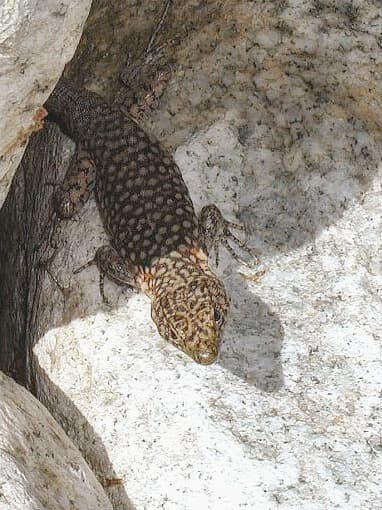
Archaeolacerta bedriagae
Bedriaga's rock lizard, scientifically known as Archaeolacterta bedriagae, is a species endemic to the islands of Corsica and Sardinia. This lizard is characterized by its brownish-grey coloration with a net pattern, which changes during the mating season, and juveniles are identifiable by their bright blue tails. It inhabits a variety of environments, including rocky areas, Mediterranean shrubland, and rural gardens, and is known for its ability to climb vertical surfaces and jump to catch flying insects.
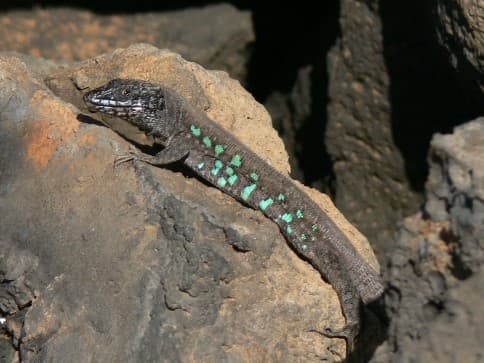
Gallotia atlantica
The Atlantic lizard (Gallotia atlantica) is a species of lizard belonging to the Lacertidae family. Endemic to the eastern Canary Islands, including Lanzarote and Fuerteventura, this lizard inhabits a variety of temperate and Mediterranean environments.

East Canary gecko
The East Canary gecko, also known as the Canary wall gecko (Tarentola angustimentalis), is a species of lizard native to the eastern Canary Islands. This plump, dorsally flattened gecko is characterized by adhesive toe pads, small tubercles on its skin, and variable greyish-brown coloration with darker bars. It inhabits a wide range of environments, from rocky shores and shrubland to urban areas, and is commonly observed at night on walls and ceilings.