
Archaeolacerta bedriagae
Bedriaga's rock lizard, scientifically known as Archaeolacterta bedriagae, is a species endemic to the islands of Corsica and Sardinia. This lizard is characterized by its brownish-grey coloration with a net pattern, which changes during the mating season, and juveniles are identifiable by their bright blue tails. It inhabits a variety of environments, including rocky areas, Mediterranean shrubland, and rural gardens, and is known for its ability to climb vertical surfaces and jump to catch flying insects.
Key Facts
- ›Found exclusively on the islands of Corsica and Sardinia.
- ›Adults are brownish-grey with a net-like pattern, males develop blue markings during mating season.
- ›Juveniles are distinguished by bright azure blue tails.
- ›Inhabits rocky areas, Mediterranean shrubland, and rural gardens.
- ›Diet consists of insects and other small invertebrates, including catching flying insects by jumping.
- ›Threatened by habitat loss and is protected by CITES.
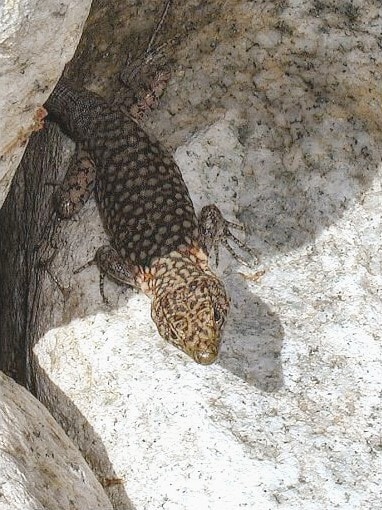
Bedriaga's Rock Lizard
Corsica, Sardinia
- Adults Are Brownish-Grey With A Dark, Fine-Lined Net Pattern On Their Backs Outside the Mating Season.
- Females Are Browner Than Males.
- Males Acquire A Blue Belly, Blue Loins, and Blue Dots On the Flanks During the Mating Season.
- the Netlike Pattern Can Transform Into A Pattern of White Dots.
- Juveniles Are Identifiable By Their Bright Azure Blue Tails.
- Adult Males Can Reach A Total Length of Up To 30 cm , Though Most Specimens Do Not Exceed 25 cm .
Insects, Other Small Invertebrates, Flying Insects
- Climbs Vertical Rocks, Cliffs, Walls, and Ruins.
- Found In Mountainous Regions, Typically Between 600 and 1,000 m Above Sea Level.
- Also Found Along the Coast, Sunbathing Near Small Streams.
- When Frightened, May Escape Into Water and Is A Good Swimmer.
- Jumps Off the Ground To Catch Flying Insects.
Habitat Loss
About Archaeolacerta bedriagae
Bedriaga's Rock Lizard (Archaeolacerta bedriagae)
Bedriaga's rock lizard, scientifically known as Archaeolacerta bedriagae, is a species of lizard belonging to the Lacertidae family. This species is the sole member of its genus, Archaeolacerta, and is exclusively found on the islands of Corsica and Sardinia. It is also sometimes referred to by the scientific name Lacerta bedriagae.
Habitat and Distribution
The natural habitats of A. bedriagae are diverse and include temperate forests, shrublands, Mediterranean-type vegetation, rocky areas, pastureland, and even rural gardens. They are typically found in mountainous regions, often between 600 and 1,000 meters above sea level, but can also be observed near the coast, basking in the sun close to small streams.
Physical Description
Adult Bedriaga's rock lizards are generally brownish-grey, featuring a dark, fine-lined net pattern on their backs outside of the mating season. Females tend to be browner than males. During the breeding period, males develop striking blue coloration on their bellies, loins, and flanks, and the net-like pattern may evolve into a pattern of white dots. A distinctive characteristic of juveniles is their bright azure blue tails.
Adult males can grow to a total length of up to 30 cm (12 inches), though most individuals do not exceed 25 cm (9.8 inches) in total length.
Ecology and Behavior
This lizard is adept at climbing vertical surfaces, including rocks, cliffs, walls, and ruins. When threatened, A. bedriagae may attempt to escape into water and is a capable swimmer. A notable feeding behavior is its ability to jump from the ground to catch flying insects, a hunting technique that sets it apart from many other lizards in the Lacertidae family.
Diet
The diet of Bedriaga's rock lizard primarily consists of insects and other small invertebrates. They are known to actively hunt by jumping to capture flying prey.
Conservation
Archaeolacerta bedriagae is considered a rare species and faces threats from habitat loss. It is a protected species under CITES, highlighting its vulnerable status and the need for conservation efforts.
Source: Wikipedia ↗
Frequently Asked Questions
What is Bedriaga's rock lizard?
Bedriaga's rock lizard, or Archaeolacerta bedriagae, is a species of lizard belonging to the Lacertidae family. It is unique to the genus Archaeolacerta and is found only on the islands of Corsica and Sardinia.
What are the distinguishing features of Bedriaga's rock lizard?
Adults typically display a brownish-grey color with a fine, dark net pattern on their backs. During the mating season, males develop striking blue coloration on their belly, loins, and flanks. A notable characteristic of juveniles is their vibrant azure blue tails, which helps distinguish them from adults.
Where does Bedriaga's rock lizard live?
This species is naturally found in a range of habitats on Corsica and Sardinia. These include temperate forests, shrublands, rocky areas, pastureland, and even rural gardens. They are often found in mountainous regions but also inhabit coastal areas near small streams.
What does Bedriaga's rock lizard eat?
The diet of Archaeolacerta bedriagae primarily consists of insects and other small invertebrates. A unique feeding behavior observed in this species is its ability to jump from the ground to catch flying insects, a skill not commonly seen in other Lacertidae lizards.
What is the conservation status of Bedriaga's rock lizard?
Bedriaga's rock lizard is considered a rare species and is threatened by habitat loss. To protect this lizard, it is listed and protected under CITES (Convention on International Trade in Endangered Species of Wild Fauna and Flora).
What is the scientific name for Bedriaga's rock lizard?
The scientific name for Bedriaga's rock lizard is Archaeolacerta bedriagae. It is also sometimes referred to by the scientific name Lacerta bedriagae.
Related Lizards

Lacerta schreiberi
The Iberian emerald lizard, scientifically known as Lacerta schreiberi, is a large lizard species endemic to the Iberian Peninsula. Characterized by its impressive size, it inhabits temperate forests, shrublands, and areas near water. Primarily an insectivore, it also preys on smaller reptiles and is known for its oviparous reproduction.

Algyroides marchi
The Spanish algyroides, also known as Valverde's lizard, is a species of lizard endemic to southeastern Spain. It inhabits temperate forests, riverbanks, and rocky areas at moderate to high altitudes. This oviparous lizard faces threats primarily from habitat loss.
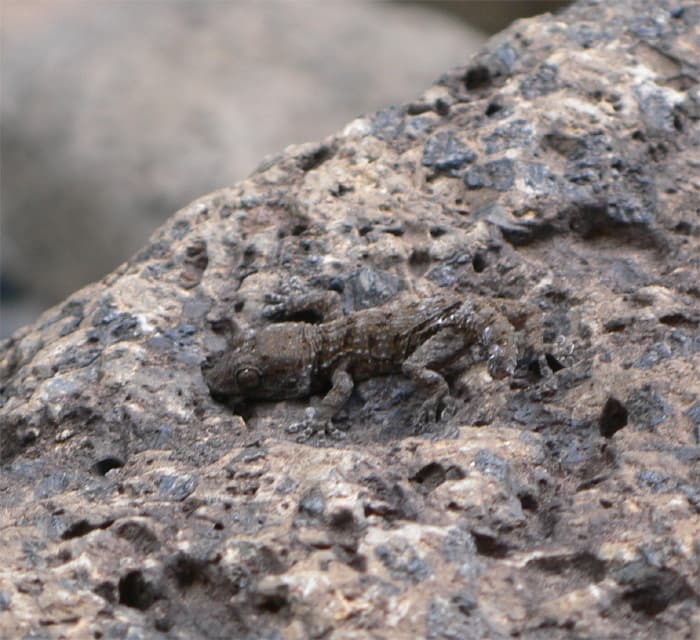
Tarentola delalandii
The Tenerife gecko, scientifically known as Tarentola delalandii, is a species of lizard native to the Canary Islands. It inhabits a diverse range of environments, from coastlines to high altitudes, and is characterized by its oviparous reproduction, laying eggs under rocks. This species faces threats primarily from habitat loss.