
Tenerife giant lizard
Extinct·Oviparous (inferred from being a lizard)
The Tenerife giant lizard (Gallotia goliath) was an extinct species of large lizard native to the island of Tenerife in the Canary Islands. It was the largest reptile in the Canary Islands, reaching lengths of up to 1.25 meters. This omnivorous lizard inhabited coastal lowlands and became extinct around the 15th century, likely after the arrival of Castilian conquerors.
Key Facts
- ›The Tenerife giant lizard was the largest reptile in the Canary Islands.
- ›It could reach lengths of 120 to 125 cm (3.94 to 4.10 ft).
- ›Fossils have been found in volcanic caves, sometimes alongside remains of the Tenerife giant rat.
- ›Analysis of its remains indicates it was omnivorous, primarily consuming C3 plant-derived carbon.
- ›It inhabited Tenerife from the late Pleistocene through the Holocene until the 15th century.
- ›Evidence suggests it was consumed by the indigenous Guanches.

Tenerife Giant Lizard, Goliath Tenerife Lizard
Tenerife, Canary Islands, Spain
Coastal Lowlands, Volcanic Caves
- Largest Reptile In the Canary Islands.
- Reached Lengths of 120 To 125 cm .
- A 13.5 cm Skull Suggests Potentially Larger Individuals Existed.
- Omnivorous
- Primarily Consumed Carbon Derived From C3 Plants
- Coexisted With the Tenerife Giant Rat, Showing Evidence of Niche Partitioning.
Guanches
Human Activity
About Tenerife giant lizard
Tenerife Giant Lizard (Gallotia goliath)
The Tenerife giant lizard, scientifically known as Gallotia goliath, was a remarkable species of extinct lizard that once inhabited the island of Tenerife in Spain's Canary Islands. This reptile held the distinction of being the largest lizard species found in the Canary Islands archipelago, reaching impressive lengths of up to 1.25 meters (approximately 4.1 feet).
Characteristics and Habitat
Gallotia goliath was characterized by its substantial size, making it a dominant reptile in its ecosystem. It primarily inhabited the coastal lowlands of Tenerife. Fossil evidence, including remains found in volcanic caves, often appears alongside those of other extinct fauna, such as the Tenerife giant rat, indicating they shared the same ancient environments.
Diet and Ecology
Paleobiological studies, particularly isotopic analysis of its remains (δ13C and δ15N), have revealed that the Tenerife giant lizard was omnivorous. Its diet consisted mainly of carbon derived from C3 plants. The isotopic data also suggests a degree of niche partitioning between G. goliath and the Tenerife giant rat, indicating they exploited resources in slightly different ways despite their similar diets.
Extinction
The species inhabited Tenerife from the late Pleistocene epoch through the Holocene, persisting until the 15th century CE. Archaeological findings show evidence of bone remains with marks indicating that the indigenous people of the island, known as the Guanches, consumed this lizard. The extinction of Gallotia goliath is believed to have closely followed the Castilian conquest of the Canary Islands, which occurred around the same period.
Classification
Prehistoric remains of the genus Gallotia have been subject to taxonomic review. While initially some specimens were assigned to G. maxima, it was later determined that G. maxima is a junior synonym of G. goliath. DNA sequence analysis of mummified remains has confirmed G. goliath as a distinct species, likely confined to Tenerife and genetically closer to the Tenerife speckled lizard (Gallotia intermedia) than to other giant lizard species found on different islands.
Source: Wikipedia ↗
Frequently Asked Questions
What is the scientific name of the Tenerife giant lizard?
The scientific name of the Tenerife giant lizard is Gallotia goliath. This name was given to the species by the German herpetologist Robert Mertens.
How large did the Tenerife giant lizard grow?
The Tenerife giant lizard was the largest reptile in the Canary Islands, reaching lengths of 120 to 125 cm (3.94 to 4.10 ft). A 13.5 cm skull found in 1952 suggests that even larger specimens may have existed.
What did the Tenerife giant lizard eat?
Analysis of its remains indicates that Gallotia goliath was omnivorous. It primarily consumed carbon derived from C3 plants. There were slight differences in its diet compared to the Tenerife giant rat, suggesting niche partitioning.
Where did the Tenerife giant lizard live?
This species inhabited the coastal lowlands of the island of Tenerife in the Canary Islands. Fossils have been discovered in volcanic caves on the island.
When did the Tenerife giant lizard go extinct?
The Tenerife giant lizard inhabited Tenerife from the late Pleistocene through the Holocene until the 15th century. It is believed that its extinction occurred in the years following the Castilian conquest of the Canary Islands.
Were there other giant lizards in the Canary Islands?
Yes, other prehistoric Gallotia species and extremely large individuals of extant giant lizard species have been identified on various Canary Islands. However, Gallotia goliath is considered a valid species, likely restricted to Tenerife.
Related Lizards

Ctenosaura pectinata
The western spiny-tailed iguana, scientifically known as Ctenosaura pectinata, is a moderately large lizard native to western Mexico. This species is characterized by its distinctive keeled scales on its tail, a crest of spines down its back, and variable coloration ranging from brown to grey-brown, with a yellowish underside. While primarily herbivorous as adults, juveniles consume insects, and they are known for their social behavior and adaptation to rocky habitats with nearby trees.
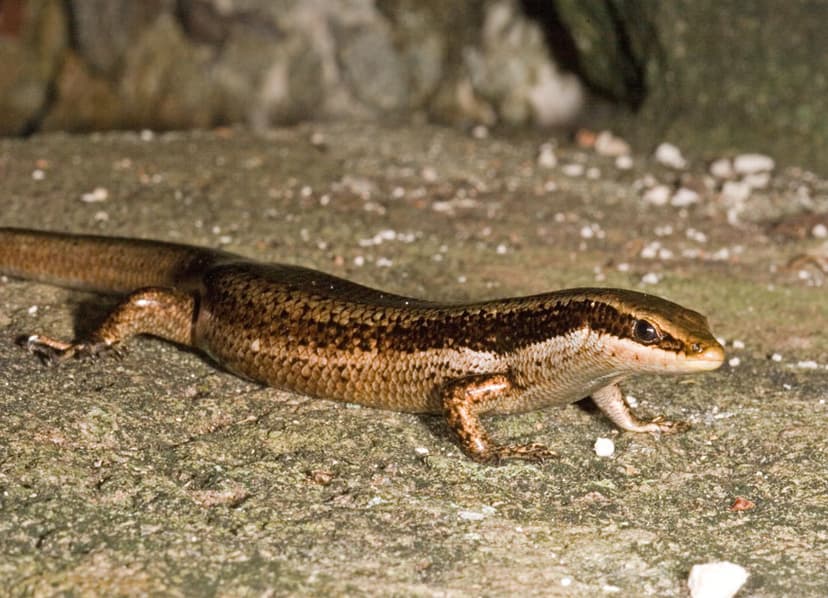
Copeoglossum redondae
Copeoglossum redondae, commonly known as the Redonda skink, was a species of skink native to the small Caribbean island of Redonda. This species is now considered extinct, with its demise linked to habitat destruction and the introduction of invasive species.

Acanthodactylus erythrurus
The spiny-footed lizard, Acanthodactylus erythrurus, is a medium-sized lizard known for the comb-like spines on its hind toes. Endemic to northwestern Africa and the Iberian Peninsula, it is recognized as one of the fastest lizards in the Lacertidae family. This species inhabits dry, sparsely vegetated areas with loose soil and low scrub, often in mountainous regions, and is primarily active during daylight hours.