
Tiliqua nigrolutea
The blotched blue-tongued lizard (Tiliqua nigrolutea) is a large, robust skink native to southeastern Australia. Known for its distinctive blue tongue, used for defense and sensory purposes, it exhibits varied coloration depending on its geographic location, with lowland and highland forms recognized. Primarily an omnivore, this species is viviparous and can live for an extended period, making it a valuable asset in agricultural and urban environments by controlling pests.
Key Facts
- ›Endemic to south-eastern Australia, including Victoria, Tasmania, South Australia, New South Wales, and the Australian Capital Territory.
- ›Possesses a fleshy blue tongue used for tasting the air and deterring predators.
- ›An omnivore, its diet includes insects, snails, wildflowers, native fruits, and occasionally small vertebrates.
- ›Viviparous, giving birth to live young, with clutch sizes varying between lowland and highland forms.
- ›Can live for up to 30 years in captivity, indicating a relatively long lifespan.
- ›Harmless to humans, with blunt teeth that typically do not break the skin even when biting.

Southern Blue-Tongued Lizard, Blotched Blue-Tongued Skink
Victoria, Tasmania, South Australia, New South Wales, Australian Capital Territory
Sclerophyll Forests, Montane Woodlands, Coastal Heathlands, Rural Areas, Urban Areas
- Robust Body With Relatively Short Limbs.
- Colouration and Pattern Vary Geographically.
- Lowlands Form: Shades of Grey Or Brown With Paler, Silvery To Tan Blotches Along the Back, Contrasted By Darker Areas.
- Highlands Form: Typically Jet Black With Strongly Contrasting Paler Cream, Pink, Salmon, Or Orange Blotches.
- Possesses A Fleshy Blue Tongue.
- Tail Can Be Autotomized When Grasped By A Predator, Though Less Likely Than In Smaller Skinks.
Insects, Snails, Carrion, Wildflowers, Native Fruits, Select Leaves, Small Vertebrates
- Relies On Camouflage and Bluffing For Defense.
- Can Exhibit An Impressive Defensive Display If Cornered Or Molested.
- Bites As A Last Resort When Further Molested.
- Inoffensive By Nature.
- Adapts Well To Captivity.
- Emerges From Brumation In Early Spring For Mating.
- Can Be Found In Rural and Urban Areas, Often Living On Farms and In Gardens.
About Tiliqua nigrolutea
The Blotched Blue-Tongued Lizard (Tiliqua nigrolutea)
The blotched blue-tongued lizard, scientifically identified as Tiliqua nigrolutea, is a notable species of skink indigenous to the southeastern regions of Australia. This lizard is characterized by its robust physique, relatively short limbs, and a striking, fleshy blue tongue, which it prominently displays as a defense mechanism and for sensory purposes.
Description and Variation
Tiliqua nigrolutea exhibits considerable geographic variation in its coloration and patterns, leading to the recognition of two distinct forms by some herpetologists: the lowland and highland varieties. The lowland form typically presents in shades of grey or brown, distinguished by paler, silvery to tan blotches along its back, set against darker surrounding areas. In contrast, the highland form is generally darker, often jet black, providing a stark contrast to much paler cream or more vibrantly colored pink, salmon, or orange blotches. These lizards grow to a substantial size, measuring between 35 to 50 cm in length.
Habitat and Distribution
This species is distributed across Victoria, Tasmania, South Australia, New South Wales, and the Australian Capital Territory. Its preferred habitats are varied, including wet and dry sclerophyll forests, montane woodlands, and coastal heathlands. Notably, the blotched blue-tongued lizard has demonstrated adaptability to certain rural and urban environments, where they can be found living on farms and in gardens, often considered beneficial for their consumption of pests.
Diet and Behavior
As an omnivore, Tiliqua nigrolutea consumes a diverse diet comprising insects, snails, carrion, wildflowers, native fruits, and other vegetation like select leaves. They are also known to occasionally prey on small vertebrates, such as mice or other young rodents. Their primary defense strategy involves camouflage and bluffing, including the conspicuous display of their blue tongue. While capable of an impressive defensive display and biting if cornered, their blunt teeth generally prevent serious injury to humans, making them harmless and inoffensive by nature.
Reproduction and Lifespan
The blotched blue-tongued lizard is viviparous, meaning it gives birth to live young. Mating occurs in early spring, with births typically taking place in autumn after a prolonged gestation period. There is a difference in litter size between the forms, with the highland/alpine form producing fewer, larger young (approximately five) compared to the lowland form (around eleven). These lizards are also relatively long-lived, with reliable reports indicating lifespans of up to 30 years in captivity, significantly longer than many smaller skink species.
Conservation Context
While no specific conservation status is detailed, the species has been identified from Pleistocene fossil sites, indicating a long evolutionary history. Their adaptability to human-modified landscapes suggests a degree of resilience, though specific threats are not elaborated upon. The species is sometimes kept as pets due to its docile nature and ability to adapt well to captive environments.
Source: Wikipedia ↗
Frequently Asked Questions
What is the blotched blue-tongued lizard?
The blotched blue-tongued lizard, scientifically known as Tiliqua nigrolutea, is a large species of skink native to southeastern Australia. It is recognized for its robust body, short limbs, and most notably, its bright blue tongue.
Where does the blotched blue-tongued lizard live?
This species is found across southeastern Australia, inhabiting states such as Victoria, Tasmania, South Australia, New South Wales, and the Australian Capital Territory. Its habitat includes sclerophyll forests, montane woodlands, and coastal heathlands.
What does the blotched blue-tongued lizard eat?
Tiliqua nigrolutea is an omnivore. Its diet consists of a variety of insects, snails, carrion, wildflowers, native fruits, and select leaves. They may also opportunistically consume small vertebrates like young rodents.
How does the blotched blue-tongued lizard defend itself?
This lizard primarily relies on camouflage and bluffing as defense mechanisms. When threatened, it can display its bright blue tongue to startle predators. If further provoked, it may bite, though its blunt teeth usually do not cause serious injury.
How long do blotched blue-tongued lizards live?
Blotched blue-tongued lizards are relatively long-lived compared to many smaller skink species. They have been reliably reported to live for up to 30 years in captivity.
Are blotched blue-tongued lizards venomous?
No, blotched blue-tongued lizards are not venomous. They are considered harmless to humans, and despite their powerful jaws, their blunt teeth make them unlikely to cause significant injury.
What are the different forms of the blotched blue-tongued lizard?
Two distinct forms are recognized by some herpetologists: the lowland form and the highland form. The lowland form is typically found in Tasmania and lower altitudes of Victoria, while the highland form inhabits higher altitudes in New South Wales and Victoria.
When do blotched blue-tongued lizards reproduce?
The mating season for the blotched blue-tongued lizard typically occurs in early spring, following their emergence from brumation. The young are usually born in autumn after a relatively long gestation period.
Related Lizards

Chamaeleo dilepis
The flap-necked chameleon (Chamaeleo dilepis) is a large, arboreal lizard native to sub-Saharan Africa. It is known for its variable coloration, ranging from green to yellow and brown, and its distinctive flap-like crest along its neck. This species inhabits a variety of environments, including forests, savannahs, and woodlands, and plays a role in the international pet trade.
Bronchocela cristatella
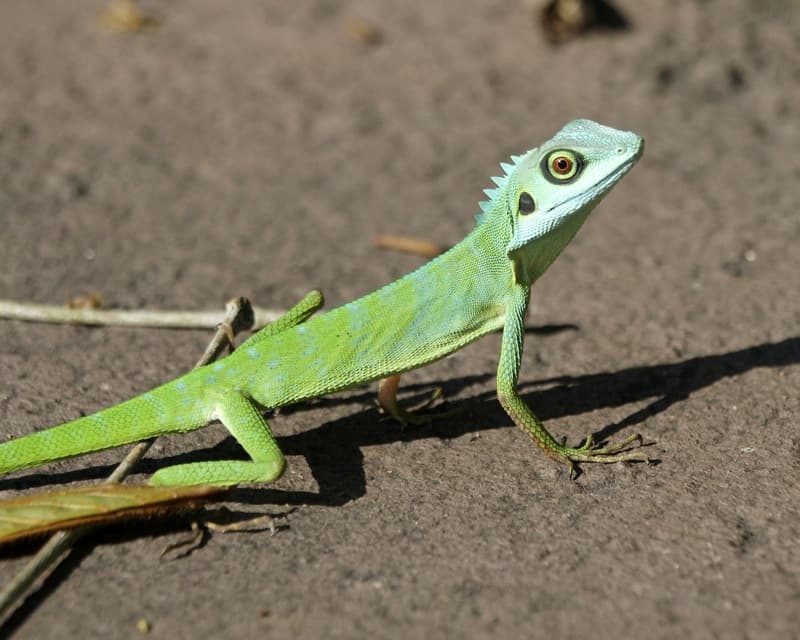
Bronchocela cristatella, commonly known as the green crested lizard, is a striking agamid lizard native to Southeast Asia. This species is characterized by its bright green coloration, which can shift to darker browns when threatened, and a distinctive crest on the male's neck. They inhabit diverse environments, including forests, parks, and rural areas, and are known for their quick movements among trees.

Cyprus rock agama
The Cyprus rock agama is a species of agamid lizard endemic to the island of Cyprus. It inhabits a variety of rocky environments, from arid to Mediterranean habitats, and has adapted well to human presence in towns and agricultural areas. This diurnal lizard is primarily insectivorous but also consumes small vertebrates and fruits.