
Trachylepis planifrons
The tree skink, scientifically known as Trachylepis planifrons, is a species of skink native to Africa. This lizard is characterized by its skink morphology and is found within various African environments.
Key Facts
- ›Trachylepis planifrons is a species of skink.
- ›It is indigenous to the continent of Africa.
- ›The common name 'tree skink' is associated with this species.
- ›It belongs to the family Scincidae.
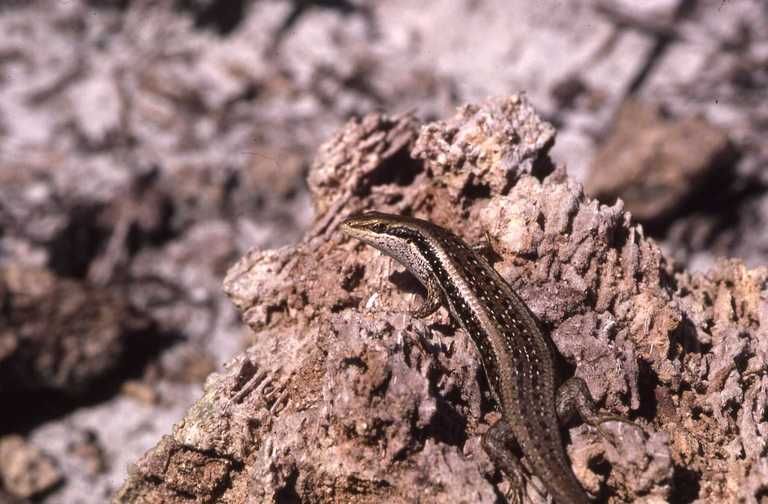
Tree Skink
Africa
About Trachylepis planifrons
Trachylepis planifrons: The Tree Skink
Trachylepis planifrons, commonly known as the tree skink, is a lizard species indigenous to Africa. As a member of the Scincidae family, it shares characteristics with other skinks, though specific details about its physical appearance, habitat preferences, and behavior are not extensively documented in available records.
What is known about the Tree Skink:
The tree skink's scientific classification is Trachylepis planifrons. Its natural range is the continent of Africa. Beyond its taxonomic designation and geographical origin, further primary details regarding its life cycle, diet, or specific ecological role are not widely cataloged in readily accessible information. It is recognized primarily as a skink species native to the African continent.
Source: Wikipedia ↗
Frequently Asked Questions
What is the scientific name for the tree skink?
The scientific name for the tree skink is Trachylepis planifrons. This binomial nomenclature is used to classify the species within the scientific community.
Where can the tree skink be found?
The tree skink, Trachylepis planifrons, is found in Africa. Its natural distribution is limited to the African continent.
What kind of lizard is Trachylepis planifrons?
Trachylepis planifrons is a species of skink. Skinks are a diverse group of lizards known for their smooth, overlapping scales and often short limbs.
Related Lizards
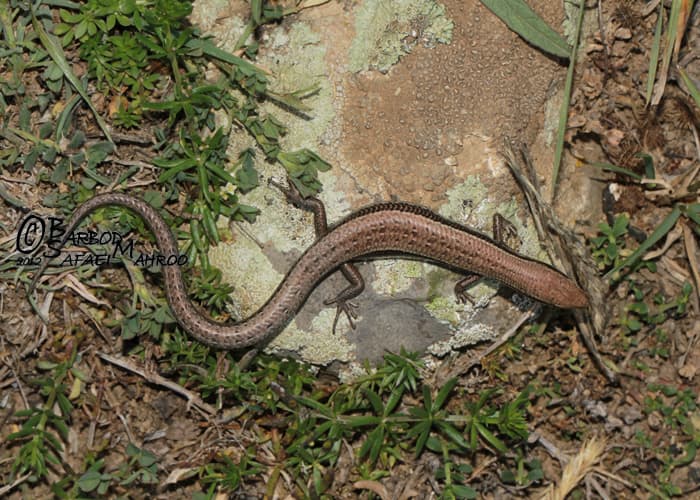
Ablepharus bivittatus
The twin-striped skink (Ablepharus bivittatus) is a species of skink found in mountainous regions of Armenia, Azerbaijan, Turkmenistan, northwestern Iran, and Turkey. It is distinguished by its habitat in high elevations, typically between 2,300 and 3,300 meters.
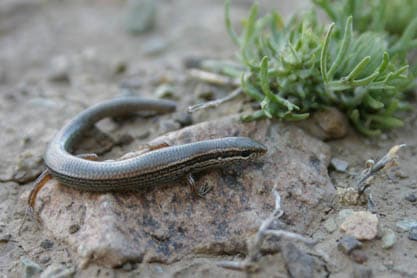
Ablepharus pannonicus
The Asian snake-eyed skink (Ablepharus pannonicus) is a species of skink native to a wide range across Asia and parts of the Middle East. It is characterized by its snake-like appearance and is found in diverse arid and semi-arid environments.

Adam's dravidogecko
Adam's dravidogecko (Dravidogecko douglasadamsi) is a species of gecko native to India. Little is documented about its specific characteristics, habitat, or behaviors, making it a relatively understudied species.