
Trachylepis vittata
The bridled mabuya, scientifically known as Heremites vittatus, is a species of skink native to North Africa and the Middle East. These lizards inhabit open, sandy or stony areas with sparse vegetation, often found near water sources like wetlands and oases. They are characterized by their smooth, shiny bodies, cone-shaped heads, elongated forms, and easily breakable yet regenerative tails.
Key Facts
- ›Scientific name: Heremites vittatus (formerly Mabuya vittata, Eutropis vittata, Trachylepis vittata).
- ›Found in North Africa and the Middle East.
- ›Inhabits open, sandy or stony soils with sparse vegetation, often near water.
- ›Grows up to 22 cm in length.
- ›Diet consists primarily of insects and other arthropods.
- ›Possesses a smooth, shiny body with overlapping scales and a tapering, regenerative tail.

Bridled Mabuya, Bridled Skink
North Africa, Middle East
- Grows Up To 22 cm In Length.
- Smooth, Shiny Body.
- Overlapping Scales.
- Cone-Shaped Head.
- Elongated Body.
- Tapering Tail That Is Easily Broken But Can Be Regenerated.
Insects, Arthropods
About Trachylepis vittata
The Bridled Mabuya (Heremites vittatus)
The bridled mabuya, scientifically recognized as Heremites vittatus, is a species of skink found across North Africa and the Middle East. This lizard is known for its smooth, shiny body, which is adorned with overlapping scales, and its distinctive cone-shaped head. It possesses an elongated form that tapers to a tail which, while easily broken, has the remarkable ability to regenerate.
Habitat and Distribution
Heremites vittatus thrives in open environments characterized by sandy or stony soil with minimal grass or bushy vegetation. These skinks are often found in proximity to water sources, such as the wetlands of Egypt and the oases of Tunisia, highlighting their reliance on these moist areas within arid landscapes.
Physical Characteristics
The bridled mabuya can reach a total length of up to 22 centimeters. Its body is sleek and shiny, a common adaptation for reptiles in open environments. The tail is a notable feature, being slender and tapering, and it is known to detach when threatened, a defense mechanism that allows the lizard to escape predators. Fortunately, this tail can regrow over time.
Diet
The diet of the bridled mabuya is primarily carnivorous, consisting of insects and other small arthropods that it encounters within its habitat. Its hunting behavior likely involves actively seeking out prey within the sandy and stony terrain it inhabits.
Source: Wikipedia ↗
Frequently Asked Questions
What is the scientific name for the bridled mabuya?
The current scientific name for the bridled mabuya is Heremites vittatus. It has also been known by other binomial names in the past, including Mabuya vittata, Eutropis vittata, and Trachylepis vittata, due to attempts to revise the Mabuya genus.
Where does the bridled mabuya live?
The bridled mabuya is found in North Africa and the Middle East. They prefer habitats with open, sandy or stony soil that has little grass or bushy vegetation, and are often located near water sources such as wetlands and oases.
What are the physical characteristics of the bridled mabuya?
This skink can grow up to 22 centimeters long. It has a smooth, shiny body covered in overlapping scales, a cone-shaped head, an elongated body, and a tapering tail that can be easily broken but also regenerated.
What does the bridled mabuya eat?
The diet of the bridled mabuya primarily consists of insects and other arthropods found in its habitat.
Are there any other common names for Heremites vittatus?
Yes, Heremites vittatus is commonly known as the bridled mabuya or bridled skink. These names reflect its distinctive appearance.
Related Lizards

Bridled skink
The bridled skink (Heremites vittatus), also known as the bridled mabuya, is a species of skink found across North Africa and the Middle East. These lizards typically inhabit open, sandy or stony areas with sparse vegetation, often near water sources like wetlands and oases. They are characterized by their smooth, shiny bodies, cone-shaped heads, and easily breakable, tapering tails.

Ablepharus
Ablepharus, commonly known as snake-eyed skinks, are small lizards distinguished by fused eyelids that prevent blinking, similar to snakes. They inhabit dry fields, hills, and rocky areas, often concealed within leaf litter. These skinks possess shiny, bronze scales and a characteristic dark stripe along their sides, feeding primarily on small insects and mollusks.
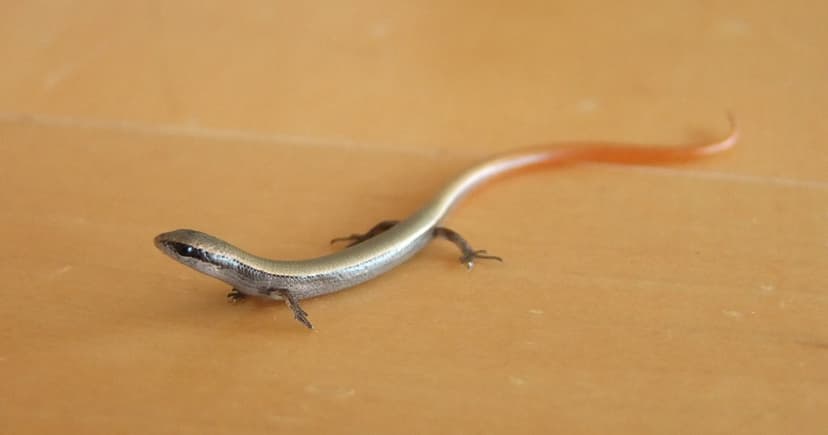
Rüppell's snake-eyed skink
Rüppell's snake-eyed skink (Ablepharus rueppellii) is a species of skink native to the Middle East, found in parts of Israel, Lebanon, Jordan, and Egypt. It inhabits the leaf litter of forested or shrubby areas, and is also found near oases in Egypt. This species was formerly considered a subspecies but is now recognized as distinct, though current understanding suggests it may represent two separate species.