
Uroplatus sikorae
The Uroplatus sikorae, commonly known as the mossy leaf-tailed gecko, is a lizard species endemic to Madagascar. Renowned for its exceptional camouflage, this nocturnal and arboreal gecko possesses a flattened tail and dermal flaps that help it blend seamlessly with tree bark. Its survival is threatened by habitat loss and the international pet trade.
Key Facts
- ›Endemic to Madagascar, found in primary and secondary forests.
- ›Possesses a flattened tail and dermal flaps for camouflage.
- ›Nocturnal and arboreal, spending days camouflaged on tree trunks.
- ›Diet consists of insects, arthropods, and gastropods.
- ›Threatened by habitat destruction, deforestation, and illegal pet trade.
- ›Protected under CITES Appendix II.

Mossy Leaf-Tailed Gecko, Southern Flat-Tail Gecko
Madagascar
- Size Ranges From 15 To 20 cm From Nose To Base of Tail.
- Large, Lidless Eyes With Yellow Sclera and Elliptical Pupils.
- Dorso-Ventrally Flattened Tail.
- Coloration Is Typically Grayish Brown To Black Or Greenish Brown.
- Markings Are Designed To Resemble Tree Bark, Including Lichens and Moss.
- Possesses Dermal Flaps of Skin Along the Body, Head, and Limbs That Can Lay Against the Tree.
- Limited Ability To Alter Skin Color To Match Surroundings.
Insects, Arthropods, Gastropods
- Nocturnal
- Arboreal
- Rests Vertically On Tree Trunks During the Day, Head Down.
- Utilizes Camouflage For Concealment.
- Possesses Dermal Flaps To Break Up Outline.
- Can Alter Skin Color To Match Surroundings.
Habitat Destruction, Deforestation, Collection For the Pet Trade
About Uroplatus sikorae
Uroplatus sikorae: The Mossy Leaf-Tailed Gecko
The Uroplatus sikorae, commonly known as the mossy leaf-tailed gecko or the southern flat-tail gecko, is a remarkable lizard species endemic to the island of Madagascar. This gecko is a master of camouflage, with its coloration and skin texture designed to mimic tree bark, often adorned with patterns that resemble lichens and moss. Its flattened tail and specialized dermal flaps, which run along its body and limbs, further enhance its ability to blend seamlessly with its arboreal environment, making it virtually invisible during daylight hours.
Biology and Behavior
As a nocturnal and arboreal species, Uroplatus sikorae spends its days resting vertically on tree trunks, typically with its head facing downwards. When night falls, it emerges from its hiding place to hunt for prey. Its diet consists mainly of insects, arthropods, and gastropods. The gecko's large, lidless eyes, featuring yellow sclera and elliptical pupils, are perfectly adapted for its nighttime activities. It also possesses a limited capacity to alter its skin color to better match its immediate surroundings.
Distribution and Habitat
This species is found exclusively in Madagascar, inhabiting the primary and secondary forests of the island's Eastern and central tropical regions. These forests provide the essential habitat structure and resources necessary for the survival of the mossy leaf-tailed gecko.
Conservation Concerns
Uroplatus sikorae faces significant threats that jeopardize its future. Habitat destruction and widespread deforestation in Madagascar are the primary drivers of population decline, as they diminish the gecko's natural environment. Furthermore, the species is highly sought after in the international pet trade, leading to unsustainable collection rates. In recognition of these threats, Uroplatus sikorae is listed as a CITES Appendix II protected animal, aiming to control and regulate its trade to prevent further endangerment.
Source: Wikipedia ↗
Frequently Asked Questions
What is the scientific name for the mossy leaf-tailed gecko?
The scientific name for the mossy leaf-tailed gecko is Uroplatus sikorae. The specific name, sikorae, is a Latinization of the surname of Franz Sikora, an Austrian explorer of Madagascar.
Where is the Uroplatus sikorae found?
Uroplatus sikorae is endemic to Madagascar. These geckos inhabit the primary and secondary forests of the Eastern and central tropical regions of the island.
How does the mossy leaf-tailed gecko camouflage itself?
The mossy leaf-tailed gecko has coloration that resembles tree bark, often with markings that mimic lichens and moss. It also possesses dermal flaps along its body, head, and limbs, which can be pressed against the tree to break up its outline and scatter shadows, making it virtually invisible.
What does Uroplatus sikorae eat?
The mossy leaf-tailed gecko is an insectivore. Its diet primarily consists of insects, arthropods, and gastropods, which it hunts during its nocturnal foraging activities.
What are the main threats to Uroplatus sikorae?
The primary threats to Uroplatus sikorae are habitat destruction and deforestation in Madagascar, which reduce its natural environment. Additionally, the species is heavily collected for the international pet trade, leading to alarming rates of capture.
Is the mossy leaf-tailed gecko protected?
Yes, the mossy leaf-tailed gecko is a CITES Appendix II protected animal. This designation aims to regulate and restrict international trade to prevent overexploitation.
What is the size of a Uroplatus sikorae?
Uroplatus sikorae typically ranges in size from 15 to 20 centimeters (6 to 8 inches) when measured from the nose to the base of the tail. This measurement excludes the length of its flattened tail.
Are mossy leaf-tailed geckos active during the day or night?
Mossy leaf-tailed geckos are nocturnal. They spend the daylight hours resting vertically on tree trunks, head down, relying on their camouflage to remain hidden, and venture out at night to hunt for prey.
Related Lizards
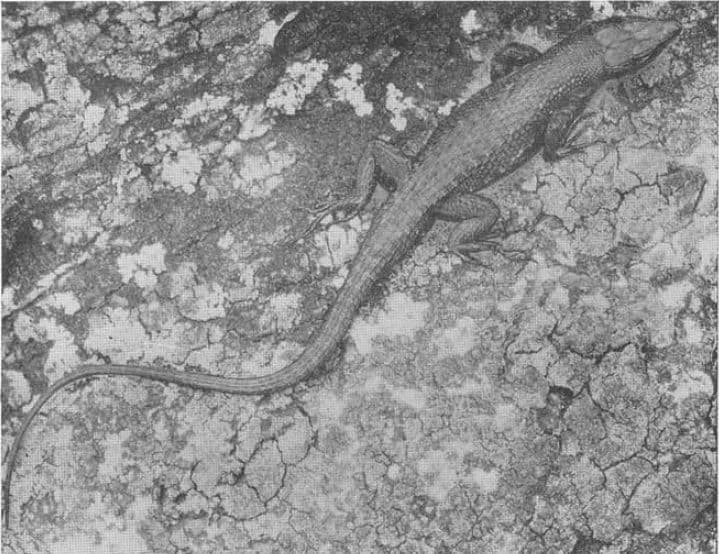
Adolfus africanus
Adolfus africanus, also known as the multi-scaled forest lizard or green-bellied forest lizard, is a species of lizard found in the humid forest zones of Central Africa. Its distribution is disjunct and primarily associated with primary forests, suggesting it is sensitive to deforestation.

Hokou gecko
The Hokou gecko (Gekko hokouensis) is a small, nocturnal, and insectivorous gecko found across parts of East Asia and introduced to several islands. It is characterized by shades of brown, grey, or tan with distinct darker cross-bands on its back and tail, and a unique scale near the base of its tail. This species plays a role in its ecosystem, primarily by consuming insects, and its reproductive cycle largely occurs during the summer months.

Chinese short-limbed skink
The Chinese short-limbed skink is a terrestrial lizard found in China and Vietnam, inhabiting secondary and mixed forests. It is characterized by its elongated body, short limbs, and a brownish coloration with distinctive black and white spots on its flanks. This insectivorous species reproduces by laying eggs and is oviparous.