
Varanus mertensi
Vulnerable (Northern Territory legislation)·Oviparous (lays eggs)
Mertens' water monitor is a semiaquatic lizard native to northern Australia, known for its exceptional adaptation to aquatic life. This species is an opportunistic predator, feeding on a variety of aquatic and terrestrial prey, and is distinguished by its dark, spotted coloration and a strongly compressed tail. It plays a role in its ecosystem but faces threats from invasive species.
Key Facts
- ›Native to northern Australia, found in coastal and inland waters.
- ›Morphologically well-adapted to an aquatic lifestyle, can seal nostrils underwater.
- ›Feeds on fish, frogs, crabs, crayfish, carrion, and terrestrial vertebrates.
- ›Lays eggs in burrows, with hatching occurring within 200-300 days.
- ›Threatened by the spread of cane toads, which are poisonous if consumed.
- ›Grows to a total length of approximately 2.0 meters (6.6 ft).

Mertens' Monitor
Northern Australia
- Grows To A Total Length of About 2.0 m .
- Dorsal Coloration Is Dark Brown To Black With Numerous Cream To Yellow Spots.
- Underparts Are Paler, Ranging From White To Yellowish, With Grey Mottling On the Throat and Blue-Grey Bars On the Chest.
- Tail Is Strongly Compressed Laterally With A High Median Dorsal Keel.
- Tail Length Is Approximately 1.5 Times the Length of the Head and Body.
Fish, Frogs, Crabs, Crayfish, Shrimps, Amphipods, Carrion, Terrestrial Vertebrates, Insects, Spiders, Human Rubbish, Freshwater Holthuisana Crabs, Eggs, Eggs of Freshwater Turtles
- Semiaquatic and A Strong Swimmer.
- Seldom Found Far From Water.
- Often Seen Basking On Midstream Rocks, Logs, and Branches Overhanging Water.
- Drops Into the Water When Disturbed.
- Can Stay Submerged For Long Periods.
- Observed Sleeping Underwater.
- Actively Forages For Prey.
- Capable of Swallowing Prey Underwater.
- Uses Sense of Smell To Locate and Capture Prey Underwater.
Poisoning From Consuming Cane Toads
About Varanus mertensi
Mertens' Water Monitor
Mertens' water monitor (Varanus mertensi) is a species of monitor lizard native to northern Australia, recognized for its remarkable adaptations to an aquatic lifestyle. This lizard is a wide-ranging, actively foraging, and opportunistic predator that inhabits both coastal and inland waters.
Physical Characteristics and Adaptations
This species can grow to a total length of approximately 2.0 meters (6.6 feet). Its dorsal side is dark brown to black, adorned with numerous cream to yellow spots, while its underparts are paler, featuring white to yellowish hues with grey mottling on the throat and blue-grey bars on the chest. A distinctive feature is its tail, which is strongly compressed laterally and possesses a high median dorsal keel, making up about 1.5 times the length of its head and body. Mertens' water monitor is considered the most morphologically well-adapted monitor species to aquatic life, evidenced by its ability to seal its nostrils underwater, swallow prey submerged, and utilize its sense of smell to find prey beneath the surface—abilities not widely reported in other monitor species.
Distribution and Habitat
Mertens' water monitor is found across a broad expanse of northern Australia. Its range extends through coastal and inland waters from the Kimberley region of Western Australia, across the Top End of the Northern Territory, and into the Gulf Country, reaching the western side of the Cape York Peninsula in Far North Queensland. It is a semiaquatic species, often found in swamps, lagoons, and waterways, and is rarely far from water sources.
Behavior and Diet
As a strong swimmer, Mertens' water monitor is frequently observed basking on rocks and logs in midstream or on branches that overhang its aquatic habitat. When threatened, it readily retreats into the water, where it can remain submerged for extended periods, and has even been documented sleeping underwater. Its diet is diverse and opportunistic, encompassing fish, frogs, crabs, crayfish, shrimps, amphipods, and carrion. It also consumes terrestrial vertebrates, insects, and spiders, and will take human refuse when available. Freshwater crabs are a particularly significant component of its diet, and it is known to dig for prey, including the eggs of freshwater turtles.
Reproduction and Conservation
Mertens' water monitor reproduces by laying eggs in burrows, typically at the beginning of the dry season. The eggs incubate and hatch within 200 to 300 days, depending on ambient temperatures, with the hatchlings being capable of entering the water and swimming immediately after emerging. The species faces a significant threat from the spread of cane toads, as consuming these poisonous amphibians can lead to fatal poisoning. Due to this vulnerability, Varanus mertensi is listed as Vulnerable under Northern Territory legislation.
Source: Wikipedia ↗
Frequently Asked Questions
Where is Mertens' water monitor found?
Mertens' water monitor is found across much of northern Australia. Its range includes coastal and inland waters from the Kimberley region of Western Australia, through the Northern Territory, and to the western side of the Cape York Peninsula in Queensland.
What does Mertens' water monitor eat?
This monitor lizard is an opportunistic predator with a varied diet. It primarily feeds on freshwater crabs, fish, frogs, and carrion, but also consumes terrestrial vertebrates, insects, and even human rubbish when available.
How is Mertens' water monitor adapted to water?
Mertens' water monitor is highly adapted to an aquatic lifestyle. It can seal its nostrils when submerged, swallow prey underwater, and is the only monitor species known to use its sense of smell to find prey underwater.
How does Mertens' water monitor reproduce?
Mertens' water monitor lays eggs in burrows, typically early in the dry season. The eggs hatch between 200 and 300 days later, with the hatchlings immediately able to enter the water and swim.
What are the main threats to Mertens' water monitor?
A significant threat to Mertens' water monitor is the spread of cane toads. Poisoning occurs when the lizards consume these toxic amphibians, leading to population declines.
What is the typical size of Mertens' water monitor?
Mertens' water monitor can reach a total length, including the tail, of approximately 2.0 meters (6.6 feet). The tail itself is strongly compressed and about 1.5 times the length of the head and body.
Related Lizards
Leopard gecko
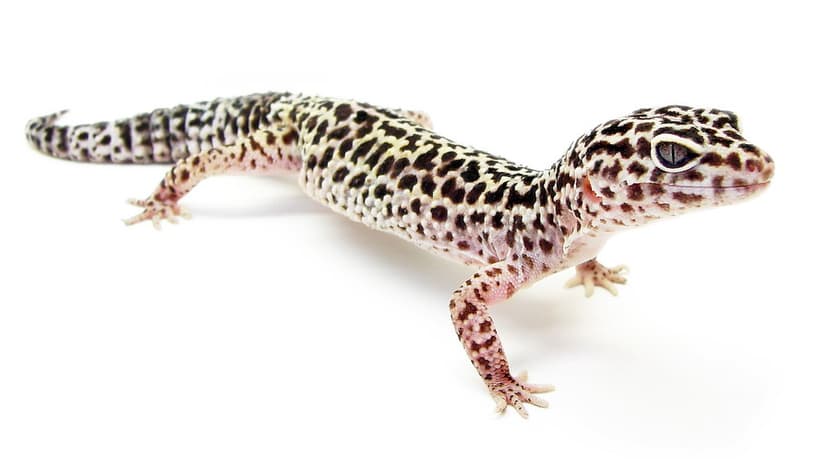
The leopard gecko, scientifically known as Eublepharis macularius, is a ground-dwelling lizard native to the dry grasslands and deserts of South Asia. Renowned for its distinctive spotted pattern, it is a popular pet, often considered the first domesticated lizard species. These geckos possess unique features like movable eyelids and thick, fat-storing tails.

Asian water monitor
The Asian water monitor (Varanus salvator) is a large lizard native to South and Southeast Asia, recognized as the second-largest lizard species after the Komodo dragon. These semiaquatic reptiles are excellent swimmers and inhabit riparian areas, adapting well to environments near human civilization. They are carnivorous, with a diverse diet, and play a role in ecosystems by consuming carrion.

Nile monitor
The Nile monitor is a large lizard native to Sub-Saharan Africa, known for its muscular build, powerful jaws, and striking coloration. It is an adaptable predator found near water bodies and is also recognized for its invasive populations in parts of North America. Despite its size, it is often kept as a pet, though its aggressive nature and significant care requirements pose challenges.