
Vinales anole
The Vinales anole, also known as the Cuban stream anole, is a species of lizard endemic to the Viñales region of western Cuba. This blue-eyed anole is characterized by its lack of a dewlap in both sexes and its semi-aquatic adaptations, allowing it to dive into water to escape predators and even run across its surface. It primarily inhabits densely vegetated, shaded areas near streams.
Key Facts
- ›Endemic to the VIñales region of western Cuba.
- ›Possesses blue eyes and lacks a dewlap in both males and females.
- ›Semi-aquatic, capable of diving underwater for extended periods and running across water surfaces.
- ›Feeds on small aquatic animals like frogs, shrimp, and fish.
- ›Has highly hydrophobic skin which aids in breathing and water expulsion.
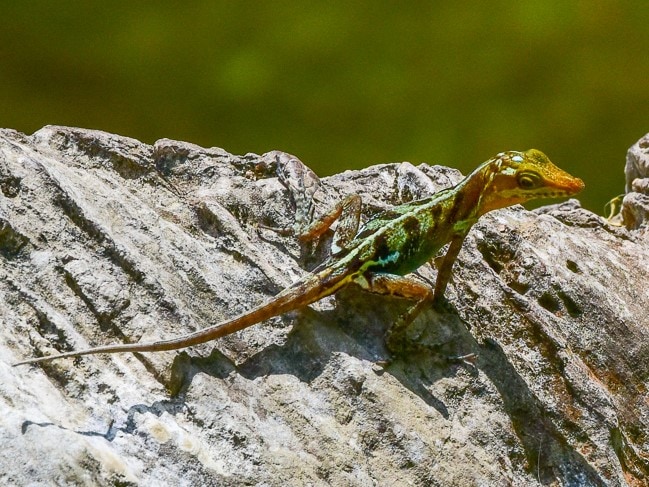
Cuban Stream Anole
Cuba
Streamside Habitats, Densely Vegetated Areas, Shaded Habitats
- Blue-Eyed Species.
- Relatively Large Anole.
- Males Reach Up To 12.3 cm Snout-To-Vent Length.
- Females Reach Up To 8.3 cm Snout-To-Vent Length.
- Completely Lacks A Dewlap In Both Sexes.
- Possesses Highly Hydrophobic Skin.
Small Animals, Frogs, Shrimp, Fish
Fast To Retreat., Dives Into Water To Escape Predators., Can Remain Submerged For Extended Periods ., Can Run Bipedally Across Water., Semi-Aquatic Behavior.
About Vinales anole
Vinales Anole (Anolis vermiculatus)
The Vinales anole, scientifically known as Anolis vermiculatus and also referred to as the Cuban stream anole, is a distinctive lizard species endemic to the Viñales region of Pinar del Río Province in western Cuba. This species is notable for its striking blue eyes and for being one of the few anoles that completely lacks a dewlap in both males and females.
Habitat and Behavior
The Vinales anole thrives in densely vegetated and heavily shaded environments, preferring locations close to water sources like streams. Its semi-aquatic nature is a key behavioral trait; when faced with potential threats, it will quickly retreat and dive into water, sometimes remaining submerged for nearly an hour. Furthermore, it exhibits the remarkable ability to run bipedally across the surface of the water, a characteristic shared with other semi-aquatic lizards.
Physical Characteristics and Diet
This species is considered a relatively large anole, with males reaching up to 12.3 cm (4.8 inches) in snout-to-vent length and females up to 8.3 cm (3.3 inches). Its diet primarily consists of small aquatic animals, including frogs, shrimp, and fish, which it actively hunts in its watery habitat. The Vinales anole possesses highly hydrophobic skin, a specialized adaptation that aids in its aquatic lifestyle by maintaining a thin layer of air on its surface when submerged, potentially assisting with respiration and allowing it to shed water efficiently upon exiting.
Source: Wikipedia ↗
Frequently Asked Questions
What is the Vinales anole?
The Vinales anole, scientifically known as Anolis vermiculatus, is a species of lizard found exclusively in the Viñales region of Cuba. It is distinguished by its blue eyes and semi-aquatic lifestyle.
Where does the Vinales anole live?
This species is endemic to the Viñales region of Pinar del Río Province in western Cuba. It prefers densely vegetated and heavily shaded habitats situated close to water, particularly streams.
What are the distinctive physical features of the Vinales anole?
The Vinales anole is a relatively large anole with striking blue eyes. A unique characteristic is the complete absence of a dewlap in both males and females, a trait shared by only one other anole species.
How does the Vinales anole behave, especially around water?
This anole is known for its quick retreat behavior and its ability to dive into water to evade threats, sometimes remaining submerged for up to an hour. It can also run bipedally across the water's surface, an adaptation shared with other species.
What does the Vinales anole eat?
The diet of the Vinales anole consists of small animals, which are frequently caught in the water. This includes prey such as frogs, shrimp, and small fish.
What adaptations does the Vinales anole have for its semi-aquatic lifestyle?
Vinales anoles possess highly hydrophobic skin. This characteristic creates a thin air layer on the skin surface when submerged, potentially aiding in respiration and facilitating rapid drying upon exiting the water.
Related Lizards

Ablepharus
Ablepharus, commonly known as snake-eyed skinks, are small lizards distinguished by fused eyelids that prevent blinking, similar to snakes. They inhabit dry fields, hills, and rocky areas, often concealed within leaf litter. These skinks possess shiny, bronze scales and a characteristic dark stripe along their sides, feeding primarily on small insects and mollusks.

Acanthocercus atricollis
The black-necked agama, Acanthocercus atricollis, is a species of tree agama found across East, Central, and southern Africa. These lizards are known for forming structured colonies and are often found in high densities near human settlements due to reduced predator presence. They are primarily insectivorous ambush predators.

Agama agama
The common agama, also known as the red-headed rock agama, is a widespread lizard species native to sub-Saharan Africa and introduced to Florida. It is characterized by its distinct coloration, with males exhibiting blue bodies and yellow tails, while females and subordinates have olive green heads. These lizards are diurnal, territorial, and primarily insectivorous, playing an important role in their ecosystems.