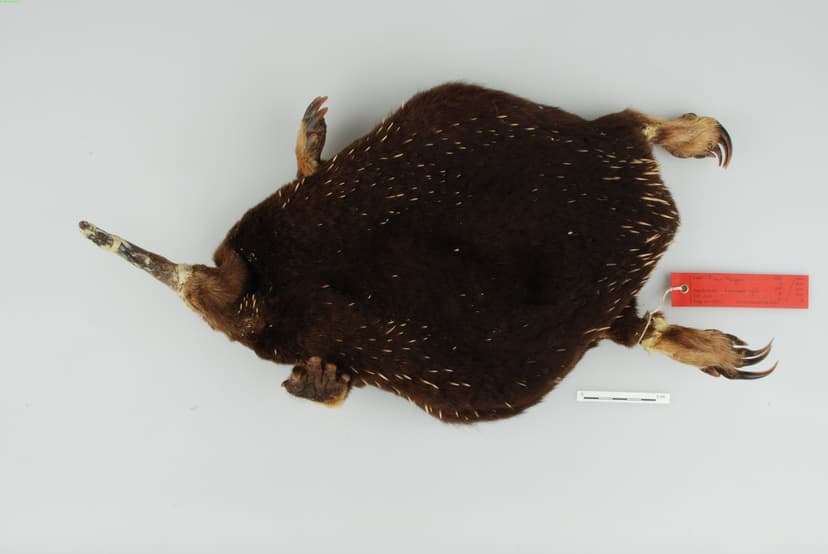
Western long-beaked echidna
Mammalia, Monotremata, Zaglossus·Critically Endangered·long snout·Western long-beaked echidna
The western long-beaked echidna (Zaglossus bruijnii), also known as Bruijn's long-beaked echidna, is the largest extant monotreme and a critically endangered species. It is characterized by its egg-laying ability, long snout, and fur that almost obscures its spines. Primarily found in the montane forests of Western New Guinea, its presence in Australia is debated but suggested by a historical specimen and indigenous accounts. This species is significant for its unique evolutionary position and faces threats from habitat loss and hunting.
Key Facts
- ›Largest extant monotreme.
- ›Egg-laying mammal.
- ›Distinguished by three (rarely four) claws on fore and hind feet.
- ›Longer snout compared to short-beaked echidna.
- ›Spines are nearly indistinguishable from long fur.
- ›Found in hill and montane forests.
- ›Considered a delicacy in some regions.
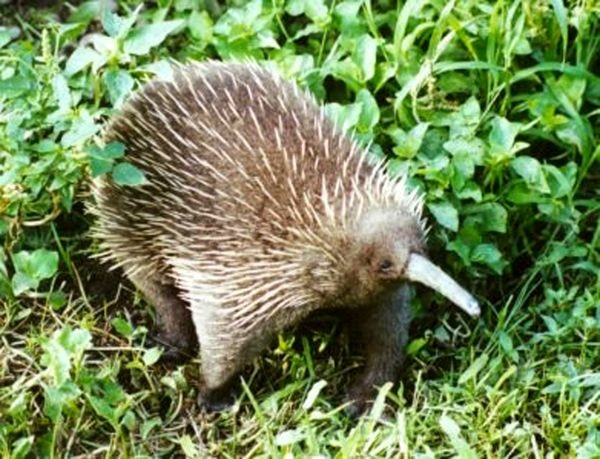
Hill Forests, Montane Forests
- Largest Extant Monotreme.
- Reaches Up To 16.5 Kilograms.
- Long Snout That Turns Downward.
- Spines Are Almost Indistinguishable From Long Fur.
- Three Claws On Fore and Hind Feet.
Forages For Earthworms., Habitat Preference For Forests.
Walking, Burrowing
About Western long-beaked echidna
The western long-beaked echidna (Zaglossus bruijnii), also referred to as Bruijn's long-beaked echidna, stands as the largest living monotreme. This unique mammal is characterized by its ability to lay eggs, a trait shared with reptiles and birds, while also possessing mammary glands to nourish its young. It is one of four extant echidna species and one of three within the Zaglossus genus, all of which are found in New Guinea.
Description and Habitat
This species is distinguished by its substantial size, capable of reaching up to 16.5 kilograms, and a notably long snout that curves downwards. Its spines are remarkably subtle, being almost indistinguishable from its dense fur. A key distinguishing feature among Zaglossus species is the number of claws on its fore and hind feet, which is typically three, though occasionally four. The western long-beaked echidna prefers the environment of hill and montane forests, typically found at elevations up to 2,500 meters in the Bird's Head and Bomberai Peninsulas of Western New Guinea, Indonesia.
Distribution and Conservation Status
The conservation status of the western long-beaked echidna is listed as Critically Endangered by the IUCN. Its populations have declined significantly due to human activities, notably habitat loss and hunting. Despite commercial hunting being banned by the Indonesian government, traditional hunting practices are still permitted, contributing to the species' precarious state. There is ongoing debate regarding its presence in Australia, with a historical specimen from the Kimberley region suggesting a possible past or even present occurrence, although this is contested by some researchers who believe the specimen may have been mislabeled.
Diet and Behavior
Unlike its short-beaked echidna relative, which primarily consumes ants and termites, the western long-beaked echidna has a diet consisting mainly of earthworms. Its behavioral patterns are adapted to its forest habitat, where it forages for its food.
Source: Wikipedia ↗
Frequently Asked Questions
What is the western long-beaked echidna?
The western long-beaked echidna is an egg-laying mammal belonging to the Zaglossus genus. It is the largest living monotreme and is distinguished by its long snout and fur that largely conceals its spines.
Where does the western long-beaked echidna live?
This species is primarily found in the Bird's Head and Bomberai Peninsulas in Western New Guinea, Indonesia. Its preferred habitats are hill and montane forests at elevations up to 2,500 meters.
What does the western long-beaked echidna eat?
Unlike the short-beaked echidna, the western long-beaked echidna's diet consists mainly of earthworms. This differs from its relative which primarily consumes ants and termites.
What are the conservation concerns for the western long-beaked echidna?
The western long-beaked echidna is listed as Critically Endangered by the IUCN due to significant population declines. Major threats include habitat loss and hunting, as the species is considered a delicacy.
Is the western long-beaked echidna found in Australia?
While primarily found in New Guinea, a single specimen collected in 1901 in Australia's Kimberley region suggests a potential historical or even extant presence. However, this is debated, with some researchers believing the specimen was mislabeled.