Conepatus
Skunk
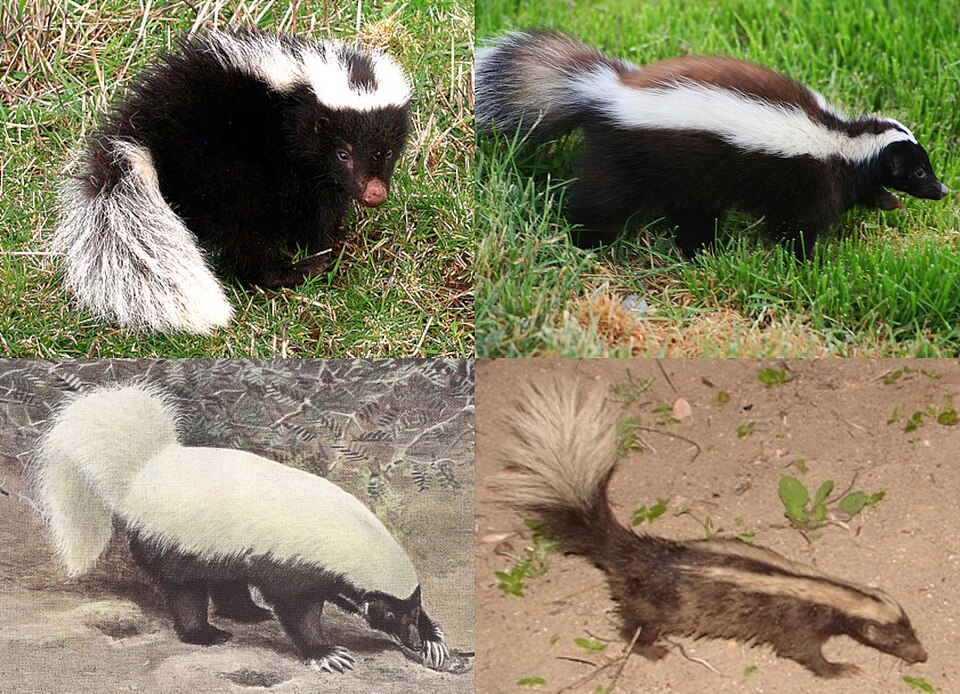
Conepatus, commonly known as hog-nosed skunks, are a genus of skunks native to the Americas. They are distinctive for their white backs and tails, black underparts, and a pig-like snout used for rooting in the earth. These nocturnal animals are primarily insectivorous and possess strong digging capabilities.
Key Facts
- ›Native to the Americas, with species found across North, Central, and South America.
- ›Characterized by a naked, pig-like snout used for rooting and strong claws for digging.
- ›Primarily insectivorous, feeding on beetles, larvae, and other insects dug from the ground.
- ›Possess coarse, harsh fur, unlike the finer coats of some other skunk species.
- ›Nocturnal animals, often less frequently seen than other skunks due to their habits.
- ›Some species are among the largest skunks, while others are considerably smaller.
Hog-Nosed Skunk
North America, South America
Brush Habitat, Semi-Open Grasslands, Rocky Terrain, Stream Beds, Desert-Scrub, Mesquite Grassland, Bottom-Lands of Watercourses, Canyons, Rocky Mountain Slopes
- Nocturnal
- Rooting Behavior Using Their Snout
- Digging For Prey Using Strong Claws and Muscular Forequarters
- Create Their Own Burrows Or Occupy Deserted Burrows and Natural Cavities
- Conservation Status Concerns For the American Hog-Nosed Skunk Due To Infrequent Sightings.
About Conepatus
The genus Conepatus, commonly known as hog-nosed skunks, comprises a group of skunks native to the Americas. These animals are a distinct lineage within the Mephitidae family, easily recognizable by their unique physical adaptations and coloration.
Physical Characteristics and Adaptations
Hog-nosed skunks are characterized by their white backs and tails set against black underparts. Their most prominent feature is the elongation of their nose into a distinct, naked snout, resembling that of a pig. This specialized snout is used for rooting in the earth to unearth prey. Complementing this are their front feet, which are armed with long, heavy claws, and their strong forequarters, which provide the muscular development needed for efficient digging, much like a badger. Their fur is notably coarse and harsh.
Habitat and Distribution
The geographic range of hog-nosed skunks extends across both North and South America. They inhabit a variety of environments, including brush habitats, semi-open grasslands, rocky terrain, stream beds, desert-scrub, and mesquite grasslands. They are also found along the bottom-lands of watercourses and in canyons and on rocky mountain slopes. Hog-nosed skunks construct their own burrows, often situated within banks or beneath rocks and tree roots, though they will also utilize abandoned burrows or natural rock cavities for shelter.
Diet and Behavior
Hog-nosed skunks are primarily insectivorous, with their diet consisting mainly of beetles, beetle larvae, and other insect larvae that they excavate from the ground using their specialized snouts and claws. They are strictly nocturnal animals, meaning they are most active during the night. This behavior, combined with their preference for sheltered burrows, often makes them less frequently observed than other skunk species, even in areas where they are numerous.
Species and Conservation
Research has led to the merging of previously distinct species, such as the western hog-nosed skunk (Conepatus mesoleucus) and the American hog-nosed skunk (Conepatus leuconotus), with Conepatus leuconotus now representing the correct scientific name for the combined populations. Infrequent sightings of the American hog-nosed skunk have raised concerns regarding its conservation status.
Source: Wikipedia ↗
Frequently Asked Questions
What is a hog-nosed skunk?
A hog-nosed skunk is a member of the genus Conepatus, a group of skunks native to the Americas. They are distinguished by their elongated, naked snouts, which they use for rooting in the ground, similar to a pig.
What do hog-nosed skunks eat?
Hog-nosed skunks are primarily insectivorous. They use their specialized snouts and strong digging claws to unearth beetles, insect larvae, and other ground-dwelling insects.
Where do hog-nosed skunks live?
Their geographic distribution spans the Americas, from parts of the United States and Mexico in the north, down through Central America, and into South America, including regions like Argentina, Chile, and Brazil.
What are the physical characteristics of hog-nosed skunks?
They typically have white backs and tails with black undersides. Their most notable feature is the pig-like snout, adapted for digging. They also possess long, heavy claws on their front feet, well-suited for excavating prey.
Are hog-nosed skunks nocturnal?
Yes, hog-nosed skunks are strictly nocturnal. This means they are primarily active during the night, which contributes to them being less frequently observed than other skunk species.
How do hog-nosed skunks differ from other skunks?
Hog-nosed skunks are set apart by their distinctive snout shape, which is adapted for rooting. Their fur is also described as coarse and harsh, and their tails lack the plumed appearance seen in some other skunk species.