
Eira
Mustelid·Least Concern
The tayra (Eira barbara) is a large, agile omnivore belonging to the mustelid family, native to the Americas and the sole species in its genus. Known for its long body, short dark fur with a unique chest patch, and arboreal adaptations, the tayra inhabits tropical and subtropical forests across Central and South America. It is an opportunistic feeder, adept at climbing and utilizing its sense of smell to locate prey.
Key Facts
- ›The tayra is the only species in the genus Eira.
- ›They have short, dark brown to black fur with a distinctive yellowish or orange chest patch.
- ›Tayras are opportunistic omnivores, feeding on mammals, birds, reptiles, fruits, and honey.
- ›They are expert climbers, using their long tails for balance.
- ›Breeding occurs year-round, with females giving birth to one to three altricial young.
- ›Despite habitat destruction, the species is listed as Least Concern.

Tolomuco, Perico Ligero, Motete, Irara, San Hol, Viejo De Monte, High-Woods Dog, Chien Bois
North America, South America
Tropical Forest, Subtropical Forest, Grassland, Cultivated Areas, Tree Plantations, Farmlands
- Diurnal, Occasionally Active At Dawn/Dusk Or Night
- Expert Climbers
- Use Bounding Gallop When Moving At High Speeds On the Ground
- Can Leap Between Trees
- Generally Avoid Water But Can Swim
- Utilize Scent For Territorial Demarcation and Identifying Other Animals
- Cache Unripe Plantains To Ripen For Consumption
Habitat Destruction For Agricultural Purposes
About Eira
The Tayra: An Agile Omnivore of the Americas
The tayra, scientifically known as Eira barbara, is a distinctive member of the mustelid family, notable as the sole species within the genus Eira. This omnivorous mammal is native to the Americas, inhabiting tropical and subtropical forests across a wide range from Mexico down to South America, and is also found on the island of Trinidad.
Physical Characteristics and Adaptations
Tayras are characterized by their long, agile bodies, reminiscent of large martens or fishers, with a sleek build. Adults typically measure between 56 to 71 cm in body length, complemented by a bushy tail of 37 to 46 cm. Their weight ranges from 2.7 to 7.0 kg, with males generally being larger and more muscular than females. The fur is short and predominantly dark brown to black, displaying a unique yellowish or orange, heart-shaped patch on the chest, which varies in color, shape, and size among individuals and can aid in identification. The fur on the head and neck is lighter, often tan or greyish. Tayras possess short, curved claws well-suited for climbing and running, and their feet have hairless pads surrounded by sensory hairs. They have small, rounded ears, prominent sensory whiskers, and black eyes that can exhibit a blue-green sheen. While they have anal scent glands, they are primarily used for territorial marking rather than defense.
Habitat and Distribution
The natural range of the tayra covers most of South America, with the exceptions of Chile, Uruguay, and some eastern parts of Brazil. In Central America, their distribution extends from Mexico southwards through to Panama. They are generally found in tropical and subtropical forests but are adaptable enough to traverse grasslands and are also observed in cultivated areas, tree plantations, and farmlands, particularly when moving between forest patches at night.
Behavior and Diet
Tayras are primarily diurnal, though they may exhibit activity during twilight hours or at night. Their social structure is not extensively documented, but they are often observed alone, though groups, likely mothers with offspring, have been noted. As opportunistic omnivores, their diet is diverse, including rodents, other small mammals, birds, reptiles, and invertebrates. They also climb trees to forage for fruits and honey. Their hunting strategy relies heavily on their keen sense of smell, as their eyesight is relatively poor; they actively chase prey once located rather than stalking it. Tayras are exceptional climbers, using their long tails for balance, and they move with a bounding gallop on the ground. They generally avoid water but are capable swimmers when necessary. An interesting behavioral adaptation observed is their practice of caching unripe plantains to allow them to ripen before consumption.
Reproduction and Conservation
Reproduction in tayras occurs year-round, with females entering estrus multiple times annually. Unlike some other mustelids, they do not exhibit embryonic diapause, and their gestation period lasts approximately 63 to 67 days. Females typically give birth to one to three young, which are born altricial, blind, and covered in black fur. The young open their eyes around 35 to 47 days and begin consuming solid food by 70 days, being fully weaned by 100 days. They start practicing hunting behaviors around three months of age and reach their full size by six months, dispersing to establish their own territories by ten months.
While wild tayra populations are experiencing a slow decline, particularly in Mexico, primarily due to habitat loss resulting from agricultural expansion, the species is currently listed as being of Least Concern by conservation authorities. This designation reflects its relatively widespread distribution and adaptable nature despite ongoing environmental pressures.
Source: Wikipedia ↗
Frequently Asked Questions
What is a tayra?
The tayra (Eira barbara) is a species of omnivorous mammal belonging to the mustelid family. It is the only member of its genus and is native to the Americas, found in tropical and subtropical forests.
What does a tayra look like?
Tayras are long and agile, resembling a large marten or fisher. They have short, dark brown to black fur, a bushy tail, and a unique yellowish or orange heart-shaped spot on their chest. Their head and neck fur is lighter, typically tan or greyish.
Where do tayras live?
Tayras are found throughout most of South America and all of Central America, ranging from Mexico to Panama, and also on the island of Trinidad. They primarily inhabit tropical and subtropical forests but can be found in grasslands and cultivated areas.
What do tayras eat?
As opportunistic omnivores, tayras hunt small mammals, birds, lizards, and invertebrates. They also climb trees to consume fruits and honey. They locate prey mainly by scent.
How do tayras behave?
Tayras are generally diurnal but can be active at dawn or dusk. They are expert climbers and move with a bounding gallop on the ground. While they typically avoid water, they can swim if necessary. Their social behavior is not well understood, though they are often seen alone.
How do tayras reproduce?
Tayras breed year-round, with gestation lasting 63 to 67 days. Females give birth to one to three young, which are born blind and covered in black fur. The young are weaned by about 100 days and become independent by 10 months.
Related Mustelids, Otters & Raccoons
Bassariscus
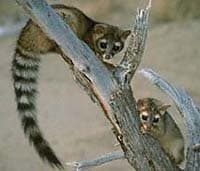
Bassariscus is a genus of two extant species, the ringtail and the cacomistle, belonging to the family Procyonidae. These animals are closely related to raccoons, diverging approximately 10 million years ago. Known for their semi-arid to tropical forest habitats, they are distinguished by a more digitigrade stance compared to other procyonids.

Arctonyx
Hog badgers are three species within the genus Arctonyx, a group of mustelids belonging to the subfamily Melinae, which also includes true badgers. These distinct species were identified through a 2008 study, expanding the genus from a single species to three: the greater hog badger, the northern hog badger, and the Sumatran hog badger.

Enhydra
Enhydra is a genus of mustelids that includes the modern sea otter and two extinct species. It represents the sole living genus within the bunodont otters, characterized by non-blade carnassials with rounded cusps. The genus is believed to have originated in the Atlantic, with its lineage later becoming established in the North Pacific.