
Acineta
Acineta, abbreviated as Acn in horticultural trade, is a small genus of orchids native to tropical mountainous forests from Mexico to western South America. These striking epiphytic orchids are known for their large, plicate leaves and pendent inflorescences bearing numerous fragrant, cup-shaped flowers that range from pale yellow to reddish-brown. Their rigid labellum, with sidelobes that meet at a central callus, is a distinctive feature.
Key Facts
- ›Acineta orchids are found in tropical mountainous forests at altitudes up to 2,000 meters.
- ›They are primarily epiphytic but can also grow lithophytically on steep embankments.
- ›The flowers are typically cup-shaped, fragrant, and vary in color from pale yellow to reddish-brown.
- ›Their labellum is rigid and features sidelobes that converge on a central callus.
- ›Pollination is carried out by male bees from the genera Eulaema or Eufriesia.
- ›Some consider Acineta orchids to be among the most splendid in appearance.
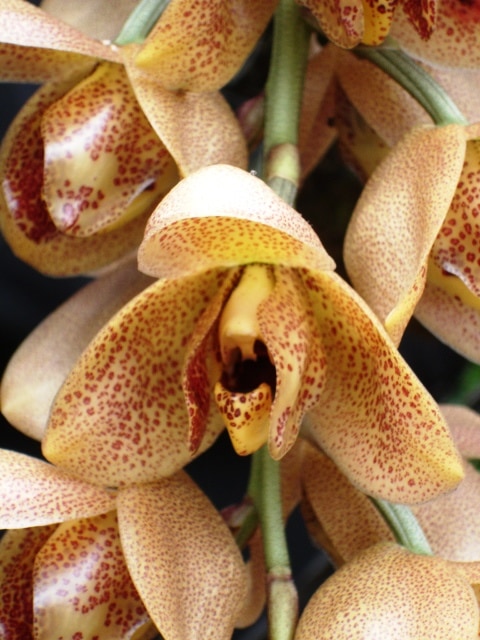
Acn
Epiphytic, Lithophytic
Pale Yellow, Reddish Brown
Eulaema Bees, Eufriesia Bees
About Acineta
Acineta, abbreviated as Acn in horticultural circles, is a genus of orchids belonging to the Orchidaceae family. The genus name originates from the Greek word 'akinetos,' meaning immobile, a reference to the rigid structure of the orchid's labellum, or lip.
Distribution and Habitat
These orchids are native to the tropical mountainous forests stretching from Mexico to western South America. They are typically found at altitudes reaching up to 2,000 meters. While primarily epiphytic, growing on trees, Acineta species can also exhibit a lithophytic habit, taking root on steep embankments.
Morphology and Characteristics
The leaves of Acineta are large and plicate, with parallel veins, bearing a resemblance to those of the genera Peristeria and Lycaste. The flower structure, however, is more closely related to Stanhopea. Acineta species produce pendent inflorescences that bear racemes of numerous flowers. These flowers are characteristically cup-shaped, fragrant, and range in color from pale yellow to reddish-brown.
A distinctive feature of the Acineta flower is its rigid labellum. The sidelobes of the lip converge to form a central callus, and the basal part of the lip, the hypochile, is at least as long as the sidelobes. The column of the flower is covered in fine hairs (pubescent). Most Acineta species possess two pollinia, with the notable exception of Acineta dalessandroi, which has four pollinia, leading some botanists to question its placement within this genus.
Pollination
Pollination of Acineta orchids is carried out by male bees from the genera Eulaema and Eufriesia. These bees are believed to be attracted by the fragrance of the flowers.
Horticultural Significance
Some enthusiasts consider Acineta orchids to be among the most splendid and visually appealing of all orchid species. Intergeneric hybrids involving Acineta have also been created, such as Aciopea (Acineta × Stanhopea) and Acinbreea (Acineta × Embreea). Acineta is grouped within the subtribe Stanhopeinae.
Source: Wikipedia ↗
Frequently Asked Questions
What does the name Acineta mean?
The name Acineta is derived from the Greek word 'akinetos', which means immobile. This name refers to the rigid structure of the orchid's labellum (lip).
Where do Acineta orchids naturally grow?
Acineta orchids are found in tropical mountainous forests spanning from Mexico down to western South America. They typically grow at altitudes of up to 2,000 meters.
What is the growth habit of Acineta orchids?
These orchids are predominantly epiphytic, meaning they grow on other plants, usually trees. However, they can also be found growing lithophytically on steep embankments.
What do Acineta flowers look like?
Acineta flowers are generally cup-shaped and fragrant, with colors ranging from pale yellow to reddish-brown. A key characteristic is their rigid labellum, where the sidelobes come together to form a central callus.
How are Acineta orchids pollinated?
The pollination of Acineta orchids is facilitated by male bees belonging to the genera Eulaema or Eufriesia. These insects are attracted to the fragrant flowers.
Are Acineta orchids considered attractive?
Yes, some observers regard Acineta orchids as among the most splendid-looking of all orchids, highlighting their striking appearance.
Related Orchid species
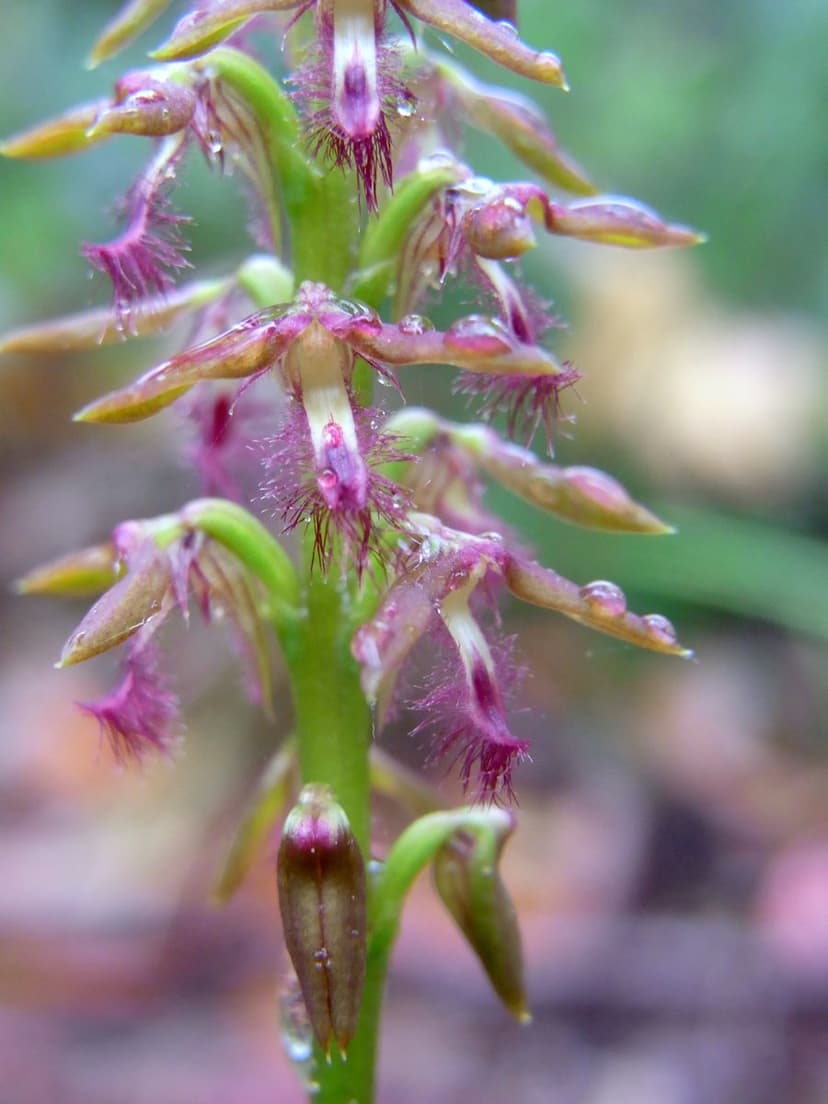
Genoplesium
Genoplesium, commonly known as midge orchids, is a genus of approximately 50 flowering plant species belonging to the Orchidaceae family, native to Australia, New Zealand, and New Caledonia. These terrestrial herbs are characterized by a single basal leaf and small, often scented flowers that are attractive to insect pollinators. There is ongoing taxonomic debate, with some scientists proposing that most Genoplesium species should be reclassified under the genus Corunastylis.

Diodonopsis
Diodonopsis is a genus of flowering plants within the Orchidaceae family. It is native to a region stretching from Costa Rica down to Western South America. The genus is characterized by its diverse species, each with unique botanical attributes.
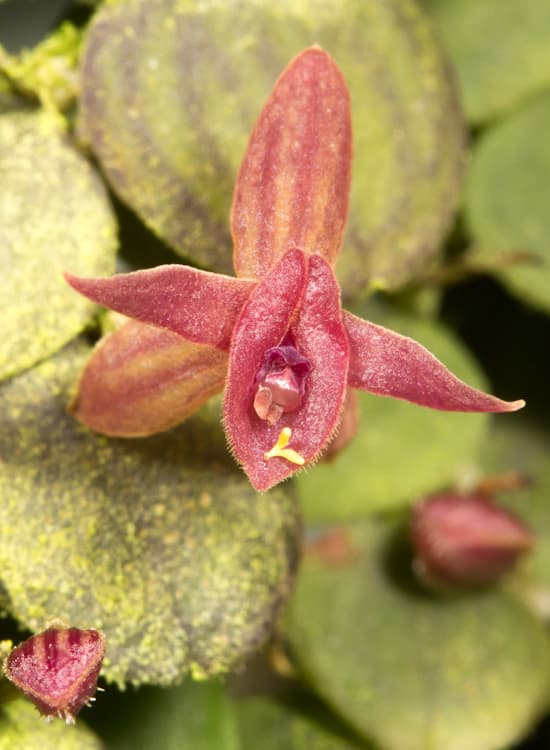
Andinia
Andinia is a genus of flowering plants belonging to the Orchidaceae family, encompassing 79 accepted species. These orchids are native to the Western South America region, extending to Venezuela. The genus is distinguished by its diverse species within the orchid family.