
Genoplesium
Genoplesium·often scented
Genoplesium, commonly known as midge orchids, is a genus of approximately 50 flowering plant species belonging to the Orchidaceae family, native to Australia, New Zealand, and New Caledonia. These terrestrial herbs are characterized by a single basal leaf and small, often scented flowers that are attractive to insect pollinators. There is ongoing taxonomic debate, with some scientists proposing that most Genoplesium species should be reclassified under the genus Corunastylis.
Key Facts
- ›Genoplesium comprises about 50 species of terrestrial orchids.
- ›They are found in Australia, New Zealand, and New Caledonia.
- ›Plants typically have a single basal leaf and small, often scented flowers.
- ›Flowers are non-resupinate and often have reddish-brown or purple coloring.
- ›Pollination is primarily by flies from the Superfamily Chloropoidea.
- ›Some species are known to self-pollinate.
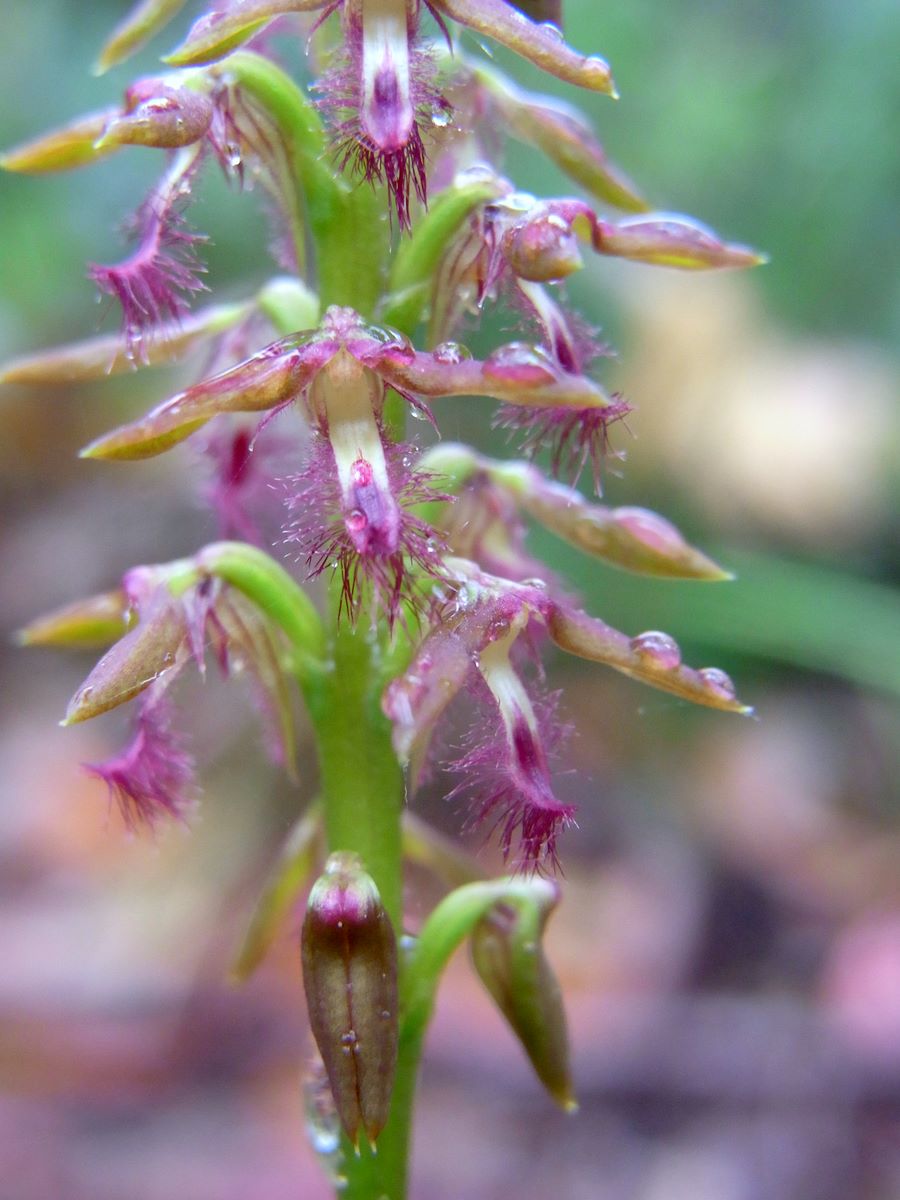
Midge Orchids
Terrestrial
Summer, Autumn, Winter
Flies, Chloropoidea
About Genoplesium
Genoplesium, commonly known as midge orchids, represents a genus of approximately 50 species of flowering plants within the Orchidaceae family. These orchids are predominantly found in Australia, with some species extending to New Zealand and New Caledonia. They are characterized as terrestrial herbs, meaning they grow in soil rather than on trees or rocks.
Description and Characteristics
Plants in the Genoplesium genus are perennial, deciduous, sympodial herbs that typically possess a few fine, inconspicuous roots and a pair of roughly spherical tubers. These tubers are partially encased in a protective fibrous sheath. A distinguishing feature of Genoplesium is its single, long, cylindrical leaf, which develops near the base of the plant and is fused to the flowering stem. This leaf is solid in flowering plants but hollow in sterile ones. The genus is named from the Ancient Greek words 'genos' (race, stock, kind) and 'plesios' (near), alluding to their resemblance to orchids in the genus Prasophyllum.
Flowers and Reproduction
The inflorescence of Genoplesium is a spike or raceme bearing numerous non-resupinate flowers. These blooms are often noted for their reddish-brown or purple parts and a pleasant, often fruity, scent. The flowers are small but attractive to their insect pollinators. A key modification in the orchid flower is the labellum, which is centrally positioned, modified, and joined to the column by a flexible attachment that allows it to vibrate in response to breezes. The edges of the labellum may exhibit fine teeth, glands, or hairs, and a fleshy callus plate is often present. Following flowering, a dehiscent capsule containing up to 500 seeds develops, indicating that reproduction primarily relies on seeds rather than vegetative propagation through 'daughter' tubers.
Distribution and Habitat
Genoplesium species are mainly distributed across Queensland, New South Wales, Victoria, Tasmania, and South Australia. New Caledonia hosts one species, while New Zealand has two. While most Genoplesium species are found in near-coastal areas, they also inhabit montane and sub-alpine regions. Their preferred habitats in Australia include moss beds over rock, forests, woodlands, heathlands, and mallee scrub. In New Zealand, they grow in grassy areas and swamps, and the New Caledonian species thrives in stunted maquis vegetation.
Ecology and Pollination
The ecological role of Genoplesium is closely tied to its pollination strategy. The small size, dull coloration, and swaying hairy parts of the flowers suggest adaptations for pollination by small flies. Scientific studies have indicated that certain Genoplesium species are exclusively pollinated by flies belonging to the Superfamily Chloropoidea (now classified within the Family Milichiidae). However, a few species, such as the New Zealand native Genoplesium nudum, appear to be self-pollinating.
Taxonomy and Naming
The genus Genoplesium was first formally described by Robert Brown in 1810. The type species is G. baueri. A significant point of contention in orchid taxonomy involves the classification of these species. David Jones and Mark Clements proposed reassigning most Genoplesium species to the genus Corunastylis. This taxonomic revision has been adopted by institutions like the Royal Botanic Gardens Victoria, which lists twelve species under Corunastylis, though it is not universally recognized by all global databases, such as Plants of the World Online.
Source: Wikipedia ↗
Frequently Asked Questions
What kind of orchid is Genoplesium?
Genoplesium is a genus of terrestrial orchids, commonly referred to as midge orchids. They grow from tubers in the ground rather than on trees or rocks.
Where are midge orchids found naturally?
Midge orchids are native to Australia, specifically Queensland, New South Wales, Victoria, Tasmania, and South Australia. They also occur in New Zealand and New Caledonia.
What do Genoplesium flowers look like?
The flowers of Genoplesium are typically small but can be quite attractive, often exhibiting reddish-brown or purple hues. They are characterized by a modified petal called a labellum, which is joined to the column by a flexible attachment, allowing it to vibrate in the breeze.
What attracts pollinators to Genoplesium flowers?
The flowers are often scented, with a fruity smell, and are attractive to their insect pollinators. Some characteristics, like their small size and hairy parts waving in a breeze, suggest pollination by small flies.
What is the taxonomic status of Genoplesium?
There is some disagreement regarding the classification of Genoplesium. Some taxonomists propose that most species should be moved to the genus Corunastylis, a view accepted by some botanical institutions but not universally by all.
Related Orchid species
Acineta
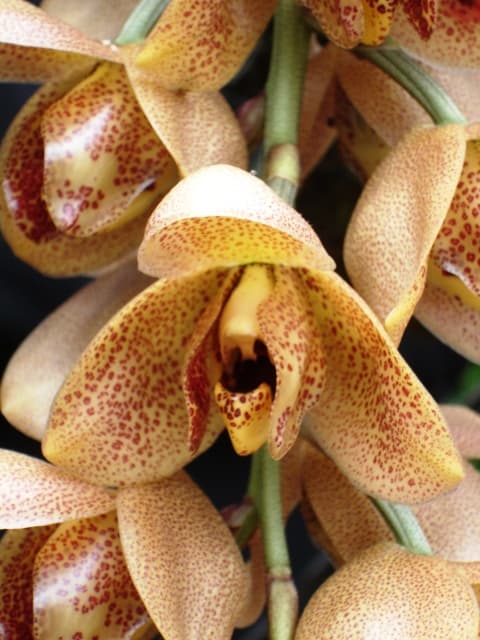
Acineta, abbreviated as Acn in horticultural trade, is a small genus of orchids native to tropical mountainous forests from Mexico to western South America. These striking epiphytic orchids are known for their large, plicate leaves and pendent inflorescences bearing numerous fragrant, cup-shaped flowers that range from pale yellow to reddish-brown. Their rigid labellum, with sidelobes that meet at a central callus, is a distinctive feature.

Calochilus
Calochilus, commonly known as beard orchids, is a genus of approximately 30 terrestrial orchid species belonging to the family Orchidaceae. These orchids are distinctive for their densely hairy labellum, which gives them their common name. Primarily found in Australia, with some species extending to New Zealand, New Guinea, and New Caledonia, they are terrestrial herbs that typically have a single leaf or are leafless, and reproduce through self-pollination if cross-pollination fails.
Cryptostylis
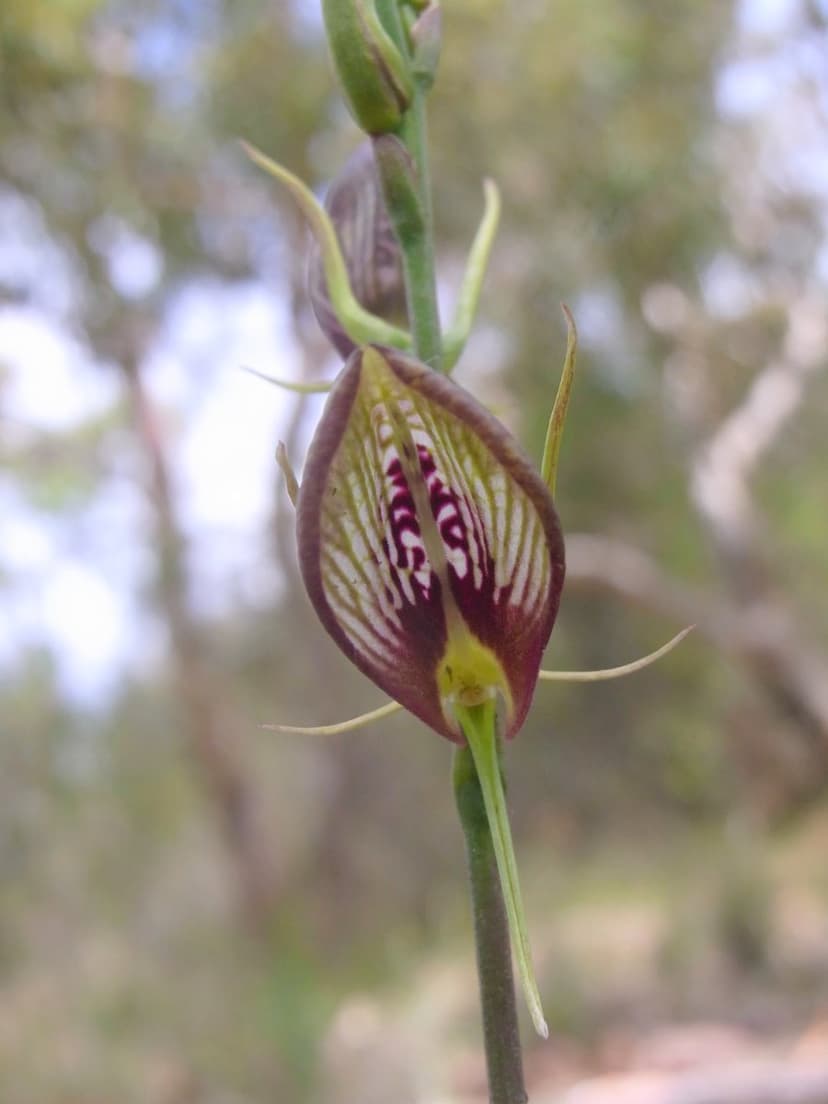
Cryptostylis, commonly known as tongue orchids, is a genus of terrestrial orchids found in South Asia, Southeast Asia, and the South Pacific. These orchids are distinguished by their prominent labellum, which is the most conspicuous part of the flower, and their unique pollination strategy involving wasps attempting to mate with the flowers. At least some species are pollinated through a process called pseudocopulation, where male wasps mistake the flower for a female wasp.