
Brassia
Brassia
Brassia is a genus of orchids native to Mexico, Central America, the West Indies, and northern South America, with one species reaching Florida. These orchids are distinguished by their long, spreading tepals, earning them the common name "spider orchid." They are epiphytic plants found in wet forests and are known for their unique pollination method involving spider-hunter wasps.
Key Facts
- ›Commonly known as spider orchids due to their long, spreading tepals.
- ›Native to Mexico, Central America, the West Indies, and northern South America.
- ›Primarily epiphytic, growing in wet forests.
- ›Pollinated by female spider-hunter wasps (Pepsis and Campsomeris genera).
- ›Features large pseudobulbs with one or two leaves at the apex.
- ›Inflorescences are lateral, unbranched, and many-flowered.
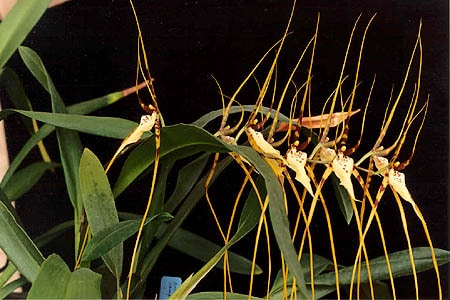
Spider Orchid
Epiphytic
Spider-Hunter Wasps
About Brassia
Brassia is a genus of orchids belonging to the subtribe Oncidiinae, renowned for their striking "spider orchid" appearance. These plants are native to a broad geographic area encompassing Mexico, Central America, the West Indies, and northern South America, with one species, Brassia caudata, extending its range into Florida. The genus was established in honor of William Brass, a British botanist and illustrator.
Description and Characteristics
Species within the Brassia genus are commonly cultivated and are easily recognizable by their characteristic long and spreading tepals. In some varieties, these tepals can exceed 50 centimeters in length, which is the source of their popular name, spider orchid. Brassia orchids are primarily epiphytic, meaning they grow on other plants, typically trees, and are found in wet forest environments. Their natural habitat spans from sea level up to altitudes below 1500 meters, with the Peruvian Andes noted as a center of diversity for the genus.
Physically, Brassia plants possess large, elliptic-oblong pseudobulbs topped with one or two leaves. They produce lateral, unbranched inflorescences that bear numerous flowers and are characterized by small floral bracts. A notable botanical feature is that the lip of the flower is not attached to the column. The pollinarium, a part of the orchid's reproductive structure, exhibits a narrow stipe.
Specialized Pollination
A particularly fascinating aspect of Brassia orchids is their highly specific pollination method, which relies on entomophily, or pollination by insects. Specifically, Brassia orchids are pollinated by female spider-hunter wasps of the genera Pepsis and Campsomeris. These wasps are deceived by the orchid's mimicry, mistaking it for prey. When a wasp attempts to sting the lip of the flower, it inadvertently comes into contact with the pollinarium, which then adheres to the wasp's head. As the wasp flies to another Brassia flower, pollination occurs.
Distribution
While most Brassia species have a restricted geographic occurrence, Brassia caudata is an exception, as it is found across the entire native range of the genus. The genus as a whole represents a significant component of the orchid flora in its native regions, contributing to the biodiversity of these wet forest ecosystems.
Source: Wikipedia ↗
Frequently Asked Questions
What is a Brassia orchid?
Brassia is a genus of orchids classified in the subtribe Oncidiinae. They are known for their distinctive long, spreading tepals that resemble spider legs, which is why they are commonly called spider orchids.
Where do Brassia orchids come from?
Brassia orchids are native to a wide geographic range including Mexico, Central America, the West Indies, and northern South America. One species, Brassia caudata, can even be found in Florida.
What makes Brassia orchids unique?
Their most striking feature is their long and spreading tepals, which can exceed 50 cm in length, giving them the "spider orchid" moniker. They also have a specialized pollination mechanism involving spider-hunter wasps.
How do Brassia orchids get pollinated?
Brassia orchids employ entomophily, specifically pollination by female spider-hunter wasps. The wasps are attracted by mimicry and attempt to sting the lip, inadvertently coming into contact with the pollinarium, which then sticks to their head and facilitates pollination in other flowers.
What are the growing conditions for Brassia orchids?
Brassia species are epiphytic and grow in wet forests, typically from sea level up to altitudes of 1500 meters. They prefer humid environments found in these forest settings.
Related Orchid species

Leochilus
Leochilus is a genus of flowering plants belonging to the orchid family, Orchidaceae. These orchids are native to a wide range across Mexico, Central America, northern South America, the West Indies, and Florida. They are characterized by their diverse distribution and are recognized within the botanical community for their specific morphological traits.
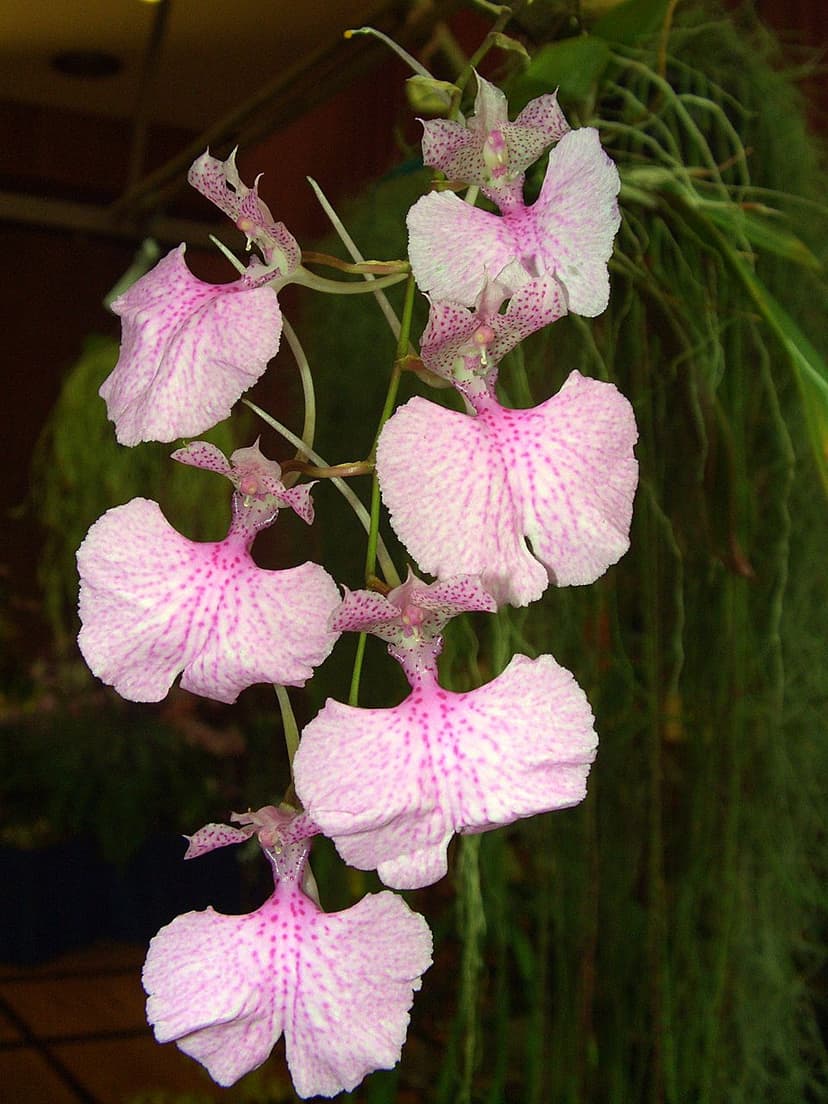
Comparettia
Comparettia is a genus of orchids native to tropical America, encompassing approximately 50-70 species. These orchids are found across Mexico, Central America, the West Indies, and northern South America, with a notable presence in the Andes. The genus has seen significant expansion in recent years due to the reclassification of numerous species from other orchid genera.
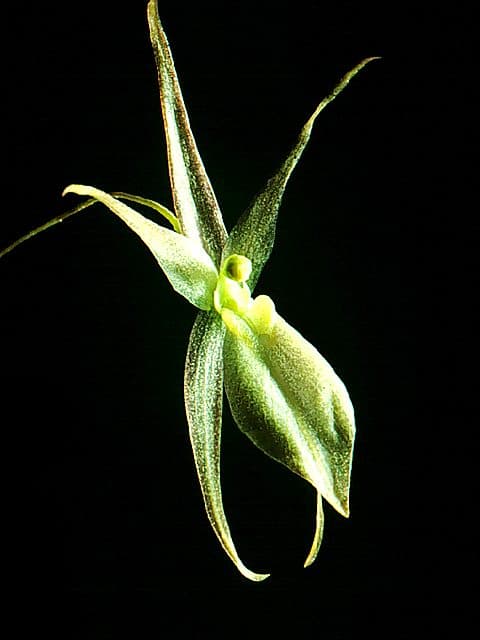
Homalopetalum
Homalopetalum is a genus of flowering plants belonging to the orchid family, Orchidaceae. It encompasses eight recognized species primarily found in Central America, northern South America, Mexico, and the West Indies. These orchids are distinguished by their varied geographic distribution and their place within the diverse orchid family.