
Cooktownia
Cooktownia
Cooktownia robertsii, commonly known as the mystery orchid, is a rare ground orchid endemic to far north Queensland, Australia. This unusual species is distinguished by its ground-hugging leaves and small green flowers, which are apomictic, meaning they form seeds without fertilization and lack both pollen and a receptive stigma.
Key Facts
- ›Endemic to a small area south of Cooktown in far north Queensland, Australia.
- ›A rare ground orchid with two dark green, ground-hugging leaves.
- ›Produces 3 to 9 small green flowers on a flowering stem.
- ›Flowers are apomictic, lacking pollen and a receptive stigma, and form seeds without fertilization.
- ›Flowering typically occurs between March and may.
- ›Found in open forest in grassy areas with red gravelly or stony loam.
Mystery Orchid
Terrestrial
March, April, May
About Cooktownia
Cooktownia robertsii
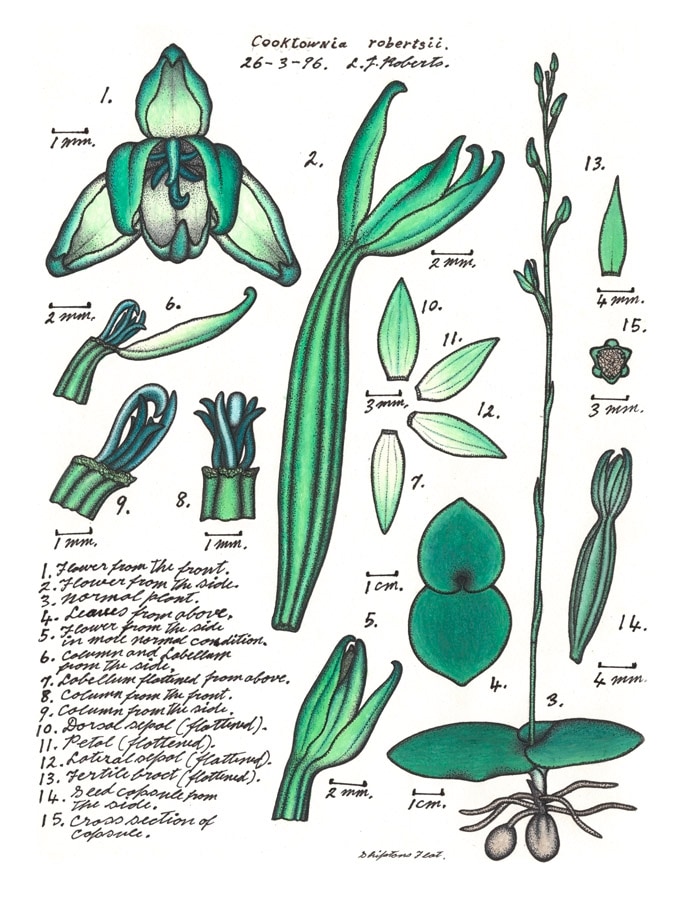
Cooktownia robertsii, commonly known as the mystery orchid, is a rare terrestrial orchid species that is the sole member of the genus Cooktownia. It is endemic to a limited area in tropical far north Queensland, Australia, specifically found south of Cooktown.
Description and Characteristics
The mystery orchid is characterized by its two dark green, ground-hugging leaves, which are typically egg-shaped to almost round and measure between 15–30 mm in length and 10–30 mm in width. The plant produces a flowering stem that can grow between 150–250 mm (6–10 inches) tall, bearing between three and nine small green flowers. These flowers, approximately 7 mm long and 2.5 mm wide, feature darker lines and have lance-shaped to egg-shaped sepals and petals. A particularly unusual characteristic of Cooktownia robertsii is its highly modified column, which notably lacks both pollen and a receptive stigma. Despite this, the flowers are apomictic, meaning they are capable of forming seeds without fertilization.
Taxonomy and Naming
The species was formally described by David Jones in 1997, based on a specimen collected in 1993. The genus name, Cooktownia, is derived from Cooktown, the closest town to the orchid's discovery location. The specific epithet, robertsii, honors Lewis Roberts, who discovered the orchid in the 1980s near his home in Shipton's Flat.
Distribution and Habitat
Cooktownia robertsii is known only from a small, localized area south of Cooktown in far north Queensland. Despite its rarity and limited distribution, it can be locally common and is noted for being easily cultivated and reproducing freely. It thrives in open forest environments within grassy areas, typically growing in red gravelly or stony loam soils at altitudes ranging from 300 to 500 meters (1,000–2,000 feet). The blooming period for this species generally occurs between March and May.
Source: Wikipedia ↗
Frequently Asked Questions
What is the scientific name of the mystery orchid?
The scientific name of the mystery orchid is Cooktownia robertsii. It is the sole species within the genus Cooktownia.
Where does Cooktownia robertsii grow naturally?
Cooktownia robertsii is endemic to a small region south of Cooktown in the tropical far north of Queensland, Australia. It is found in open forests within grassy areas, preferring red gravelly or stony loam soil.
What makes the mystery orchid unusual?
The mystery orchid is unusual because its flowers are apomictic. This means they can form seeds without fertilization, and the flowers themselves lack both pollen and a receptive stigma.
What does Cooktownia robertsii look like?
This orchid has two dark green, ground-hugging leaves that are egg-shaped to almost round. It bears between three and nine small green flowers, about 7 mm long, on a flowering stem that can reach up to 250 mm in height.
When does the mystery orchid bloom?
The flowering period for Cooktownia robertsii typically occurs between March and May. The flowers are borne on a stem that emerges from the ground.
Related Orchid species
Dendrobium
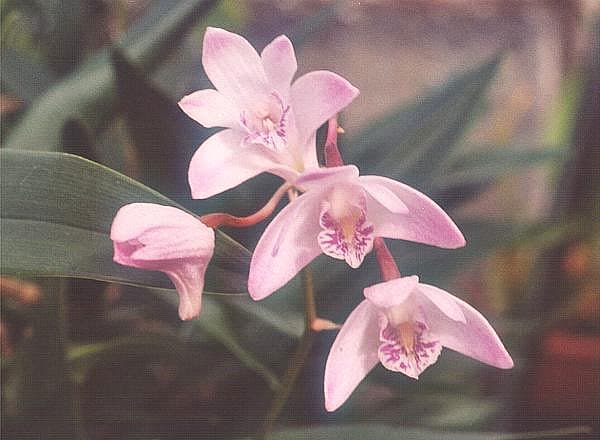
Dendrobium is a vast genus of orchids, predominantly epiphytic or lithophytic, found across Asia and the Pacific. These orchids are characterized by their creeping roots and unique flower arrangements, often featuring contrasting labellums and a central callus. Many species are cultivated for their horticultural value and some are recognized for their air-purifying qualities and medicinal properties.

Dipodium
Dipodium, commonly known as hyacinth orchids, is a genus of approximately forty orchid species native to tropical, subtropical, and temperate regions across Southeast Asia, New Guinea, the Pacific Islands, and Australia. This genus is distinguished by its large, often colorful flowers borne on tall stems, and includes species that are either terrestrial or climbing, some with leaves and some leafless.
Dienia
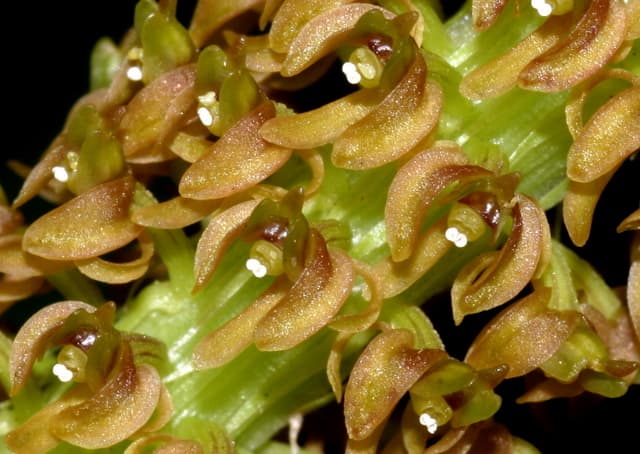
Dienia, commonly known as snout orchids, is a genus of six species of evergreen orchids found across Southeast Asia, Australia, Micronesia, and Melanesia. These plants are characterized by their fleshy, above-ground stems, large pleated leaves, and small, non-resupinate flowers with a distinctive short, tongue-like labellum. While primarily terrestrial, some species can grow as epiphytes.