
Dendrobium
Dendrobium
Dendrobium is a vast genus of orchids, predominantly epiphytic or lithophytic, found across Asia and the Pacific. These orchids are characterized by their creeping roots and unique flower arrangements, often featuring contrasting labellums and a central callus. Many species are cultivated for their horticultural value and some are recognized for their air-purifying qualities and medicinal properties.
Key Facts
- ›Contains over 1,800 species found in diverse habitats across Asia and the Pacific.
- ›Primarily epiphytic or lithophytic, with roots growing on trees or rocks.
- ›Flowers can be white, green, yellow, or pink to purple, often with distinct labellum colors.
- ›Some species are used in traditional Chinese medicine and are known for air purification.
- ›Many species and hybrids are significant in horticulture and have been designated as floral emblems.
- ›The genus name 'Dendrobium' is derived from Greek words meaning 'tree' and 'life', referencing their epiphytic habit.
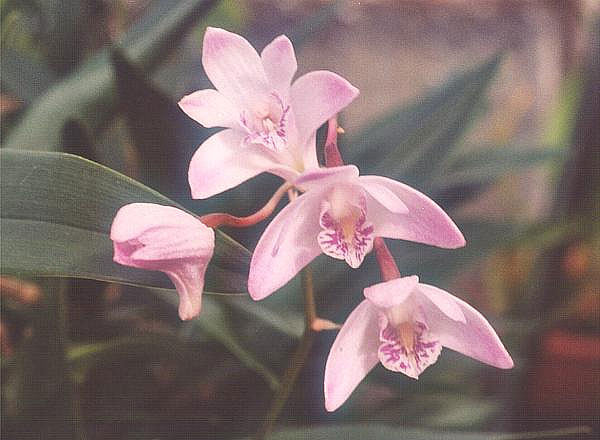
Noble Dendrobium, Cooktown Orchid, Anggrek Larat, Sekikoku, Beautiful Giant-Flowered Dendrobium, Fried-Egg Orchid, Anggrek Serat
China, Japan, India, Philippines, Indonesia, Australia, New Guinea, Vietnam, Pacific Islands, Himalayan Mountains
Epiphytic, Lithophytic, Terrestrial
About Dendrobium
Dendrobium is a very large genus of orchids, encompassing over 1,800 species that are primarily epiphytic or lithophytic. These orchids are widespread, found in diverse habitats across much of south, east, and southeast Asia, including countries like China, Japan, India, the Philippines, Indonesia, Australia, and New Guinea, as well as many Pacific islands. The genus name itself is derived from the Greek words 'dendron' (tree) and 'bios' (life), aptly describing the epiphytic habit of most species, whose roots typically creep over the surfaces of trees or rocks rather than taking root in soil.
Description and Characteristics
Species within the Dendrobium genus are sympodial herbs. They typically possess cylindrical roots that emerge from the base of pseudobulbs. When present, these pseudobulbs are often hard, cane-like, cylindrical, or cone-shaped, and are usually covered by leaf bases. Each shoot can develop up to six leaves, arranged in two ranks, which vary in shape from linear to oblong and typically last for only one growing season. The flowers, which can be numerous, are borne along an unbranched flowering stem. They can be resupinate or non-resupinate and may be short- or long-lived. The flower colors commonly include white, green, yellow, or shades of pink to purple, frequently featuring contrasting tones on the labellum. The sepals and petals are generally free and similar to each other, but distinct from the labellum, which is often egg-shaped and may feature a callus of narrow, parallel ridges.
Taxonomy and Distribution
The genus was first formally described by Olof Swartz in 1799. While various attempts have been made to subdivide Dendrobium into smaller genera based on morphological characteristics and later DNA markers, most proposed reclassifications have not been widely accepted by global botanical authorities. Dendrobium orchids have demonstrated remarkable adaptability, thriving in a wide array of habitats. Their distribution spans from the elevated altitudes of the Himalayan mountains to the humid lowland tropical forests and even the arid conditions found in parts of the Australian desert.
Horticultural and Medicinal Significance
Dendrobium is a highly valued genus in horticulture, with many species and their hybrids being sought after by collectors. The abbreviation 'Den.' is commonly used for the genus by the Royal Horticultural Society. Notable hybrids, such as those derived from Den. nobile, have expanded the color range of the original species. Some Dendrobium species are recognized for their air-purifying capabilities, reportedly filtering pollutants like toluene and xylene from the air. Beyond horticulture, several species hold medicinal importance. Dendrobium nobile, known as shí hú or shí hú lán in traditional Chinese medicine, is one of the 50 fundamental herbs used. Indigenous peoples in Australia, such as the Aboriginal people of Queensland, have historically referred to Dendrobium canaliculatum as 'yamberin', with its bulbous stems being edible after leaf removal.
Cultural Importance
Numerous Dendrobium species and cultivars are significant as floral emblems in various cultures and have been depicted in art. For instance, Dendrobium formosum is the emblem of Ranong Province in Thailand, while Dendrobium 'Kim il Sung' (Kimilsungia) serves as the emblem of North Korea. Dendrobium nobile is the emblem of Sikkim, India, and Dendrobium bigibbum, known as the Cooktown orchid, is the floral emblem of Queensland, Australia, and Maluku province, Indonesia. The Cooktown orchid has been featured on Australian postage stamps, and various Dendrobium greges have appeared on Singaporean currency notes. The fictional detective Nero Wolfe was also an orchid enthusiast who grew species like the golden-bow dendrobium (D. chrysotoxum).
Source: Wikipedia ↗
Frequently Asked Questions
What are Dendrobium orchids?
Dendrobium orchids are a large genus of predominantly epiphytic and lithophytic plants belonging to the Orchidaceae family. They are found in a wide range of habitats across much of south, east, and southeast Asia, as well as many Pacific islands.
What is the natural habitat of Dendrobium orchids?
Dendrobium species have adapted to a variety of environments, ranging from high altitudes in the Himalayas to lowland tropical forests and even arid regions like the Australian desert. They typically grow on trees or rocks rather than in soil.
What do Dendrobium flowers look like?
Dendrobium flowers are arranged along an unbranched flowering stem and can vary greatly in number. Their colors are typically white, green, yellow, or pink to purple, often featuring contrasting colors on the labellum, which is usually egg-shaped and may have a central callus.
Are Dendrobium orchids used for anything other than decoration?
Yes, several Dendrobium species are cultivated for medicinal purposes, with D. nobile being a key herb in traditional Chinese medicine. Additionally, many species are known for their ability to filter air pollutants like toluene and xylene.
Are there specific Dendrobium species known for cultural significance?
Many Dendrobium species and cultivars are recognized as floral emblems in various regions. Examples include Dendrobium nobile for Sikkim, India, and Dendrobium bigibbum (Cooktown orchid) for Queensland, Australia, and Maluku province, Indonesia.
What does the name 'Dendrobium' mean?
The name 'Dendrobium' originates from ancient Greek words: 'dendron' meaning 'tree' and 'bios' meaning 'life'. This name reflects the epiphytic nature of most species within the genus, as they grow on trees.
Related Orchid species

Dipodium
Dipodium, commonly known as hyacinth orchids, is a genus of approximately forty orchid species native to tropical, subtropical, and temperate regions across Southeast Asia, New Guinea, the Pacific Islands, and Australia. This genus is distinguished by its large, often colorful flowers borne on tall stems, and includes species that are either terrestrial or climbing, some with leaves and some leafless.
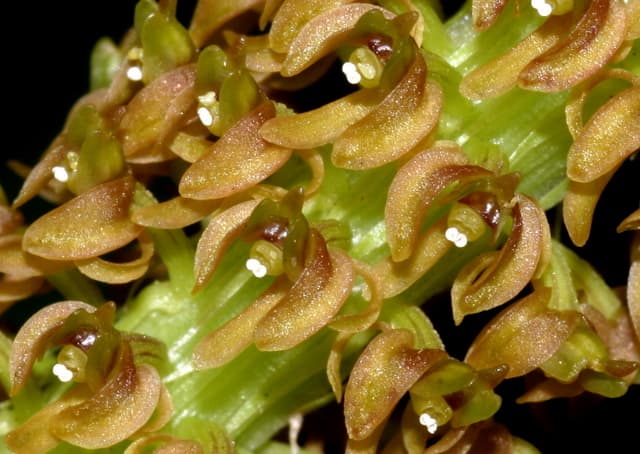
Dienia
Dienia, commonly known as snout orchids, is a genus of six species of evergreen orchids found across Southeast Asia, Australia, Micronesia, and Melanesia. These plants are characterized by their fleshy, above-ground stems, large pleated leaves, and small, non-resupinate flowers with a distinctive short, tongue-like labellum. While primarily terrestrial, some species can grow as epiphytes.
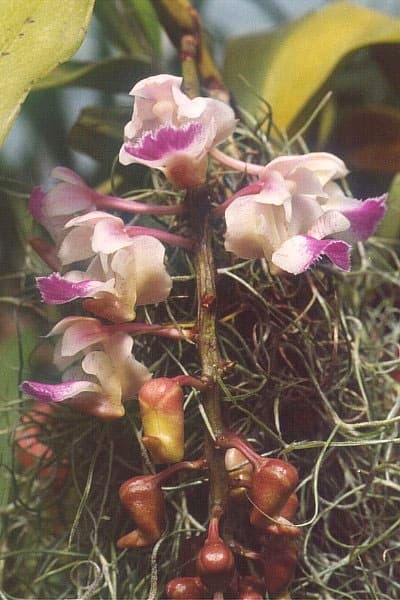
Aerides
Aerides, commonly known as cat's-tail orchids and fox brush orchids, is a genus of tropical epiphytic orchids native to Asia. These orchids are highly valued in horticulture for their showy, fragrant, and long-lasting flowers, which typically appear in racemes and are often white with colorful edges.