
Cryptostylis
Cryptostylis·none (to humans)
Cryptostylis, commonly known as tongue orchids, is a genus of terrestrial orchids found in South Asia, Southeast Asia, and the South Pacific. These orchids are distinguished by their prominent labellum, which is the most conspicuous part of the flower, and their unique pollination strategy involving wasps attempting to mate with the flowers. At least some species are pollinated through a process called pseudocopulation, where male wasps mistake the flower for a female wasp.
Key Facts
- ›Terrestrial perennial herbs with thick, branching underground rhizomes.
- ›Flowers are non-resupinate with narrow sepals and petals, and a prominent labellum.
- ›Pollinated by ichneumon wasps (Lissopimpla excelsa) through pseudocopulation.
- ›Found in regions from India and Sri Lanka to Australia and New Zealand.
- ›Around twenty-five species are known, with some species endemic to Australia.
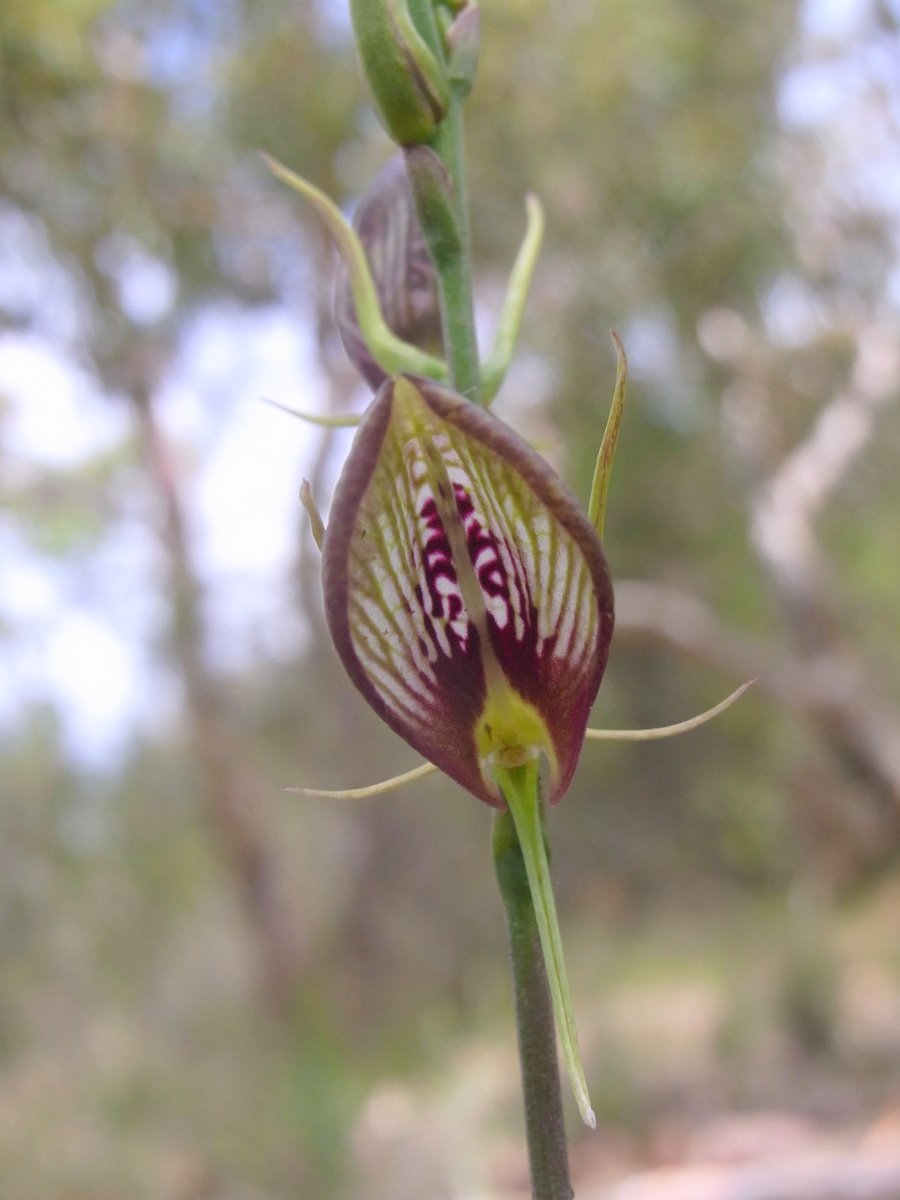
Tongue Orchids
South Asia, Southeast Asia, South Pacific, India, Sri Lanka, Thailand, Taiwan, Philippines, Malaysia, Indonesia, Australia, New Zealand, Samoa, New Caledonia, Vanuatu
Terrestrial
Dull Coloured
Ichneumon Wasp
About Cryptostylis
Cryptostylis, commonly known as tongue orchids, is a genus of terrestrial orchids belonging to the Orchidaceae family. These plants are found across a broad geographical range, extending from South Asia and Southeast Asia through to Australia and New Zealand, as well as islands in the South Pacific.
Description and Morphology
Plants in the genus Cryptostylis are perennial herbs that grow terrestrially, characterized by a thick, branching underground rhizome from which vertical shoots emerge. They possess thick, fleshy roots but do not form tubers. Each year, new leaves are produced, typically numbering one to a few, arising from the base of the flowering stem. These leaves have a distinct petiole and are often purplish on their lower surface. However, some species, such as C. hunteriana, are saprophytic and leafless.
The inflorescence is a raceme bearing one to a few non-resupinate flowers. The sepals and petals, excluding the labellum, are narrow and similar in appearance to each other. The most striking feature of the flower is the labellum, which is attached to the base of the column and closely encircles it. Following pollination, the fruit develops as a thin-walled capsule containing a large number of seeds.
Taxonomy and Naming
Cryptostylis was first formally described by the botanist Robert Brown in 1810. The genus name is derived from the Ancient Greek words 'kryptos' (hidden) and 'stylos' (pillar or column), a reference to the column of the orchid being partially concealed by the labellum. Molecular studies of the DNA of tongue orchids indicate that the genus belongs to the tribe Diurideae within the orchid family, having previously been placed in the Cranichideae. Cryptostylis and the New Caledonian endemic genus Coilochilus together form the subtribe Cryptostylidinae.
Distribution and Habitat
The genus comprises approximately twenty-five species, distributed from India, Sri Lanka, Thailand, Taiwan, the Philippines, and Malaysia, extending through Indonesia to Australia and New Zealand. The distribution also includes Samoa, New Caledonia, and Vanuatu. Five species are found in Australia, with three of these being endemic to the continent. Tongue orchids inhabit a range of environments, from temperate to tropical regions, and can be found in sites with well-drained soil as well as swampy areas. Cryptostylis arachnites has the widest distribution within the genus and typically grows in rainforests, often in mountainous terrain.
Ecology and Pollination
All Australian species of Cryptostylis are pollinated by the ichneumon wasp, Lissopimpla excelsa, often referred to as the orchid dupe wasp. This pollination occurs through a phenomenon known as pseudocopulation, where male wasps attempt to mate with the flowers, mistaking them for female wasps. This remarkable strategy was first documented by Australian naturalist Edith Coleman in 1928. While mimicry of female insect parts by flowers has been observed in other orchid genera, Cryptostylis is unique in that the observed insect has been documented ejecting seminal fluid containing sperm cells. It is suggested that male wasps are more strongly attracted to the orchid flowers than to actual female wasps of the same species. Color perception studies indicate that the flowers and female wasps share similar colors when viewed under the visual system of hymenopterans, despite appearing different to human eyes. The visual spectrum of wasps includes green, blue, and ultraviolet wavelengths. Unusually for insect-pollinated orchids, several Cryptostylis species are pollinated by the same wasp species, whereas many other orchids that mimic insects are highly species-specific in their pollinators. Although undetectable to humans, the flowers emit an odor that attracts the orchid dupe wasp, and gas chromatography has identified specific compounds responsible for this attraction across different Cryptostylis species.
Source: Wikipedia ↗
Frequently Asked Questions
What are tongue orchids?
Tongue orchids are terrestrial orchids belonging to the genus Cryptostylis. They are characterized by having one to a few stalked leaves at the base of the flowering stem and flowers where the labellum is the most prominent feature.
How are Cryptostylis orchids pollinated?
Many Cryptostylis species are pollinated by male ichneumon wasps (Lissopimpla excelsa) that mistake the flowers for female wasps and attempt to copulate with them. This process is known as pseudocopulation.
Where are tongue orchids found?
The genus Cryptostylis is distributed across a wide range, from India, Sri Lanka, and Southeast Asia through to Australia and New Zealand, as well as islands in the South Pacific like Samoa and New Caledonia.
What makes the flower of a Cryptostylis orchid distinctive?
The most conspicuous part of the Cryptostylis flower is the labellum, which is significantly larger and more prominent than the sepals and petals. The column of the flower is also partially hidden by this labellum.
Do Cryptostylis orchids have a scent?
While Cryptostylis orchids do not have a smell detectable to humans, they do possess an odor that attracts the specific wasp species that pollinates them. This odor is crucial for their pollination strategy.
Related Orchid species

Corybas
Corybas, commonly known as helmet orchids, is a genus of about 120 species of small, perennial, terrestrial herbs in the orchid family. Native to a wide range including Australia, New Zealand, Southeast Asia, and the Himalayas, these orchids are distinctive for their single, fungus-like flower, dominated by a large dorsal sepal and labellum, often resembling a helmet.
Earina
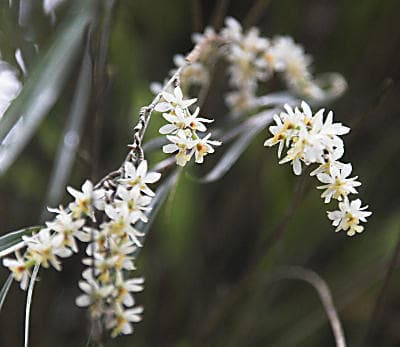
Earina is a genus of orchids belonging to the family Orchidaceae, with seven recognized species primarily found on various Pacific Ocean islands. The New Zealand species are notable for their epiphytic or lithophytic growth habit on mossy tree trunks and rocks, producing abundant, tiny flowers that can create a spectacular display.

Brachycorythis
Brachycorythis is a genus of flowering plants belonging to the orchid family, Orchidaceae. It comprises approximately 40 to 50 species, predominantly found in Africa and Madagascar, with a smaller presence in South and East Asia. These orchids are characterized by their diverse geographical distribution and their inclusion within the large and varied orchid family.