
Dimorphorchis
Dimorphorchis is a genus of nine orchid species found in Southeast Asia and Oceania, remarkable for producing two distinct flower forms on the same plant. These epiphytic or lithophytic herbs are characterized by long stems and leathery leaves, with their inflorescences bearing dimorphic flowers that differ in size, scent, and petal shape.
Key Facts
- ›Contains 9 recognized species.
- ›Native to Papua New Guinea, the Philippines, Indonesia, Malaysia, Solomon Islands, and Brunei.
- ›Distinguished by having two different flower morphs on the same plant.
- ›Flowers closest to the inflorescence base are fragrant and smaller, while others are unscented with wavy petals.
- ›Can grow as epiphytes or lithophytes in rainforests.
- ›Stems can reach up to 200 cm (approx. 6.5 feet) in length.
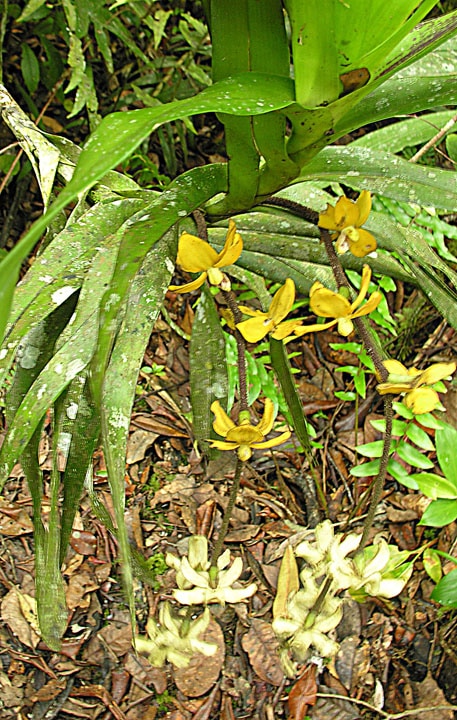
Papua New Guinea, Philippines, Indonesia, Malaysia, Solomon Islands, Brunei
Epiphytic, Lithophytic
About Dimorphorchis
Dimorphorchis is a genus within the Orchidaceae family, comprising nine distinct species. These orchids are naturally found in a diverse range of locations across Southeast Asia and Oceania, including Papua New Guinea, the Philippines, Indonesia, Malaysia, the Solomon Islands, and Brunei. The genus is particularly remarkable for a unique characteristic: the simultaneous presence of two different flower morphs on the same plant, a trait that gives the genus its name.
Vegetative Characteristics
Species within the Dimorphorchis genus are herbaceous, monopodial plants that typically grow as epiphytes, attached to trees, or occasionally as lithophytes, growing on rocks. They possess large, spreading stems that can be pendulous or erect, reaching lengths of up to 200 cm (approximately 6.5 feet). The basal portion of these stems is where the roots emerge. The leaves are arranged distichously, meaning in two opposite rows, and are coriaceous, or leathery, in texture. They are linear in shape, measuring up to 70 cm in length, and terminate in an unequally bilobed or acute apex.
Generative Characteristics
The inflorescences of Dimorphorchis are long and can be either glabrous (smooth) or pubescent (hairy). They may be pendent or erect, and can be either racemose or paniculate. These inflorescences bear flowers that are bisexual and can be dimorphic (heteranthous) or not. A key feature is that the 2-3 flowers closest to the base of the inflorescence are strongly fragrant and slightly smaller, differing in color from the rest of the flowers. These other flowers are unscented and have wavy petals. The reproductive structures include four pollinia grouped in two pairs, each with an elliptic viscidium. The specific pollinators of the genus are not yet known.
Taxonomy and Ecology
The genus Dimorphorchis was formally published by Robert Allen Rolfe in 1919, with Dimorphorchis lowii designated as the type species. Phylogenetic studies place Dimorphorchis as the sistergroup to the genus Thrixspermum within the subtribe Aeridinae. Ecologically, these orchids thrive in rainforest environments, adapting to grow on either trees or rocks.
Source: Wikipedia ↗
Frequently Asked Questions
What is unique about Dimorphorchis flowers?
Dimorphorchis orchids are notable for producing two distinct flower morphs on the same plant. The flowers near the base of the inflorescence are typically smaller and fragrant, while the rest are unscented and possess wavy petals.
Where are Dimorphorchis orchids found naturally?
This genus of orchids is native to a region encompassing Papua New Guinea, the Philippines, Indonesia, Malaysia, the Solomon Islands, and Brunei.
How do Dimorphorchis orchids grow?
Dimorphorchis species exhibit an epiphytic growth habit, meaning they grow on other plants like trees, and can also be found as lithophytes, growing on rocks, primarily within rainforest environments.
What is the meaning behind the name Dimorphorchis?
The generic name Dimorphorchis directly refers to the genus's distinctive characteristic: the presence of two different flower morphs on a single plant.
Are all Dimorphorchis flowers fragrant?
No, not all flowers on a Dimorphorchis plant are fragrant. The flowers located closer to the base of the inflorescence are strongly fragrant, whereas the other flowers on the same inflorescence are unscented.
Related Orchid species
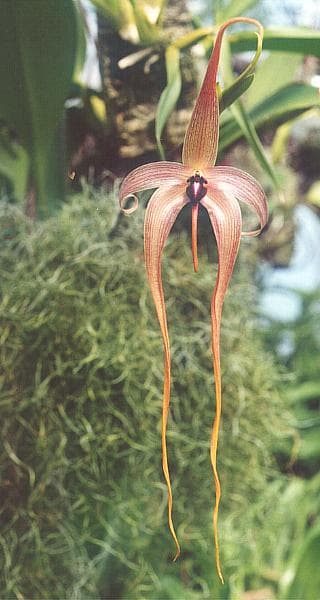
Bulbophyllum
Bulbophyllum is a large genus of orchids primarily found in warmer regions of the world, known for their diverse habitats and unique floral mechanisms. Characterized by creeping rhizomes and pseudobulbs, these orchids exhibit a wide range of flower forms and often emit strong odors to attract pollinators.

Dipodium
Dipodium, commonly known as hyacinth orchids, is a genus of approximately forty orchid species native to tropical, subtropical, and temperate regions across Southeast Asia, New Guinea, the Pacific Islands, and Australia. This genus is distinguished by its large, often colorful flowers borne on tall stems, and includes species that are either terrestrial or climbing, some with leaves and some leafless.
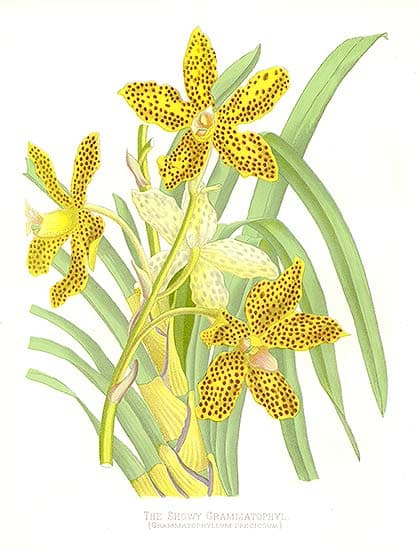
Grammatophyllum
Grammatophyllum is a genus of 13 orchid species known for their large size and distinctive yellow-green to olive-green, waxy flowers marked with dark purplish-red. These epiphytic orchids are native to dense rainforests spanning from Indo-China to the Southwest Pacific islands. The genus includes the "giant orchid" (Grammatophyllum speciosum), recognized as the largest orchid species globally.