
Bulbophyllum
Bulbophyllum is a large genus of orchids primarily found in warmer regions of the world, known for their diverse habitats and unique floral mechanisms. Characterized by creeping rhizomes and pseudobulbs, these orchids exhibit a wide range of flower forms and often emit strong odors to attract pollinators.
Key Facts
- ›Bulbophyllum is the largest genus in the Orchidaceae family, with over 2,800 recorded species.
- ›These orchids are found in diverse habitats across Africa, southern Asia, Latin America, the West Indies, and Pacific islands.
- ›The genus is characterized by thread-like roots, a rhizome, and a pseudobulb, typically bearing a single leaf.
- ›Many species have flowers with strong odors, often resembling rotting carcasses or carrion, to attract flies for pollination.
- ›Some Bulbophyllum species are threatened with extinction and are listed as vulnerable, endangered, or critically endangered by the IUCN.
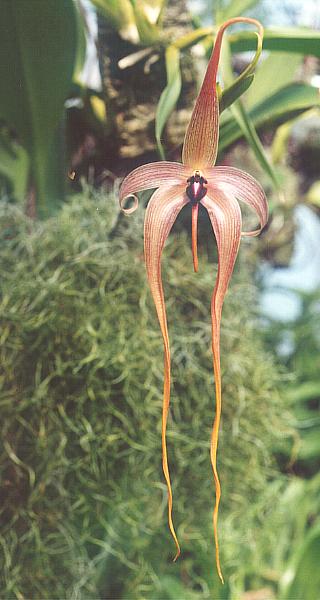
Epiphytic, Lithophytic
Bark Substrate
Flies
About Bulbophyllum
Bulbophyllum: A Diverse Genus of Orchids
The genus Bulbophyllum represents the largest group within the Orchidaceae family, boasting over 2,800 recognized species. These orchids are predominantly epiphytic or lithophytic, meaning they grow on other plants or rocks, respectively. Their distribution is pantropical, spanning vast regions across Africa, southern Asia, Latin America, the West Indies, and numerous islands in the Indian and Pacific Oceans. Papua New Guinea stands out as a significant center of diversity, harboring more than 600 species.
Botanical Characteristics
Bulbophyllum orchids are distinguished by their creeping, thread-like or fibrous roots that anchor them to their hosts. The stem is composed of a rhizome and a pseudobulb, a fleshy structure that typically supports a single leaf. Flowers are arranged on an unbranched inflorescence that emerges from the base of the pseudobulb. The floral structure, while serving as a genus identifier, exhibits remarkable diversity in form, with flowers that can be compound or single, and arranged spirally or in vertical ranks. Sepals and petals vary greatly, and the labellum is often fleshy and hinged.
Ecology and Pollination
A notable ecological characteristic of many Bulbophyllum species is their distinctive floral fragrance, which often mimics the scent of rotting carcasses or carrion. This strategy is highly effective in attracting flies, particularly Dacini fruit flies, which serve as primary pollinators. Some species, however, produce mild and pleasant fragrances, attracting specific fly species through compounds like methyl eugenol. The pollination mechanism often involves a dynamic lip that snaps shut, trapping the fly and facilitating pollinarium removal and pollinia deposition.
Horticulture and Conservation
Bulbophyllum orchids have been a focus for collectors for over a century. They generally require high humidity, good air movement, and moderate light levels to thrive. Cultivation can be challenging due to their sensitivity to root disturbance and their need for consistent moisture, making them less suited for typical houseplants. Many species are continuously blooming throughout the year without a distinct dormancy period. Some species within the genus are facing threats of extinction, with several listed as vulnerable, endangered, or critically endangered by the IUCN, highlighting the importance of conservation efforts.
Source: Wikipedia ↗
Frequently Asked Questions
What is Bulbophyllum?
Bulbophyllum is a large genus of orchids belonging to the family Orchidaceae. It comprises over 2,800 species known for their diverse forms and adaptations, primarily found in warmer regions globally.
Where are Bulbophyllum orchids found?
Bulbophyllum orchids are pantropical and widespread, occurring in Africa, southern Asia, Latin America, the West Indies, and various islands in the Indian and Pacific Oceans. Papua New Guinea is a significant center of diversity with over 600 species.
What are the distinctive features of Bulbophyllum plants?
Bulbophyllum plants typically have thread-like or fibrous roots that creep over surfaces. Their stems consist of a rhizome and a pseudobulb, which usually supports a single leaf. Flowers are borne on an unbranched flowering stem arising from the pseudobulb's base.
Why do some Bulbophyllum flowers smell bad?
Many Bulbophyllum species emit odors resembling rotting carcasses or carrion to attract flies, which are their primary pollinators. This strategy aids in their reproduction by facilitating pollinarium removal and pollinia deposition.
Are Bulbophyllum orchids easy to grow?
Bulbophyllum orchids are generally considered moderate to difficult to cultivate. They require high humidity, good air movement, and a controlled growing environment, making them less suitable as typical houseplants.
What is the origin of the name Bulbophyllum?
The genus name Bulbophyllum is derived from the Greek words 'bolbos' meaning 'bulb' and 'phyllon' meaning 'leaf'. This name refers to the characteristic pseudobulbs on top of which the leaf grows.
Related Orchid species

Cheirostylis
Cheirostylis is a genus of about sixty species of terrestrial orchids known for their distinctive caterpillar-like rhizomes and loose rosettes of leaves. These orchids are found across tropical regions of Africa, Asia, and Australia, producing small, white, hairy flowers as their leaves typically wither. They are often referred to as fleshy jewel orchids or velvet orchids.
Dimorphorchis
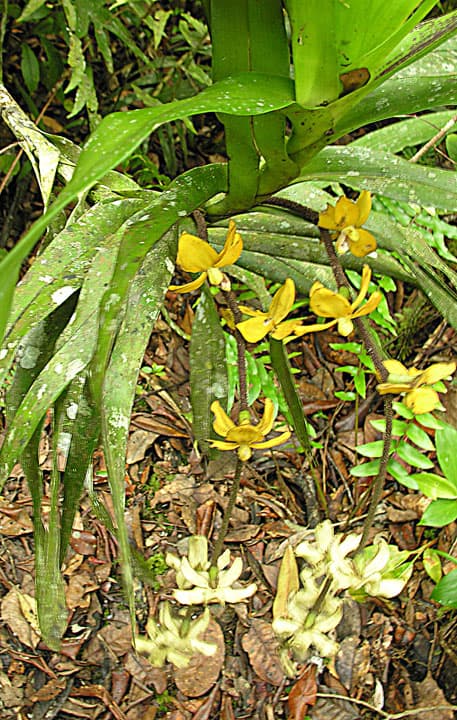
Dimorphorchis is a genus of nine orchid species found in Southeast Asia and Oceania, remarkable for producing two distinct flower forms on the same plant. These epiphytic or lithophytic herbs are characterized by long stems and leathery leaves, with their inflorescences bearing dimorphic flowers that differ in size, scent, and petal shape.

Gastrodia
Gastrodia, commonly known as potato orchids, is a genus of about ninety described species of leafless, terrestrial orchids. These orchids are characterized by fleshy, upright stems and small to medium-sized flowers with narrow sepals and petals, native to diverse regions across Asia, Australia, New Zealand, central Africa, and various islands.