
Disperis
Disperis
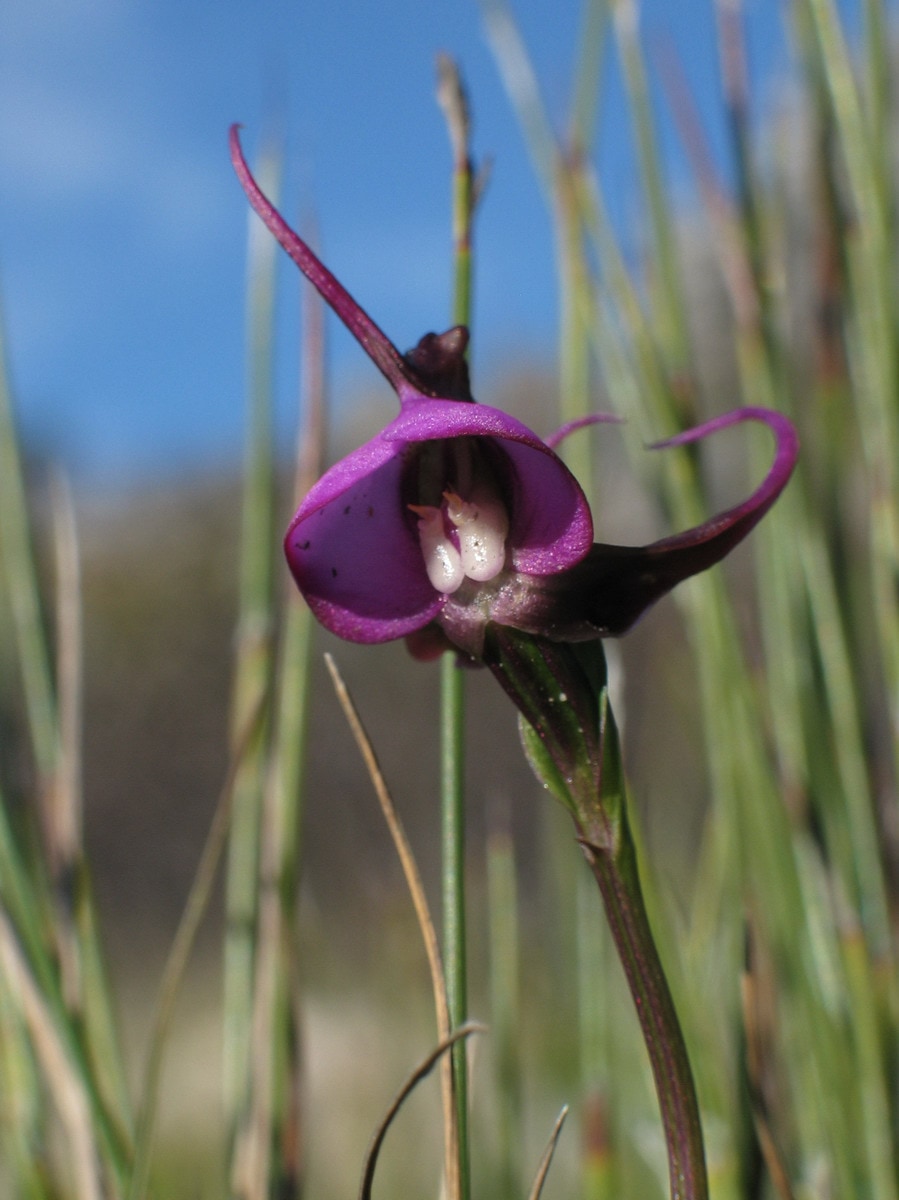
Disperis is a genus of approximately 78 plant species belonging to the orchid family, Orchidaceae. Primarily found in tropical and southern Africa, with extensions to Indian Ocean islands and parts of Asia and Malesia, these orchids are distinguished by the unique pouches formed by their lateral sepals. They are notable for their pollination by oil-collecting bees of the genus Rediviva, which are attracted to oils produced on the lip appendage.
Key Facts
- ›Disperis is a genus of orchids comprising about 78 species.
- ›Most species originate from tropical and southern Africa, with others found in Asia and Malesia.
- ›The genus name "Disperis" refers to the "twice" (dis) "pouches" (pera) formed by the lateral sepals.
- ›Disperis orchids are pollinated by oil-collecting bees of the genus Rediviva.
- ›The genus has been taxonomically placed in the subtribe Brownleeinae, showing relationships with the genus Brownleea.
- ›Disperis is divided into two subgenera: Disperis and Dryorkis, distinguished by their lip appendages.
Oil-Collecting Bees of the Genus Rediviva
About Disperis
The genus Disperis encompasses approximately 78 species of flowering plants within the Orchidaceae family, commonly known as orchids. These plants are predominantly found in the diverse habitats of tropical and southern Africa, extending their range to various Indian Ocean islands. A smaller number of species also occur in the tropical or warmer subtropical regions of Asia and Malesia.
Etymology and Floral Morphology
The scientific name Disperis originates from the ancient Greek words "dís," meaning "twice," and "pḗra," meaning "bag" or "pouch." This name aptly describes a distinctive characteristic of the genus: the formation of pouches by the lateral sepals of their flowers. This unique floral morphology plays a crucial role in their reproductive strategy.
Taxonomy and Relationships
Historically, Disperis has been classified within the subtribe Coryciinae. However, more recent molecular phylogenetic studies have challenged this placement, suggesting the polyphyly of Coryciinae. These studies indicate that Disperis may be more closely related to the genus Brownleea. Based on this evidence, a 2015 classification transferred Disperis to the subtribe Brownleeinae, noting shared characteristics such as similar pollen structure and an upright labellum positioned over the stigma, as well as the presence of a median sepal spur in many species.
Subgenera
Disperis is broadly divided into two subgenera: Disperis and Dryorkis. Subgenus Disperis comprises around 30 species, predominantly from southern Africa, and is distinguished by an entire lip appendage. Subgenus Dryorkis contains approximately 48 species, found throughout tropical Africa and Madagascar, characterized by a 2-lobed lip appendage. This subgenus also includes a single widespread species found in tropical Asia.
Pollination Syndrome
A notable aspect of Disperis biology is its specialized pollination mechanism. Like other members of the subtribe Coryciinae sensu stricto, Disperis species are pollinated by oil-collecting bees belonging to the genus Rediviva. The flowers have evolved to produce oil, typically near the apex of the lip appendage, to attract these bees, demonstrating a clear example of co-evolution between plant and pollinator.
Source: Wikipedia ↗
Frequently Asked Questions
What is the origin of the name Disperis?
The genus name Disperis is derived from ancient Greek words. "Dis" means "twice," and "pera" means "bag" or "pouch," referring to the distinctive pouches formed by the lateral sepals of the flowers.
Where are Disperis orchids found?
The majority of Disperis species are native to tropical and southern Africa. They also occur on islands in the Indian Ocean, and a few species are found in tropical or warmer subtropical regions of Asia and Malesia.
What is unique about Disperis pollination?
Disperis orchids are pollinated by oil-collecting bees of the genus Rediviva. These bees are attracted to oils produced by the orchid on its lip appendage, a specialized adaptation for attracting these specific pollinators.
How is the genus Disperis classified taxonomically?
While previously placed in the subtribe Coryciinae, molecular phylogeny studies have led to Disperis being transferred to the subtribe Brownleeinae. This placement reflects a closer relationship to the genus Brownleea, indicated by similar pollen structures and an upright labellum.
What are the two subgenera within Disperis?
Disperis is divided into two subgenera: Disperis and Dryorkis. Subgenus Disperis, with about 30 species, is mostly found in southern Africa and is characterized by an entire lip appendage, while subgenus Dryorkis has about 48 species with a 2-lobed lip appendage and is found throughout tropical Africa and neighboring islands.
Related Orchid species

Acampe
Acampe is a genus of monopodial, epiphytic orchids native to tropical Asia and Africa. Known for their slow-growing, vine-like habit and thick, leathery leaves, these orchids produce small to medium-sized, fragrant yellow flowers with orange or red stripes. The genus name "Acampe" comes from the Greek word for "rigid," referring to their inflexible flowers.

Cheirostylis
Cheirostylis is a genus of about sixty species of terrestrial orchids known for their distinctive caterpillar-like rhizomes and loose rosettes of leaves. These orchids are found across tropical regions of Africa, Asia, and Australia, producing small, white, hairy flowers as their leaves typically wither. They are often referred to as fleshy jewel orchids or velvet orchids.

Disa
Disa is a genus of approximately 182 species of flowering plants in the orchid family, Orchidaceae. Primarily found in tropical and southern Africa, with extensions into the Arabian Peninsula, Madagascar, and Réunion, these orchids are distinguished by their unique floral structures that often feature prominent sepals and small petals and lips, adapted for specific pollinators. Some species are also cultivated for their ornamental value, notably Disa uniflora, known as 'The Pride of Table Mountain'.