
Encyclia
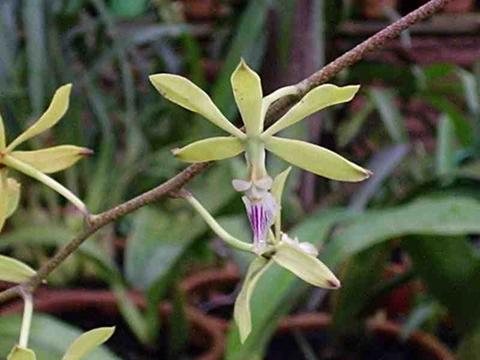
Encyclia is a genus of orchids native to Florida, the Caribbean, Mexico, and other tropical American regions. These plants are known for their stiff, drought-resistant leaves, large pseudobulbs, and flowers that can last over a month. Some species within the genus are fragrant, with Encyclia fragrans notably producing vanilla-scented blooms.
Key Facts
- ›Occurs in Florida, the Caribbean, Mexico, and tropical Americas.
- ›Grows in lowland forests up to 1000 meters, often in seasonally dry oak forests.
- ›Characterized by stiff, drought-resistant leaves and large, onion-shaped pseudobulbs.
- ›Flowers can persist for over a month, and some species are fragrant.
- ›Pollinated by bees and birds.
- ›The genus name "Encyclia" derives from a Greek term meaning "to encircle."
Epiphytic
Bees, Birds
About Encyclia
Encyclia is a genus of orchids recognized for their distinctive growth habits and often fragrant flowers. The genus name itself is derived from the Greek word "enkykleomai," meaning "to encircle," a reference to the way the lateral lobes of the orchid's lip embrace the column.
Biology and Habitat
These orchids are primarily epiphytic, meaning they grow on other plants, typically trees, rather than in soil. They are native to a wide range of locations, including Florida, the Caribbean, Mexico, and other areas within the tropical Americas. Encyclia species are commonly found in lowland forests, often at altitudes up to 1000 meters. Their preferred habitat is frequently in seasonally dry forests, where they can endure periods of infrequent rainfall while still benefiting from high humidity levels throughout the year. They are particularly abundant in dry oak forests.
Physically, most Encyclia species possess stiff, drought-resistant leaves and prominent, large pseudobulbs that are often described as onion-shaped. The flowers emerge from an apical inflorescence. The genus plays a role in its ecosystem as it is pollinated by both bees and birds. While typically having eight pollinia (pollen masses), some subgroups within the genus may have this number reduced to four. One notable species, Encyclia cyperifolia, is distinguished by its cylindrical, terete leaves.
Cultivation and Characteristics
Many Encyclia species are cultivated by orchid enthusiasts for their ornamental appeal. Their flowers are known for their longevity, often lasting for more than a month. A key aspect of their cultivation is avoiding overwatering, as they are susceptible to root rot. They generally require only a periodic misting, especially during the winter months. Some species within this genus are fragrant; Encyclia fragrans is particularly noted for its pleasant vanilla scent.
The growth pattern of Encyclia plants involves continuously growing rhizomes, which can lead to the formation of substantial plant masses over time. In their natural environment, older pseudobulbs are shed. However, in cultivation, they may not split naturally, prompting growers to divide them manually to prevent the plants from becoming unwieldy. An exception to this is Encyclia tampensis, which thrives when allowed to grow in a mounded form and does not require division.
Taxonomy and Hybridization
Cladistic studies have confirmed that Encyclia, as it is narrowly defined (sensu stricto), forms a monophyletic group. Historically, this genus was included within Epidendrum until William Jackson Hooker established Encyclia as a separate genus in 1828. Over time, further morphological analyses led to the separation of the genera Euchile, Prosthechea, and Dinema from Encyclia. The name Sulpitia Raf. is recognized as a synonym for Encyclia.
Encyclia orchids have the capacity to hybridize with related genera, making them of interest for breeding new ornamental varieties. Encyclia tampensis, in particular, is frequently utilized in breeding programs to produce attractive hybrids.
Source: Wikipedia ↗
Frequently Asked Questions
What does the name "Encyclia" mean?
The genus name "Encyclia" originates from the Greek word "enkykleomai," which translates to "to encircle." This name refers to the characteristic lateral lobes of the orchid's lip that surround the column.
Where are Encyclia orchids found in the wild?
Encyclia orchids are found in Florida, throughout the Caribbean islands, Mexico, and other regions within the tropical Americas. They typically inhabit lowland forests, often at elevations up to 1000 meters.
What are the typical growing conditions for Encyclia orchids?
Encyclia orchids often grow in seasonally dry forests, where humidity remains high year-round despite infrequent precipitation. They are most commonly found in dry oak forests and are well-adapted to periods of drought.
How should Encyclia orchids be watered?
These orchids are easily overwatered and require only periodic misting, particularly during the winter months. It is important to allow them to dry out between waterings to prevent root rot.
Are Encyclia flowers fragrant?
Some species within the Encyclia genus are fragrant. A notable example is Encyclia fragrans, which is known for its vanilla-scented flowers.
How do Encyclia plants grow and reproduce?
Encyclia plants possess continuously growing rhizomes that can eventually form large masses. In cultivation, growers often divide these plants to manage their size and prevent overly large mounds, though exceptions like Encyclia tampensis do well when allowed to grow in a mounded form.
Related Orchid species
Echinosepala
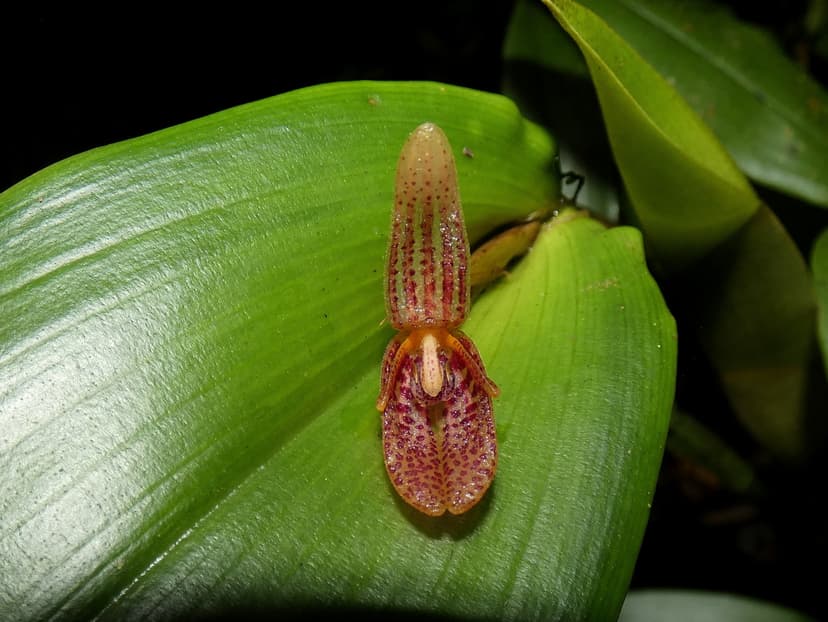
Echinosepala is a genus of orchids native to the tropical Americas, with species found from Nicaragua to Bolivia and northern Brazil, as well as Belize and Jamaica. It was formerly classified under the genus Myoxanthus, comprising its subgenera Silenia and Satyria. The genus name was changed from Echinella to Echinosepala to avoid confusion with an algae genus.

Lepanthopsis
Lepanthopsis is a genus of orchids comprising approximately 43 known species, primarily found in the Andes and Caribbean regions, with extensions into Central America, southern Mexico, and Florida. These orchids are distinguished by their very small size, with many species featuring flowers less than one centimeter in diameter.

Cyrtochilum
Cyrtochilum is a genus of flowering plants belonging to the Orchidaceae family, originating from the Caribbean and South America, with its natural range extending from Costa Rica to Peru. The genus was formally established by Carl Sigismund Kunth in 1978.