
Eriochilus
Eriochilus
Eriochilus, commonly known as bunny orchids, is a genus of terrestrial flowering plants in the orchid family (Orchidaceae) that is endemic to Australia. These orchids are distinctive for their glabrous leaf and a densely woolly labellum, with prominent ear-like lateral sepals that contribute to their common name. They are found across various habitats in southern and eastern Australia, from Western Australia to Tasmania.
Key Facts
- ›Terrestrial, perennial, deciduous, sympodial herbs with succulent tubers.
- ›Distinguished by a glabrous leaf and a densely woolly labellum.
- ›Flowers typically have prominent, ear-like lateral sepals, often white to pink.
- ›Found in a range of habitats across Australia, including Western Australia, South Australia, Victoria, New South Wales, Queensland, and Tasmania.
- ›Bloom season varies by species, generally from late winter to early summer.
- ›Fruit is a dehiscent capsule containing up to 500 seeds.

Bunny Orchids
Terrestrial
Late Winter, Spring, Early Summer
About Eriochilus
Eriochilus, widely recognized by its common name, bunny orchids, represents a genus of flowering plants belonging to the Orchidaceae family. This genus is notable for being endemic to Australia, with its species distributed across various regions including Western Australia, South Australia, Victoria, New South Wales, Queensland, and Tasmania. The defining characteristics that set Eriochilus apart include a smooth, or glabrous, leaf and a labellum that is densely covered in woolly hairs. These features, combined with prominent, ear-like lateral sepals, give the flowers their distinctive appearance and lead to their common moniker.
Botanical Description and Habitat
Bunny orchids are terrestrial, perennial, and deciduous herbs that grow sympodially. They typically possess a few fine, inconspicuous roots and a roughly spherical, succulent tuber, with replacement tubers forming at the end of short extensions. A single, glabrous leaf, varying in shape from egg-shaped to lance-shaped, is usually present either at the base or mid-stem. The inflorescence is a raceme that can bear up to 25 resupinate flowers, each subtended by a small bract. The dorsal sepal is smaller and forms a hood over the labellum, while the lateral sepals are significantly longer, broader, and more conspicuous, often displaying white to pink coloration and spreading outwards. The labellum, a highly modified petal, is tube-like at its base, surrounding the lower column, and curves downwards at the front, adorned with glandular hairs and often spots. These orchids thrive in a range of habitats across Australia, from seasonally swampy areas to dry inland woodlands.
Taxonomy and Species
The genus Eriochilus was formally described in 1810 by Robert Brown. The genus name itself is derived from Ancient Greek words, 'erion' meaning 'wool' and 'cheilos' meaning 'lip,' a direct reference to the plant's woolly labellum. The genus encompasses a number of species, including variations within Eriochilus dilatatus and Eriochilus scaber, each with specific common names such as blunt-leaved bunny orchid, white bunny orchid, common bunny orchid, pink bunny orchid, and round-leafed bunny orchid, highlighting the diversity within the group. Flowering typically occurs from late winter through to early summer, with the subsequent fruit being a non-fleshy, dehiscent capsule capable of containing up to 500 seeds.
Source: Wikipedia ↗
Frequently Asked Questions
What are bunny orchids?
Bunny orchids are a genus of terrestrial orchids named Eriochilus, endemic to Australia. They are known for their distinctive flowers that resemble bunny ears, due to prominent lateral sepals, and a woolly labellum.
What makes Eriochilus orchids distinctive?
Eriochilus orchids are characterized by having a smooth (glabrous) leaf and a labellum that is densely covered in woolly hairs. Their lateral sepals are also notably long, broad, and conspicuous, often contributing to their common name.
Where do bunny orchids grow?
Bunny orchids are found throughout Australia, with species occurring in Western Australia, South Australia, Victoria, New South Wales, Queensland, and Tasmania. They inhabit a variety of environments, from swampy areas to dry woodlands.
When do bunny orchids bloom?
The blooming period for bunny orchids varies depending on the specific species, but generally occurs from late winter through to early summer. This timing allows them to take advantage of seasonal conditions for flowering and reproduction.
What is the scientific name for bunny orchids?
The genus name for bunny orchids is Eriochilus. This name is derived from Ancient Greek words meaning 'wool' and 'lip,' referencing the characteristic woolly labellum found on their flowers.
Related Orchid species
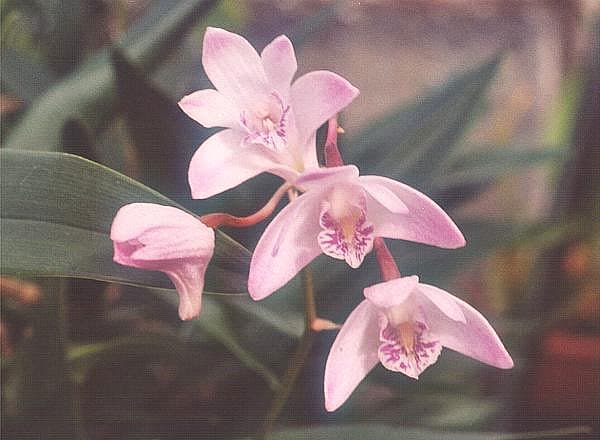
Dendrobium
Dendrobium is a vast genus of orchids, predominantly epiphytic or lithophytic, found across Asia and the Pacific. These orchids are characterized by their creeping roots and unique flower arrangements, often featuring contrasting labellums and a central callus. Many species are cultivated for their horticultural value and some are recognized for their air-purifying qualities and medicinal properties.

Dipodium
Dipodium, commonly known as hyacinth orchids, is a genus of approximately forty orchid species native to tropical, subtropical, and temperate regions across Southeast Asia, New Guinea, the Pacific Islands, and Australia. This genus is distinguished by its large, often colorful flowers borne on tall stems, and includes species that are either terrestrial or climbing, some with leaves and some leafless.
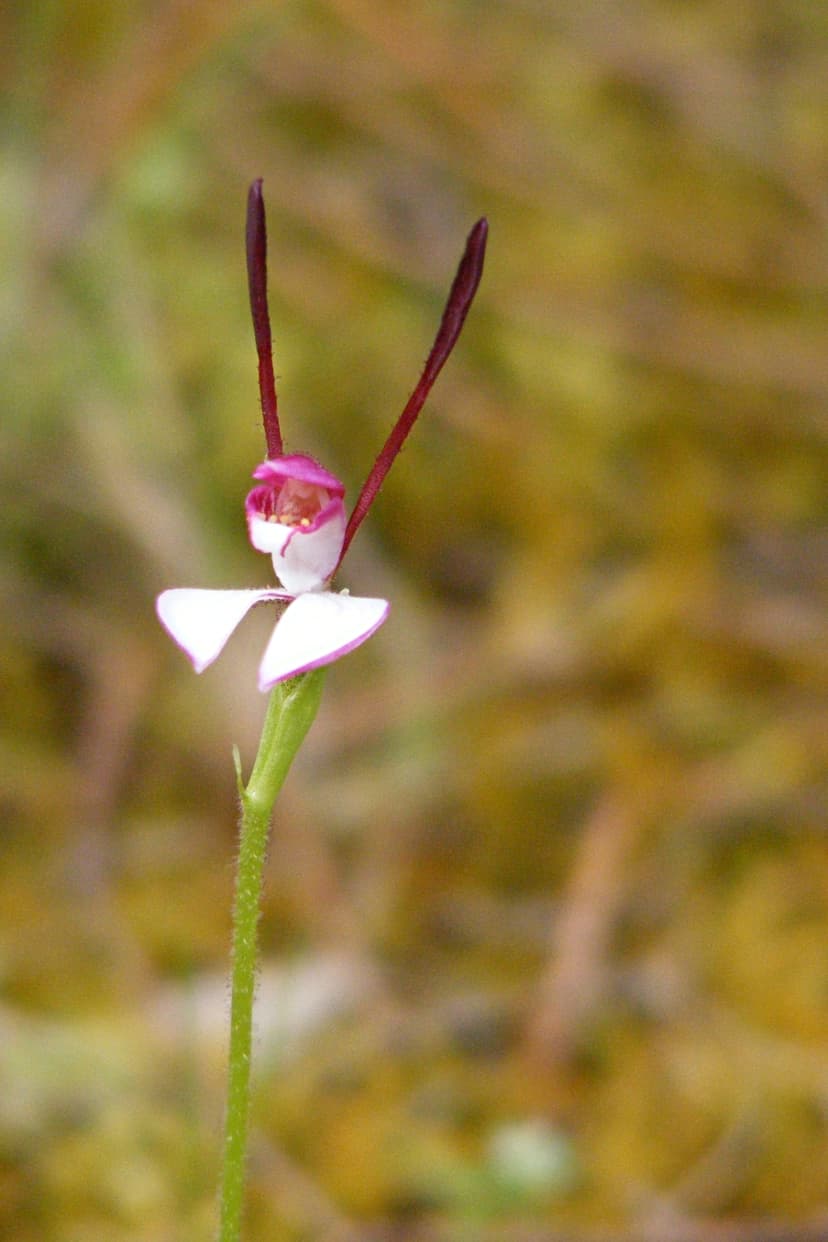
Leptoceras
Leptoceras menziesii, commonly known as the rabbit orchid, is the sole member of its genus and is native to southern Australia. This slender orchid is distinctive for flowering prolifically only after bushfires, and its flowers are characterized by prominent, ear-like petals.