
Gennaria
Gennaria
Gennaria is a small genus of flowering plants belonging to the orchid family, Orchidaceae. It currently comprises two recognized species, Gennaria diphylla and Gennaria griffithii, which are native to disparate regions spanning Macaronesia, northwest Africa, southwest Europe, and areas from Afghanistan to China. The genus is notable for its geographical distribution and the recent addition of a second species.
Key Facts
- ›The genus Gennaria is part of the Orchidaceae family.
- ›It was named in honor of the Italian botanist and patriot Patrizio Gennari.
- ›The genus historically contained a single species, Gennaria diphylla.
- ›A second species, Gennaria griffithii, was added to the genus in 2015.
- ›Gennaria diphylla is found in Macaronesia, northwest Africa, and southwest Europe.
- ›Gennaria griffithii occurs from Afghanistan to China.

Macaronesia, Northwest Africa, Southwest Europe, Afghanistan, China
About Gennaria
Gennaria is a genus of flowering plants within the esteemed orchid family, Orchidaceae. For a significant period, this genus was recognized as containing only a single species. However, in 2015, a second species was formally incorporated, expanding the known diversity of Gennaria.
Etymology
The genus name, Gennaria, serves as a tribute to Patrizio Gennari, an individual noted for his contributions as an Italian botanist and his role as a patriot. This naming convention highlights the historical and scientific significance attributed to him.
Species and Distribution
As of March 2018, the genus Gennaria is accepted to comprise two distinct species:
- Gennaria diphylla: This species is geographically distributed across Macaronesia, northwest Africa, and southwest Europe. Its presence spans these varied regions, indicating adaptability to different environmental conditions within these areas.
- Gennaria griffithii: The second species, Gennaria griffithii, exhibits a more easterly distribution, with occurrences documented from Afghanistan extending through to China. This species' range suggests a different set of ecological requirements and evolutionary history compared to G. diphylla.
The distinction and geographical separation of these two species are key characteristics of the Gennaria genus, reflecting different evolutionary pathways and adaptations within the broader orchid family.
Source: Wikipedia ↗
Frequently Asked Questions
How many species are in the genus Gennaria?
As of March 2018, there are two accepted species within the genus Gennaria. These are Gennaria diphylla and Gennaria griffithii.
What regions are Gennaria species found in?
Gennaria diphylla is native to Macaronesia, northwest Africa, and southwest Europe. Gennaria griffithii has a more easterly distribution, found from Afghanistan to China.
Who is the genus Gennaria named after?
The genus name 'Gennaria' honors Patrizio Gennari, who was an Italian botanist and patriot. His contributions are recognized through this botanical classification.
When was the second species of Gennaria identified?
The second species, Gennaria griffithii, was formally added to the genus Gennaria in the year 2015. Prior to this, the genus was understood to contain only one species.
Related Orchid species

Corymborkis
Corymborkis is a genus of terrestrial orchids found across tropical regions worldwide. These evergreen plants are known for their leafy stems, pleated leaves, and widely-opening flowers, which are typically greenish-white and arranged in crowded clusters. The genus name itself reflects the characteristic bunched arrangement of their blooms.

Cremastra
Cremastra is a genus of flowering plants belonging to the orchid family, Orchidaceae. It encompasses four recognized species, predominantly found in East Asia and Southeast Asia, including regions like China, Japan, Korea, Thailand, the Himalayas, and the Russian Far East. These orchids are distinguished by their botanical classification within the Orchidaceae family.
Cryptochilus
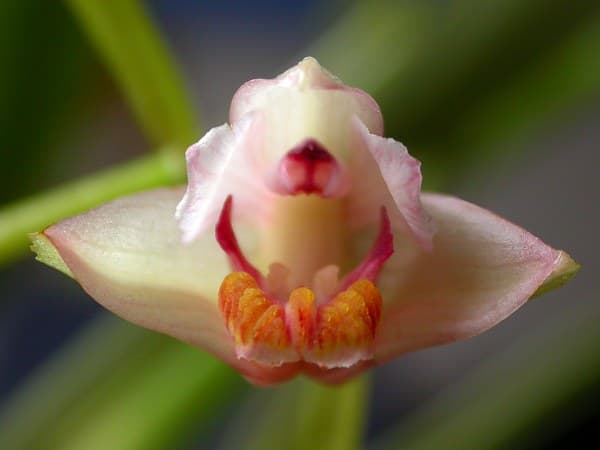
Cryptochilus is a genus of flowering plants belonging to the orchid family, Orchidaceae. These orchids are indigenous to regions spanning China, the Himalayas, and Indochina. The genus is characterized by its diverse species, each with specific geographical distributions within these broad areas.