
Grosourdya
Grosourdya
Grosourdya is a genus of flowering plants belonging to the orchid family, Orchidaceae. Native to Southeast Asia, this genus comprises 26 known species, each contributing to the region's rich botanical diversity. While specific details about individual species' unique characteristics are varied, the genus as a whole represents a collection of orchids adapted to the diverse environments of its native range.
Key Facts
- ›Grosourdya is a genus within the Orchidaceae family.
- ›The genus contains 26 known species as of May 2022.
- ›All species are native to Southeast Asia.
- ›The genus was first described by H.G. Reichenbach in 1864.
- ›Species within Grosourdya exhibit a range of geographical distributions across Southeast Asia.

Southeast Asia, Hainan, Andaman Islands, Philippines, Maluku, Sabah, Thailand, Java, Peninsular Malaysia, Sulawesi, Pahang, Leyte, Vietnam
About Grosourdya
Grosourdya is a genus of flowering plants belonging to the widely recognized orchid family, Orchidaceae. As of May 2022, botanical records indicate that the genus encompasses 26 known species. These orchids are indigenous to the diverse and botanically rich regions of Southeast Asia.
Botanical Classification and Distribution
The genus Grosourdya was established in 1864 by H.G. Reichenbach in the publication Botanische Zeitung. The species within this genus exhibit varied geographical distributions across Southeast Asia. For instance, Grosourdya appendiculata is noted for its widespread presence from Hainan to the Andaman Islands, extending to the Philippines and Maluku. Other species have more localized distributions, such as Grosourdya bicornuta found in Sabah and Grosourdya minutiflora documented in Pahang.
Known Species Examples
The genus includes a variety of species with distinct scientific names, reflecting their classification and discovery. Some examples of species within the Grosourdya genus include Grosourdya bicornuta, Grosourdya callifera, Grosourdya ciliata, Grosourdya emarginata, Grosourdya incurvicalcar (found in Java, Peninsular Malaysia, and Sulawesi), Grosourdya leytensis, Grosourdya mindanaensis, Grosourdya muscosa (present in Peninsular Malaysia, Thailand, and the Andaman Islands), Grosourdya pulvinifera (from Sabah and Sulawesi), Grosourdya quinquelobata (found in Sulawesi), Grosourdya tripercus (native to Leyte), and Grosourdya zollingeri (occurring in Java and Maluku). The diversity in their specific origins underscores the broad reach of the genus throughout the Southeast Asian continent and its islands.
While specific details regarding the growth habits, flower characteristics, or conservation status for every species within the Grosourdya genus are not universally detailed in all botanical records, their classification within the Orchidaceae family suggests adaptations typical of orchids, such as epiphytic or terrestrial growth in humid environments. Further research into individual species would be required to ascertain more specific ecological and horticultural information.
Source: Wikipedia ↗
Frequently Asked Questions
What is Grosourdya?
Grosourdya is a genus of flowering plants that belongs to the orchid family, Orchidaceae. It is recognized for its diverse species found across Southeast Asia.
How many species are in the Grosourdya genus?
As of May 2022, there are 26 known species documented within the Grosourdya genus. This number reflects ongoing botanical research and discoveries in the field of orchids.
Where are Grosourdya orchids found naturally?
Grosourdya orchids are native to Southeast Asia. Their natural distribution spans a wide geographical area within this region, from Hainan to the Philippines and Maluku.
When was the genus Grosourdya first described?
The genus Grosourdya was first described in 1864 by H.G. Reichenbach. This foundational work established the genus and its initial classifications.
Related Orchid species
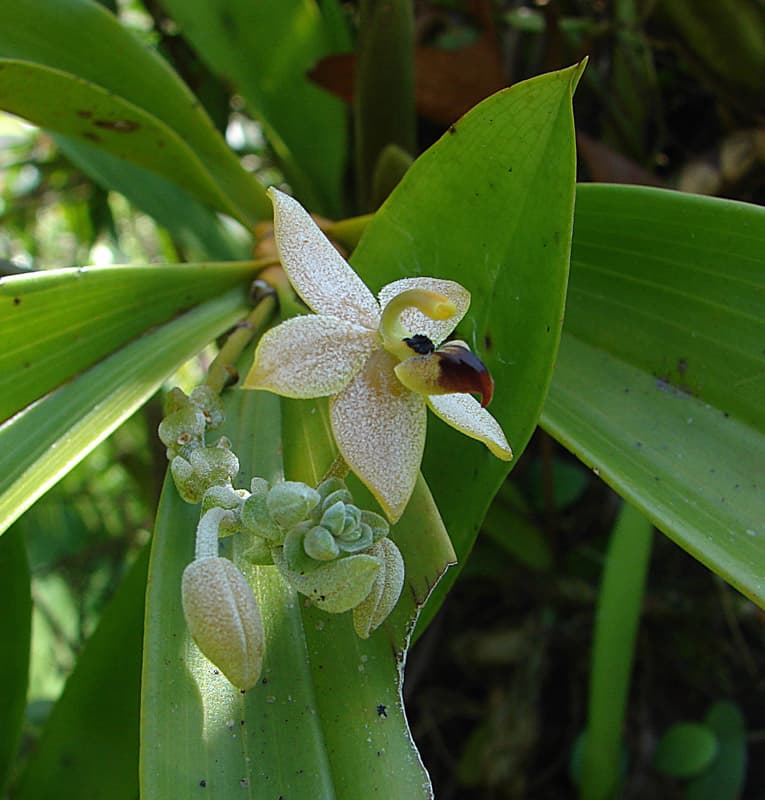
Callostylis
Callostylis is a genus of orchids native to Southeast Asia, ranging from Assam and southern China to Java. Previously considered a synonym of the genus Eria, it is now an accepted name. The genus is recognized for its diverse species found across various regions within its native range.

Geodorum
Geodorum is a genus of eight deciduous, terrestrial orchid species found across southern Japan, tropical Asia, Australia, and the southwest Pacific islands. These orchids are distinguished by their underground pseudobulbs, broad pleated leaves, and small to medium-sized, bell-shaped or tube-shaped flowers that hang downwards on a drooping flowering stem.
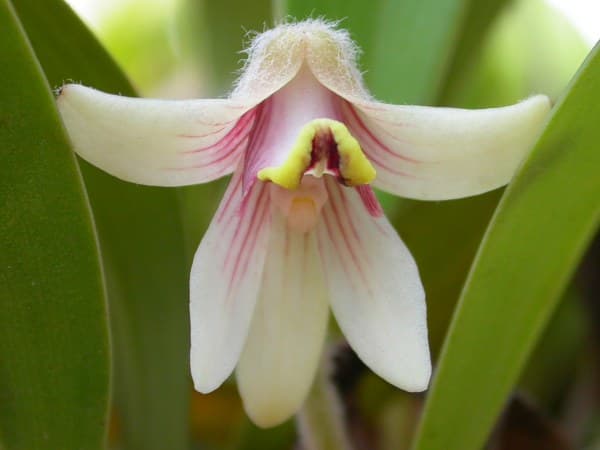
Campanulorchis
Campanulorchis is a genus of orchids native to Southeast Asia, extending from Hainan to New Guinea. Previously considered a synonym of the genus Eria, it is now recognized as a distinct and accepted name. The genus encompasses several species, each with specific geographic distributions within this broad region.