
Huntleya
Huntleya
Huntleya is a small genus of orchids native to South America, Central America, and Trinidad. These plants are characterized by their epiphytic growth habit, pseudobulbless structure, and erect, single-flowered inflorescences. They are typically found growing in wet cloud forests at medium altitudes.
Key Facts
- ›Native to South America, Central America, and Trinidad.
- ›Epiphytic, pseudobulbless plants with subplicate leaves.
- ›Each inflorescence bears a single flower.
- ›Found in wet cloud forests at medium altitudes.
- ›The genus includes species like Huntleya apiculata, Huntleya brevis, and Huntleya citrina.
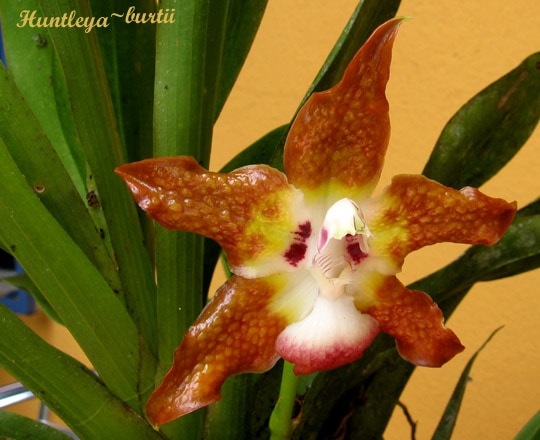
Epiphytic
About Huntleya
The genus Huntleya comprises a small group of orchids native to the diverse landscapes of South America, Central America, and Trinidad. These plants are distinct for their epiphytic growth habit, meaning they naturally grow on other plants, typically trees, rather than in soil. Unlike many orchids, Huntleya species are pseudobulbless, and their leaves are subplicate, reaching lengths of up to forty centimeters. Each flower stalk is erect and bears a single bloom, contributing to their unique aesthetic.
These orchids are found thriving in wet cloud forest environments at medium altitudes, conditions that favor their specific ecological needs. The genus includes a variety of species, such as Huntleya apiculata, Huntleya brevis, Huntleya citrina, and Huntleya meleagris, among others, each with its own geographical distribution within the broader native range.
While specific details on pollination, fragrance, and precise cultivation requirements are not extensively documented in general references, their habitat in humid cloud forests suggests a need for consistent moisture and high humidity. The visual appeal of their erect, single-flowered inflorescences makes them of interest to orchid enthusiasts and botanists alike.
Source: Wikipedia ↗
Frequently Asked Questions
Where are Huntleya orchids found naturally?
Huntleya orchids are native to a range of regions including South America, Central America, and Trinidad. They are specifically found in wet cloud forests at medium altitudes.
What is the growth habit of Huntleya orchids?
Huntleya orchids are epiphytic, meaning they grow on other plants, typically trees. They are also described as pseudobulbless plants.
How are the flowers of Huntleya orchids structured?
Each inflorescence of a Huntleya orchid is erect and bears a single flower. The leaves are subplicate and can grow to be nearly forty centimeters long.
Are there many species within the Huntleya genus?
As of June 2014, there were several species accepted within the Huntleya genus. Some of these include Huntleya apiculata, Huntleya brevis, and Huntleya citrina, among others.
Related Orchid species
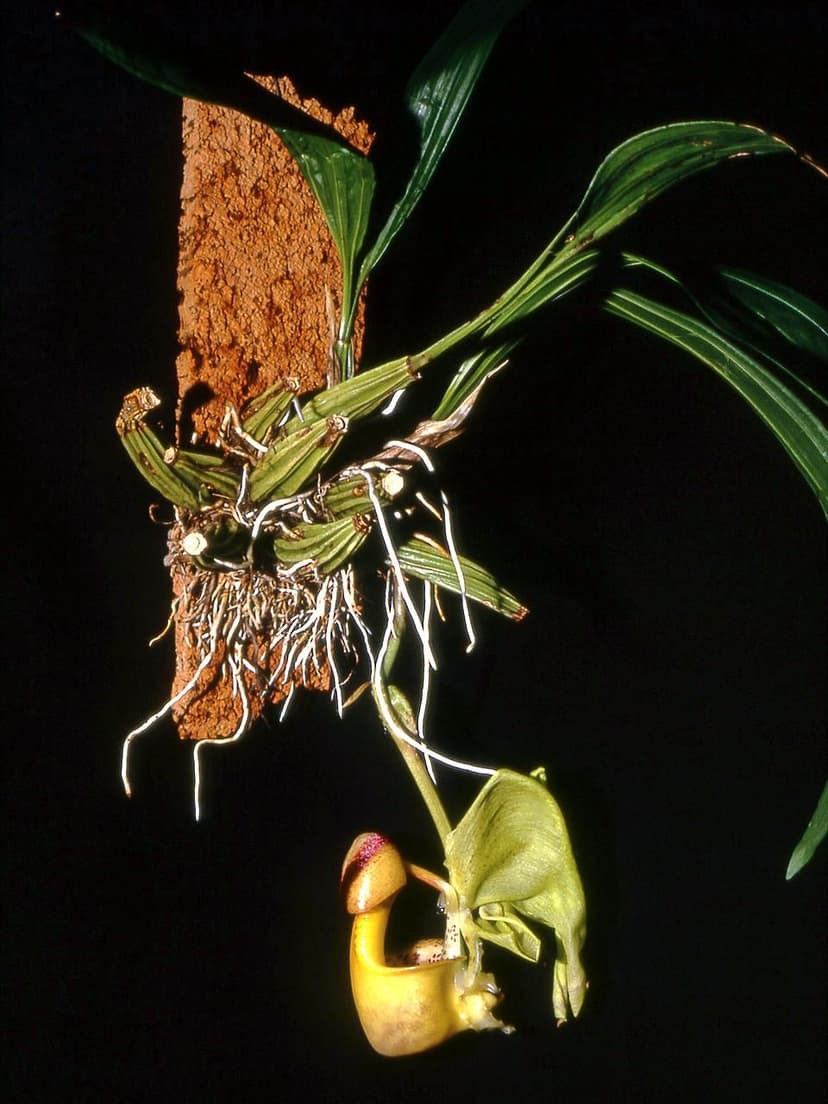
Coryanthes
Coryanthes, commonly known as bucket orchids, is a genus of neotropical epiphytic orchids native to South America, Central America, Mexico, and Trinidad. These orchids are renowned for their intricate coevolutionary relationship with male orchid bees, which are essential for their reproduction through a unique pollination mechanism involving a fluid-filled bucket-shaped lip.
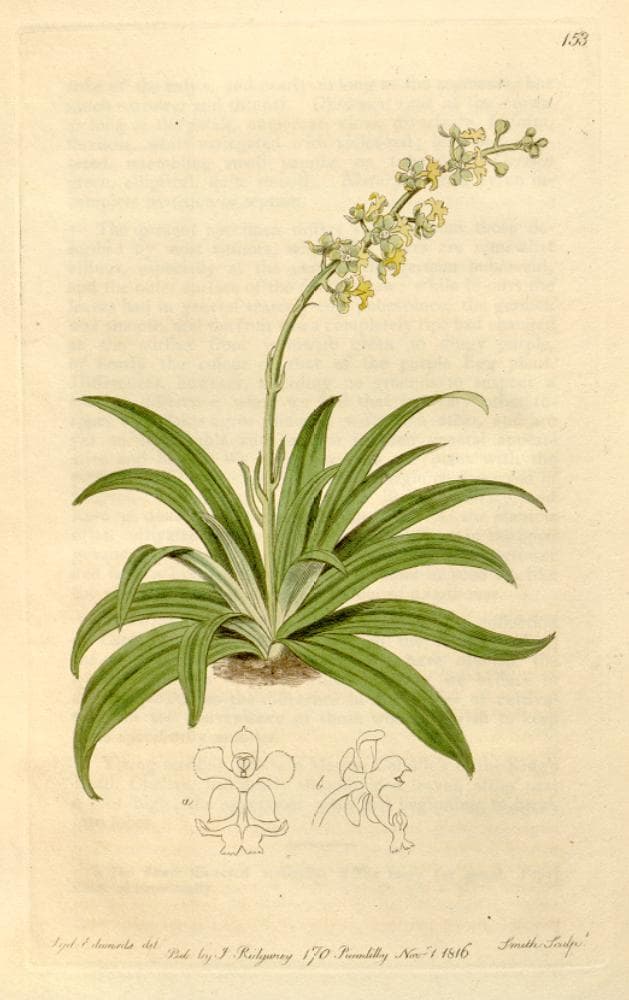
Cryptarrhena
Cryptarrhena is a genus of orchids comprising three known species, all native to the New World Tropics. These orchids are found across Central and South America, including countries like Mexico, Colombia, Peru, Brazil, and the island of Trinidad. They are distinguished by their diverse geographical distribution within these tropical regions.

Erycina
Erycina is a genus of flowering plants belonging to the orchid family, Orchidaceae. These orchids are naturally found across Mexico, Central America, South America, and the island of Trinidad. The genus is distinguished by its diverse species, each adapted to various tropical and subtropical environments.