
Jacquiniella
Jacquiniella
Jacquiniella, often called the tufted orchid, is a genus of flowering plants belonging to the orchid family, Orchidaceae. These orchids are native to diverse regions spanning Mexico, Central America, the West Indies, and South America. The genus is characterized by its compact growth habit and often small, numerous flowers.
Key Facts
- ›Jacquiniella is a genus of orchids found in Mexico, Central America, the West Indies, and South America.
- ›The genus belongs to the orchid family, Orchidaceae.
- ›Kew recognizes twelve species within the Jacquiniella genus as of May 2014.
- ›One species, J. globosa, has a diploid chromosome number of 2n = 38.
- ›The common name 'tufted orchid' likely refers to their growth habit.

Tufted Orchid
About Jacquiniella
Jacquiniella, commonly referred to as the tufted orchid, represents a genus of flowering plants within the extensive Orchidaceae family. These orchids are indigenous to a diverse geographical spread encompassing Mexico, Central America, the West Indies, and extending into South America. The genus is recognized for its compact growth forms, often presenting clusters of small, numerous flowers.
Botanical Classification and Species
As of May 2014, the esteemed botanical institution Kew officially recognized twelve distinct species within the Jacquiniella genus. These species include names such as Jacquiniella aporophylla, Jacquiniella cernua, Jacquiniella cobanensis, Jacquiniella colombiana, Jacquiniella equitantifolia, Jacquiniella gigantea, Jacquiniella globosa, Jacquiniella leucomelana, Jacquiniella pedunculata, Jacquiniella standleyi, Jacquiniella steyermarkii, and Jacquiniella teretifolia. Each species may possess unique morphological traits and occupy specific ecological niches within the broader native range.
Genetic Information
Specific genetic data has been recorded for certain species. For instance, the diploid chromosome number of Jacquiniella globosa has been determined to be 2n = 38. This type of cytological information is crucial for botanical research, aiding in the understanding of plant evolution, speciation, and hybridization.
Source: Wikipedia ↗
Frequently Asked Questions
What regions are Jacquiniella orchids native to?
Jacquiniella orchids are native to a broad geographical area that includes Mexico, Central America, the West Indies, and various parts of South America. This wide distribution suggests adaptability to different tropical and subtropical climates within these regions.
How many species are recognized in the Jacquiniella genus?
As of May 2014, Kew's botanical records recognized twelve distinct species within the Jacquiniella genus. These species may vary in their specific characteristics and geographical distribution within the broader native range.
What is the chromosome number for Jacquiniella globosa?
The diploid chromosome number for the Jacquiniella globosa species has been documented as 2n = 38. Chromosome counts are important for understanding plant genetics and evolutionary relationships within a genus.
Related Orchid species

Corymborkis
Corymborkis is a genus of terrestrial orchids found across tropical regions worldwide. These evergreen plants are known for their leafy stems, pleated leaves, and widely-opening flowers, which are typically greenish-white and arranged in crowded clusters. The genus name itself reflects the characteristic bunched arrangement of their blooms.

Beloglottis
Beloglottis is a genus of orchids belonging to the tribe Cranichideae and subtribe Spiranthinae. These terrestrial plants are known for their erect stems, fleshy roots, and basal leaves. Some species within this genus are recognized for their potential use as herbal supplements.
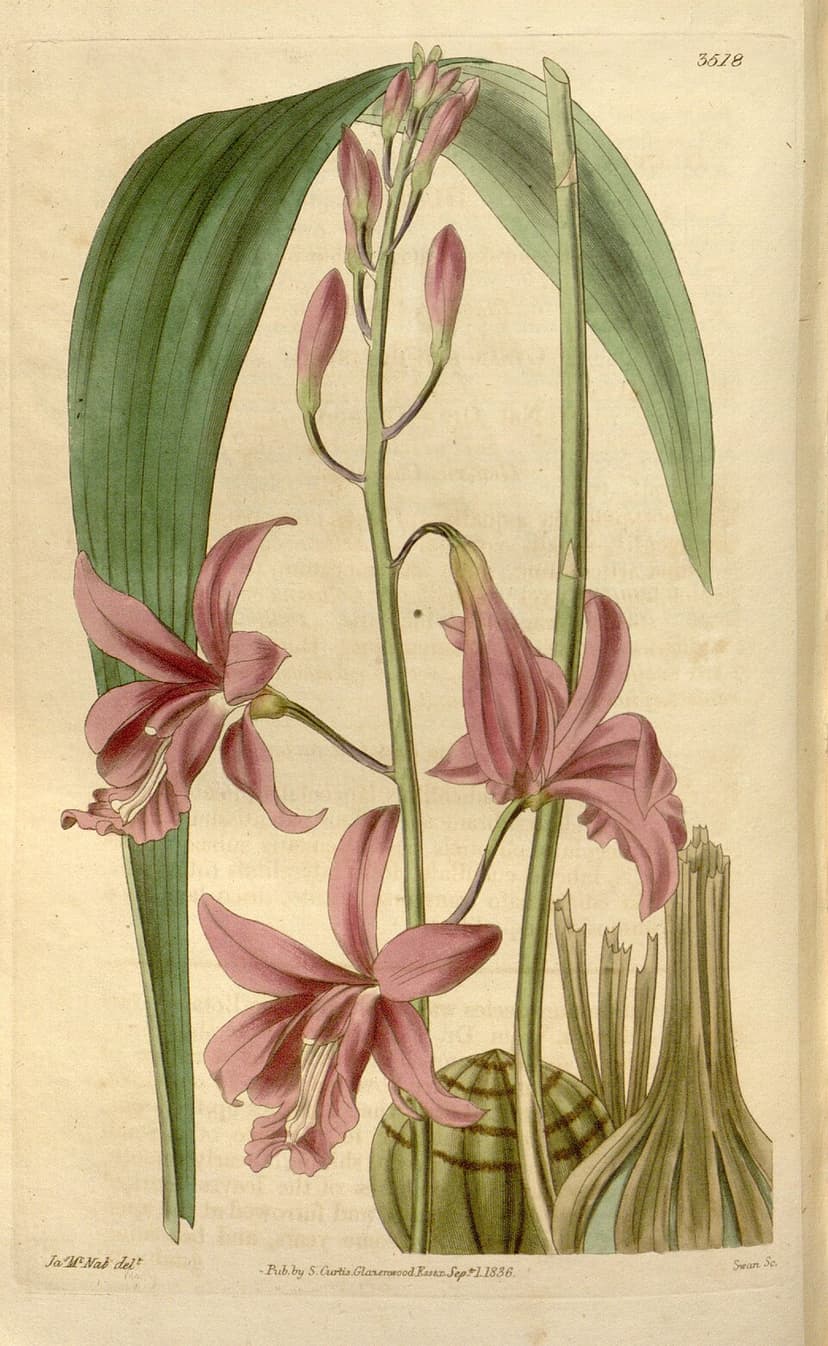
Bletia
Bletia is a genus of approximately 30 species of terrestrial orchids, with some also growing as lithophytes or epiphytes. Named in honor of Spanish botanist Don Luis Blet, this genus is widely distributed across regions including Florida, Mexico, Central America, the West Indies, and South America down to Argentina.