
Kraenzlinella
Kraenzlinella
Kraenzlinella is a genus of flowering plants belonging to the orchid family, Orchidaceae. It is primarily found in Mexico, Central America, and South America. The genus is characterized by its diverse species, each with specific geographical distributions within these regions.
Key Facts
- ›Kraenzlinella is a genus within the Orchidaceae family.
- ›It was first described as a genus in 1903.
- ›The genus is native to Southern Mexico, Central America, and South America.
- ›Several species are documented, including Kraenzlinella anfracta, Kraenzlinella echinocarpa, and Kraenzlinella erinacea.
- ›Some species have specific provincial or regional occurrences within South America.
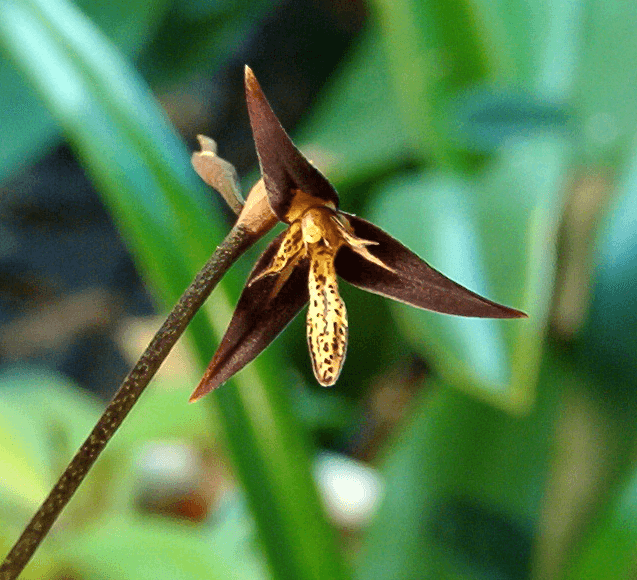
About Kraenzlinella
Kraenzlinella is a genus of flowering plants that belongs to the orchid family, Orchidaceae. Established as a distinct genus in 1903, Kraenzlinella species are indigenous to a broad geographical area encompassing Southern Mexico, Central America, and South America. The genus comprises several species, each with its own specific natural habitat and distribution within these regions.
Species and Distribution
Documentation of Kraenzlinella includes species such as Kraenzlinella anfracta, which is found in the Tolima region of Colombia. Another species, Kraenzlinella echinocarpa, is native to Peru and Ecuador. Kraenzlinella erinacea exhibits a more extensive range, occurring in Oaxaca and Chiapas in Mexico, across Central America, and extending into Colombia, Venezuela, Guyana, Ecuador, Peru, and Bolivia. Other recognized species include Kraenzlinella gigantea from Peru, Kraenzlinella hintonii native to Guerrero, Kraenzlinella lappago and Kraenzlinella phrynoglossa found in specific Ecuadorian provinces, and Kraenzlinella rinkei and Kraenzlinella sigmoidea, both documented in Costa Rica. Kraenzlinella tunguraguae is found in Colombia, Ecuador, and Peru.
Historically, some orchids were included in the Kraenzlinella genus but have since been reclassified into other genera, such as Anathallis, Echinosepala, and Specklinia. Examples of such reclassifications include Kraenzlinella platyrachis (now Specklinia pfavii), Kraenzlinella shuarii (now Echinosepala shuarii), and Kraenzlinella smaragdina (now Anathallis smaragdina).
Source: Wikipedia ↗
Frequently Asked Questions
What is Kraenzlinella?
Kraenzlinella is a genus of flowering plants belonging to the orchid family, Orchidaceae. It was formally described as a genus in 1903.
Where is Kraenzlinella found?
The natural distribution of Kraenzlinella extends across Southern Mexico, Central America, and various parts of South America. Specific species have more localized ranges within these broader regions.
What are some known species of Kraenzlinella?
Notable species within the genus include Kraenzlinella anfracta, found in the Tolima region of Colombia, and Kraenzlinella echinocarpa, native to Peru and Ecuador. Kraenzlinella erinacea has a wider distribution across Central and South America.
When was the genus Kraenzlinella first described?
The genus Kraenzlinella was first officially described in the year 1903.
Related Orchid species

Cycnoches
Cycnoches is a genus of orchids native to South America, Central America, and southern Mexico, commonly known as swan necks, swan orchids, or swanworts. These epiphytic plants are distinctive for their elegant, swan-like flower appearance and are found in lowland and pre-montane forests.

Aspasia
Aspasia is a genus of seven orchid species native to Central and South America, known for their exquisite, medium-sized flowers that are occasionally used in artificial hybrids. These orchids are closely related to the Miltonia and Brassia genera and exhibit diverse growth habits, ranging from epiphytic to lithophytic.

Lepanthopsis
Lepanthopsis is a genus of orchids comprising approximately 43 known species, primarily found in the Andes and Caribbean regions, with extensions into Central America, southern Mexico, and Florida. These orchids are distinguished by their very small size, with many species featuring flowers less than one centimeter in diameter.