
Liparis
Liparis
Liparis, commonly known as widelip orchids or sphinx orchids, is a widespread genus of over 350 orchid species found on every continent except Antarctica. These plants exhibit diverse growth habits, being terrestrial, lithophytic, or epiphytic, and are characterized by their small to medium-sized, often dull-colored flowers with a distinctive, usually larger labellum.
Key Facts
- ›Liparis is a cosmopolitan genus with over 350 species.
- ›Species can be terrestrial, lithophytic, or epiphytic.
- ›Flowers are typically small to medium-sized, resupinate, and yellow, yellow-green, or purplish.
- ›The labellum is usually larger than sepals and petals, often lobed with calli at the base.
- ›Flowers may have an unpleasant odor.
- ›Found on all continents except Antarctica, with significant diversity in tropical Asia and the Americas.

Widelip Orchids, Sphinx Orchids, 羊耳蒜属
Terrestrial, Lithophytic, Epiphytic
About Liparis
The genus Liparis, commonly known as widelip orchids or sphinx orchids, represents a diverse group of over 350 species within the Orchidaceae family. These orchids are found across the globe, inhabiting every continent except Antarctica, with significant diversity concentrated in tropical Asia and the Americas.
Growth Habits and Morphology
Plants in the Liparis genus exhibit a wide range of forms and can grow as terrestrial, lithophytic, or epiphytic herbs. They typically possess one to a few leaves that vary in shape from linear to egg-shaped, and their texture can be thin, leathery, or even pleated. The genus is characterized by its small to medium-sized flowers, which are usually resupinate. These flowers are often dull in color, typically appearing in shades of yellow, yellow-green, or purplish. A notable characteristic is the labellum, which is generally larger than the sepals and petals, often featuring a lobed structure with a toothed or wavy margin and one or two calli at its base. The flowers are borne on a flowering stem adorned with small bracts.
Taxonomy and Naming
The genus Liparis was formally described in 1817 by Louis Claude Richard. The scientific name is derived from the Ancient Greek word 'liparos', translating to 'oily,' 'greasy,' 'sleek,' or 'shiny.' This etymology directly refers to the smooth, often lustrous appearance of the leaves found in many species within the genus.
Distribution and Diversity
Liparis species are remarkably widespread, with a cosmopolitan distribution. They are found in tropical Asia, the subtropical and tropical regions of the Americas, Africa, New Guinea, and Australia. China, in particular, hosts a significant number of species, with sixty-three recorded, twenty of which are endemic to the country. Smaller numbers are found in North America (two species) and Europe (one species).
Source: Wikipedia ↗
Frequently Asked Questions
What are the common names for the genus Liparis?
Liparis orchids are commonly known as widelip orchids or sphinx orchids. In Chinese, they are referred to as 羊耳蒜属 (yáng'ěrsuàn shǔ).
What is the meaning of the name Liparis?
The name Liparis originates from the Ancient Greek word 'liparos', meaning 'oily', 'greasy', 'sleek', or 'shiny'. This name refers to the smooth texture of the orchid's leaves.
Where are Liparis orchids found geographically?
Liparis species have a cosmopolitan distribution, occurring on every continent except Antarctica. They are prevalent in tropical Asia, subtropical and tropical regions of the Americas, Africa, New Guinea, and Australia.
What are the typical characteristics of Liparis flowers?
Liparis flowers are usually resupinate and range from small to medium in size. Their colors are often dull yellow, yellow-green, or purplish, with spreading sepals and petals. A distinctive feature is the labellum, which is typically larger than the sepals and petals and may be lobed with a toothed or wavy margin.
Do Liparis orchids have a scent?
Some Liparis species are noted to have an unpleasant odor. While not all species are fragrant, the description indicates that an unpleasant scent is not uncommon for this genus.
Related Orchid species

Eulophia
Eulophia, commonly known as corduroy orchids, is a genus of approximately two hundred flowering plant species within the orchid family, Orchidaceae. Primarily found in Africa and Asia, these orchids typically inhabit shady forest floors, open scrub, or woodlands, often adapting to dry seasons with underground storage organs. While most species are terrestrial, a few have evolved to thrive in arid environments.
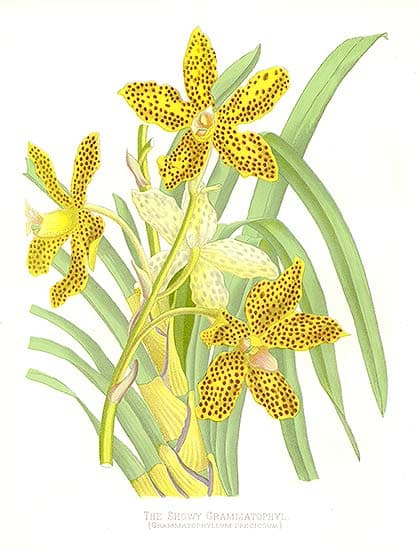
Grammatophyllum
Grammatophyllum is a genus of 13 orchid species known for their large size and distinctive yellow-green to olive-green, waxy flowers marked with dark purplish-red. These epiphytic orchids are native to dense rainforests spanning from Indo-China to the Southwest Pacific islands. The genus includes the "giant orchid" (Grammatophyllum speciosum), recognized as the largest orchid species globally.

Acianthus
Acianthus, commonly known as mosquito orchids, is a genus of terrestrial orchids found in New Caledonia, Australia, and New Zealand. These plants are distinctive for their small, mosquito-like flowers, typically green, pinkish, or purplish, which bloom in the cooler months and blend with their surroundings.