
Andaman boobook
Strigidae·Rare (due to habitat loss)
The Andaman boobook is a species of owl endemic to the Andaman Islands. This owl inhabits moist lowland forests and mangrove forests, but its populations are declining due to habitat loss. It is a member of the Strigidae family.
Key Facts
- ›Endemic to the Andaman Islands.
- ›Inhabits subtropical or tropical moist lowland forest.
- ›Also found in subtropical or tropical mangrove forest.
- ›Populations are becoming rare due to habitat loss.
- ›Belongs to the family Strigidae.
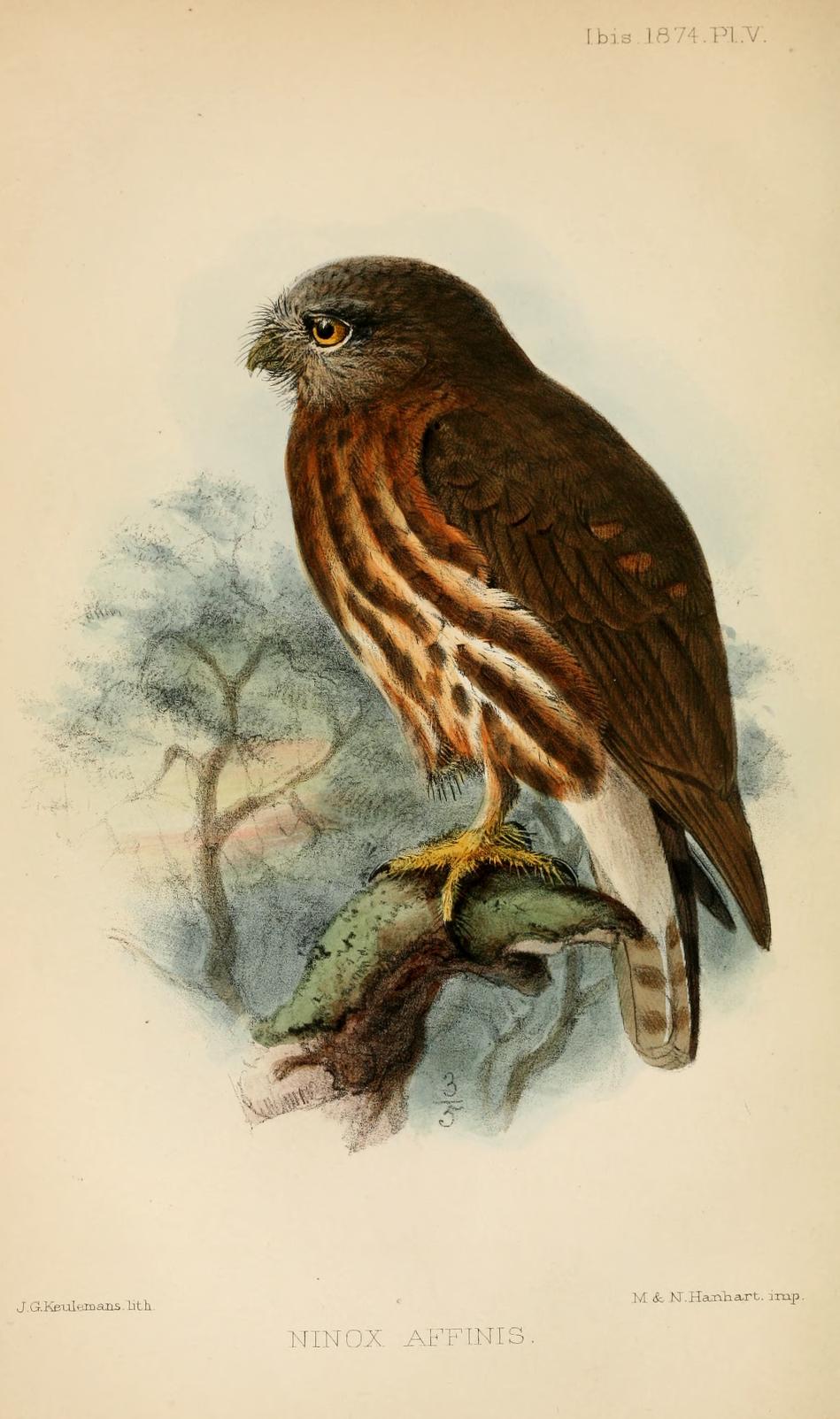
Andaman Hawk-Owl
Subtropical Or Tropical Moist Lowland Forest, Subtropical Or Tropical Mangrove Forest
Andaman Islands
About Andaman boobook
The Andaman boobook, scientifically known as Ninox affinis, is a species of owl that is endemic to the Andaman Islands. This owl is a member of the Strigidae family, commonly known for its diverse range of owl species.
Habitat and Distribution
The natural habitats of the Andaman boobook are primarily subtropical or tropical moist lowland forests and subtropical or tropical mangrove forests. These specific ecosystems provide the necessary environment for the species to thrive.
Conservation Concerns
Unfortunately, the Andaman boobook is facing significant challenges to its survival. The species is becoming rare, a situation directly linked to ongoing habitat loss. This decline highlights the vulnerability of specialized species to environmental changes and human impact on their native ecosystems.
Source: Wikipedia ↗
Frequently Asked Questions
Where can the Andaman boobook be found?
The Andaman boobook is found exclusively in the Andaman Islands. Its natural habitats include moist lowland forests and mangrove forests within this archipelago.
What is the conservation status of the Andaman boobook?
The Andaman boobook is becoming rare. This decline is attributed to habitat loss, indicating a concerning conservation status for the species.
What kind of forests does the Andaman boobook live in?
This owl species inhabits subtropical or tropical moist lowland forests. It is also found in subtropical or tropical mangrove forests.
Related Owl species

African barred owlet
The African barred owlet is a small owl species found across southern, central, and eastern Africa. It inhabits open woodlands and gallery forests, and is notable for being partly diurnal, often seen hunting during daylight hours. Its call is a distinctive purring sound, and it feeds on a variety of small prey.

Alor boobook
The Alor boobook (Ninox plesseni) is a species of owl native to the Pantar and Alor Islands in the eastern Lesser Sunda Islands. Previously classified as a subspecies of the Australian boobook, it was recognized as a distinct species in 2017 based on bioacoustic evidence.
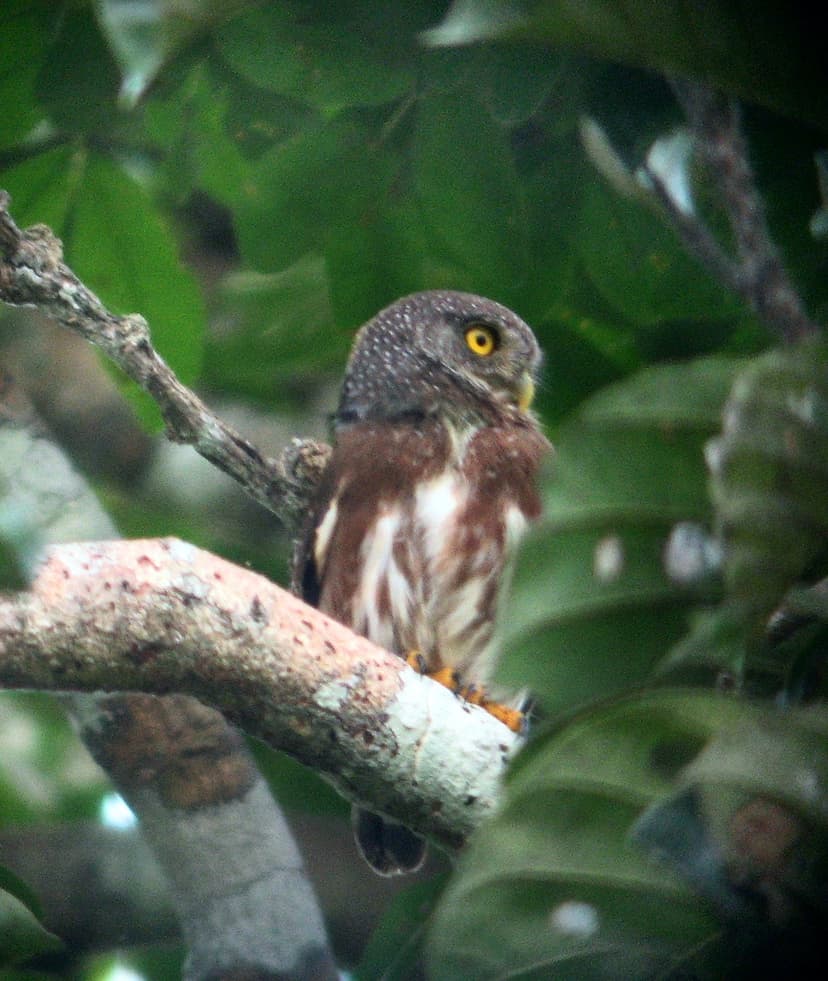
Amazonian pygmy owl
The Amazonian pygmy owl (Glaucidium hardyi), also known as Hardy's pygmy owl, is a small owl species native to the Amazon Basin and northern South America. It is characterized by its large, round head with false eyespots, diurnal habits, and a diet likely consisting of arthropods and small vertebrates. Its conservation status is listed as Least Concern by the IUCN, despite evidence of a decreasing population.