
Pernambuco pygmy owl
Strigidae·Critically Endangered and Possibly Extinct
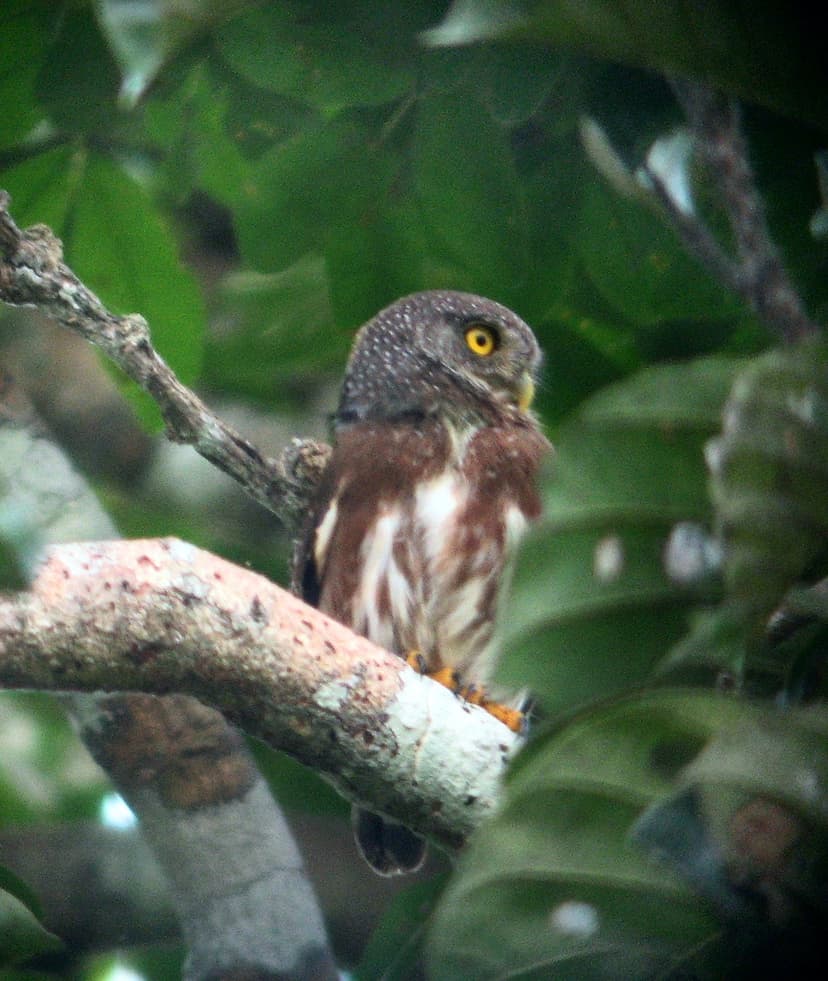
The Pernambuco pygmy owl (Glaucidium mooreorum) is a small owl species endemic to Pernambuco state in Brazil, first described in 2002. It is distinguished by its light grey-chestnut coloration, conspicuous white spots on its head, and a distinctive vocalization. Sadly, it is currently listed as Critically Endangered and Possibly Extinct due to extensive habitat destruction and a lack of sightings since 2001.
Key Facts
- ›Endemic to Pernambuco state in northeastern Brazil.
- ›First formally described in 2002.
- ›Characterized by a light grey-chestnut crown and head with white spots.
- ›Its song is a short phrase of 5-7 rising notes.
- ›Assessed as Critically Endangered and Possibly Extinct by the IUCN.
- ›Has not been reliably observed since 2001.

Pernambuco Pygmy Owl
Canopy of Humid Forest, Forest Edge
Brazil
Cicadas, Invertebrates, Small Mammals, Small Reptiles
About Pernambuco pygmy owl
The Pernambuco pygmy owl (Glaucidium mooreorum) is a small owl species native to a limited region within Pernambuco state in northeastern Brazil. First formally described in 2002, it belongs to the family Strigidae. This owl is characterized by its distinctive appearance, including a light grey-chestnut crown and head speckled with conspicuous white spots, a white collar, and white underparts streaked with rufous. Its upperparts are chestnut, and its tail is blackish brown marked with white spots.
Distribution and Habitat
This species is exclusively found in a small area of Pernambuco state, Brazil. It inhabits the canopy of humid forests, often observed near the forest edge, and has been recorded at elevations up to 150 meters above sea level. Its restricted range makes it particularly vulnerable to environmental changes.
Diet and Behavior
Information regarding the diet of the Pernambuco pygmy owl is scarce. One documented instance records an individual consuming a large cicada. It is presumed that its diet also includes other invertebrates, small mammals, and small reptiles. The species is known to be vocally active during the rainy season, specifically in April and May, though other aspects of its breeding behavior remain unrecorded.
Vocalization
The vocalization of the Pernambuco pygmy owl is described as a short phrase consisting of five to seven notes, each of which ascends in pitch. This unique call played a significant role in its identification as a distinct species.
Conservation Status
The Pernambuco pygmy owl faces a dire conservation outlook. It is listed by the International Union for Conservation of Nature (IUCN) as Critically Endangered and Possibly Extinct. This severe assessment is due to the extensive destruction of its habitat and the fact that the species has not been reliably sighted since 2001, despite targeted searches. If any individuals remain, their population is estimated to be extremely small, fewer than fifty adult birds, within a tiny and shrinking range.
Source: Wikipedia ↗
Frequently Asked Questions
When was the Pernambuco pygmy owl first discovered?
The Pernambuco pygmy owl was first described in December 2002. However, the study skins used for its description were collected much earlier, in 1980, and vocalizations were recorded in 1990.
What does the Pernambuco pygmy owl look like?
It is a small owl, about 13 cm long, with a light grey-chestnut colored crown and head speckled with conspicuous white spots. It has a white collar, white underparts streaked with rufous, a chestnut back, and a dark tail with white spots.
Where does the Pernambuco pygmy owl live?
This species is found only in a small area of Pernambuco state in northeastern Brazil. It has been observed in the canopy of humid forest near its edge, up to an elevation of 150 meters.
What does the Pernambuco pygmy owl eat?
One observation recorded a Pernambuco pygmy owl eating a large cicada. Its diet is assumed to include other invertebrates, small mammals, and small reptiles, though little is known for certain.
What is the conservation status of the Pernambuco pygmy owl?
The Pernambuco pygmy owl is assessed by the IUCN as Critically Endangered and Possibly Extinct. This status reflects the near-complete destruction of its habitat and the fact that it has not been seen since 2001.
What does the Pernambuco pygmy owl sound like?
Its vocalization is described as a short phrase of 5 to 7 notes, with each note rising in pitch. This distinctive call was one of the factors that led to its identification as a new species.
Related Owl species

African barred owlet
The African barred owlet is a small owl species found across southern, central, and eastern Africa. It inhabits open woodlands and gallery forests, and is notable for being partly diurnal, often seen hunting during daylight hours. Its call is a distinctive purring sound, and it feeds on a variety of small prey.

Alor boobook
The Alor boobook (Ninox plesseni) is a species of owl native to the Pantar and Alor Islands in the eastern Lesser Sunda Islands. Previously classified as a subspecies of the Australian boobook, it was recognized as a distinct species in 2017 based on bioacoustic evidence.
Amazonian pygmy owl
The Amazonian pygmy owl (Glaucidium hardyi), also known as Hardy's pygmy owl, is a small owl species native to the Amazon Basin and northern South America. It is characterized by its large, round head with false eyespots, diurnal habits, and a diet likely consisting of arthropods and small vertebrates. Its conservation status is listed as Least Concern by the IUCN, despite evidence of a decreasing population.