
Togian boobook
The Togian boobook is an owl species discovered in 2004, native to a small archipelago in Indonesia. It is distinguished by its limited geographic range and its recent scientific description.
Key Facts
- ›Described as a new species in 2004.
- ›Known only from three islands in the Togian archipelago.
- ›Located in the Gulf of Tomini, off the coast of Sulawesi, Indonesia.
- ›Scientific name honors Indonesian conservationist Burhan.
- ›Discovered on December 25, 1999.

Togian Hawk-Owl
Islands
Indonesia
About Togian boobook
The Togian boobook, also known as the Togian hawk-owl, is a species of owl that was formally described as new to science in 2004. Its scientific name, Ninox burhani, honors the local Indonesian conservationist Burhan.
Geographic Distribution and Habitat
This owl is known to inhabit a very restricted geographical area. It has currently only been observed on three islands within the Togian group. This archipelago is located in the Gulf of Tomini, which lies off the coast of Sulawesi in Indonesia. The limited known range suggests it may be an island endemic.
Discovery
The Togian boobook was discovered on December 25, 1999. Its formal description followed several years later, highlighting it as a recent addition to ornithological knowledge.
Source: Wikipedia ↗
Frequently Asked Questions
When was the Togian boobook first described?
The Togian boobook was described as a new species to science in 2004. Its discovery date was December 25, 1999.
Where is the Togian boobook found?
This owl species is currently known only from three islands within the Togian group. This archipelago is situated in the Gulf of Tomini, off the coast of Sulawesi, Indonesia.
What is the origin of the scientific name Ninox burhani?
The scientific name of the Togian boobook, Ninox burhani, honors a local Indonesian conservationist named Burhan. This dedication recognizes his contributions.
Related Owl species

African barred owlet
The African barred owlet is a small owl species found across southern, central, and eastern Africa. It inhabits open woodlands and gallery forests, and is notable for being partly diurnal, often seen hunting during daylight hours. Its call is a distinctive purring sound, and it feeds on a variety of small prey.

Alor boobook
The Alor boobook (Ninox plesseni) is a species of owl native to the Pantar and Alor Islands in the eastern Lesser Sunda Islands. Previously classified as a subspecies of the Australian boobook, it was recognized as a distinct species in 2017 based on bioacoustic evidence.
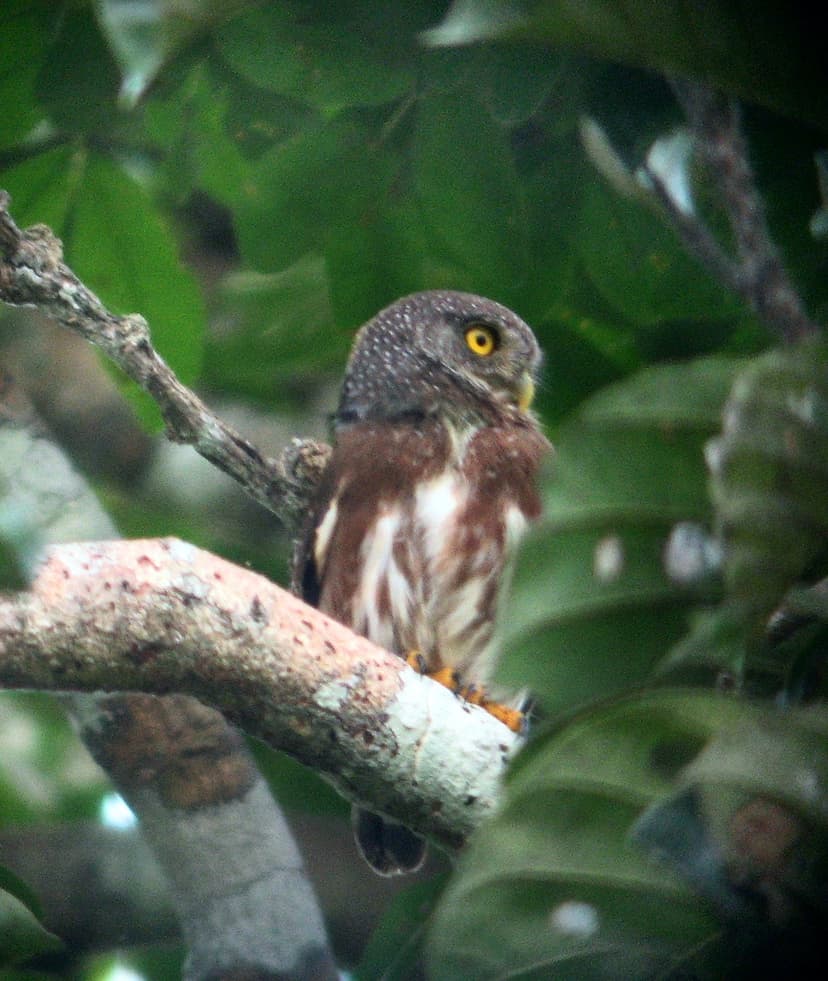
Amazonian pygmy owl
The Amazonian pygmy owl (Glaucidium hardyi), also known as Hardy's pygmy owl, is a small owl species native to the Amazon Basin and northern South America. It is characterized by its large, round head with false eyespots, diurnal habits, and a diet likely consisting of arthropods and small vertebrates. Its conservation status is listed as Least Concern by the IUCN, despite evidence of a decreasing population.