
Black-billed hanging parrot
Loriculus bonapartei·Psittacidae·14·March to May
The black-billed hanging parrot is a small parrot species native to the Sulu Archipelago of the Philippines. It is distinguished by its bright green plumage, black bill, and a distinctive red, orange, and yellow crown. This species is presumed to share ecological behaviors and diet with its close relative, the Philippine hanging parrot.
Key Facts
- ›The black-billed hanging parrot is 14 cm in length.
- ›Its plumage is predominantly bright green, with a red, orange, and yellow crown.
- ›The species has a black bill and brown irises.
- ›It is found in tropical moist lowland forests, forest edges, and cultivated areas.
- ›Nesting behavior is presumed to be similar to the Philippine hanging parrot, including using nesting material.
- ›It is often caught for the illegal wildlife trade.

Black-Billed Hanging Parrot
Philippines
Tropical Moist Lowland Forest, Forest Edge, Bushy Areas, Coconut Plantations, Bamboo Clusters
Black Bill, Red, Orange, and Yellow Crown
Flowers, Bananas, Figs, Nectar
Cavity nester, Uses nesting material brought by the female
About Black-billed hanging parrot
The black-billed hanging parrot, scientifically known as Loriculus bonapartei, is a small parrot species found exclusively in the Sulu Archipelago of the Philippines. This species was formerly considered to be the same as the Philippine hanging parrot but was distinguished due to morphological differences, particularly its black bill and duller legs compared to its relative's dark red bill.
Description and Taxonomy
Measuring approximately 14 centimeters in length, the black-billed hanging parrot is characterized by its predominantly bright green plumage. Its head displays a striking pattern, with the front of the crown being red, transitioning to orange and then yellow towards the back. The tail is green on its upper side and blue underneath. The bill is a notable black color, and its irises are brown. This species is monotypic, meaning it has no recognized subspecies.
Behavior and Ecology
Information regarding the specific behavior and ecology of the black-billed hanging parrot is limited, but it is presumed to be similar to that of the closely related Philippine hanging parrot. They are typically observed alone or in pairs, with sightings in small groups being rare. Their foraging activities usually occur in the canopy or mid-levels of forests. Their diet is thought to consist of nectar, flowers, and soft fruits, such as those from fig trees.
Habitat and Conservation
The black-billed hanging parrot inhabits tropical moist lowland forests, forest edges, bushy areas, coconut plantations, and bamboo clusters. The conservation status of this bird has not yet been assessed by the IUCN. However, significant deforestation has occurred in its native range, with areas like Jolo and Sanga-Sanga being almost completely cleared. The remaining forests are increasingly being converted into palm oil and rubber plantations. Like the Philippine hanging parrot, it is also a target for the illegal wildlife trade, with escaped individuals having been recorded outside their natural range.
Reproduction
While specific details for the black-billed hanging parrot are scarce, its breeding habits are inferred from the Philippine hanging parrot. The latter is a seasonal breeder, with nesting occurring between March and May. Parrots are generally cavity nesters, and a nest found in the wild was located high in a dead tree. A unique behavior observed in some hanging parrots is the use of nesting material, where the female tucks it between her feathers to transport it to the nest. In captivity, clutches typically consist of 3 eggs, which are incubated for about 20 days. The chicks take approximately 35 days after hatching to reach the fledging stage.
Source: Wikipedia ↗
Frequently Asked Questions
What does the black-billed hanging parrot look like?
The black-billed hanging parrot is a small parrot, measuring about 14 cm in length. It features bright green feathers, a black bill, and brown irises. A distinctive characteristic is its crown, which is red at the front and transitions to orange and yellow at the back.
Where does the black-billed hanging parrot live?
This species is native to the Sulu Archipelago in the Philippines. It inhabits tropical moist lowland forests, forest edges, bushy areas, coconut plantations, and bamboo clusters.
What is the diet of the black-billed hanging parrot?
The specific diet is not well-documented, but it is presumed to be similar to that of the Philippine hanging parrot. This includes feeding on nectar, flowers, and soft fruits such as figs.
What are the nesting habits of the black-billed hanging parrot?
Like most parrots, it is believed to be a cavity nester, likely in tree cavities. A notable behavior, presumed to be shared with the Philippine hanging parrot, is the use of nesting material, which the female tucks between her feathers to transport to the nest.
What is the conservation status of the black-billed hanging parrot?
The International Union for Conservation of Nature (IUCN) has not yet assessed the conservation status of this bird. However, its habitat in areas like Jolo and Sanga-Sanga has been significantly deforested, and it is also subject to the illegal wildlife trade.
Related Parrot species

Australian king parrot
The Australian king parrot is a striking parrot species native to the humid, forested eastern regions of Australia. It is distinguished by the vibrant red plumage of the adult male, contrasting with the predominantly green female. These parrots are known for their relatively quiet nature and devotion to their human companions when kept as pets.

Crimson rosella
The crimson rosella is a vibrantly colored parrot native to eastern and southeastern Australia. It is distinguished by its striking red plumage, blue cheeks, and blue-margined wings, though juvenile coloration can be predominantly green. This species is adaptable, inhabiting mountain forests, woodlands, and even human-modified areas, and is known for its social behavior outside the breeding season.
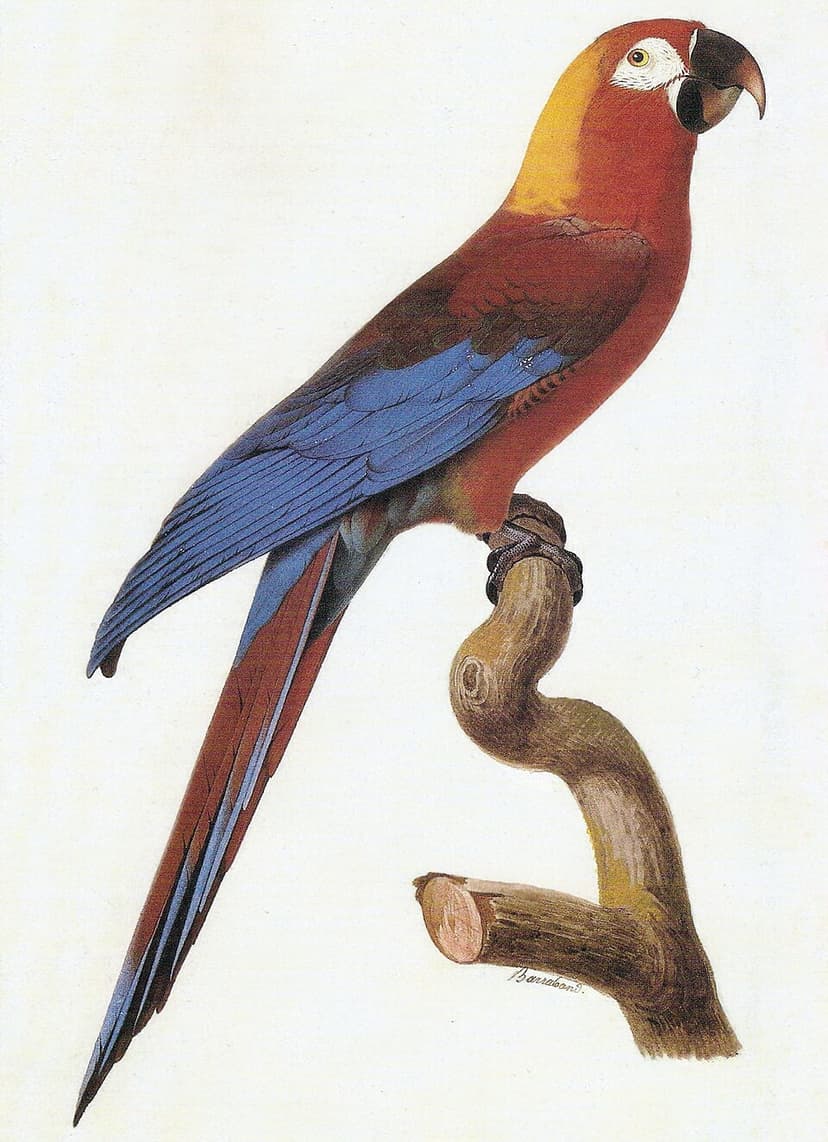
Cuban macaw
The Cuban macaw (Ara tricolor) was a species of macaw native to Cuba and Isla de la Juventud, becoming extinct in the late 19th century. It was one of the smallest macaws, characterized by a vibrant plumage of red, orange, yellow, green, brown, and blue. Its demise was attributed to hunting, habitat destruction, and possibly hurricanes, despite limited knowledge of its behavior.