
Blue-bellied parrot
The blue-bellied parrot, also known as the purple-bellied parrot, is the sole species within its genus and is primarily found in the Atlantic Forest of southeastern Brazil. This relatively long-tailed, green parrot is distinctive for the bluish-purple patch on the male's belly, a feature absent in females. It is generally a quiet bird, often overlooked, but pairs will sing in duet.
Key Facts
- ›The only species in its genus, Triclaria malachitacea.
- ›Found in the humid Atlantic Forest of southeastern Brazil.
- ›Males possess a distinctive bluish-purple patch on their belly.
- ›Its diet includes seeds, fruits, flower buds, nectar, and some insects.
- ›Nests are typically found in tree or palm cavities.
- ›Habitat loss due to agricultural expansion is a primary threat.
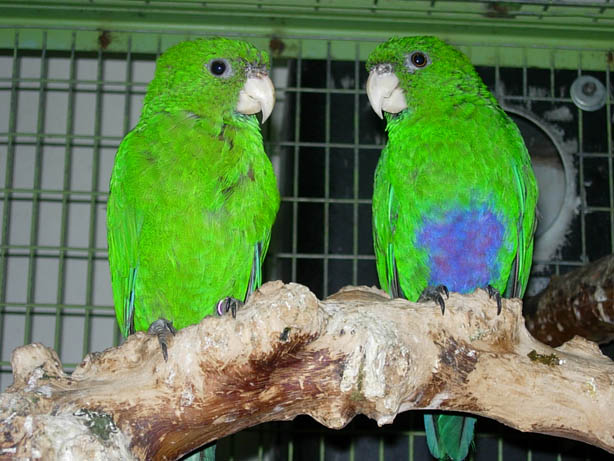
Purple-Bellied Parrot
Brazil, Argentina
Humid Atlantic forest, Remnant forest strips on slopes and ridges
Bluish-Purple Patch On the Male's Belly, Relatively Long Tail
Seeds, Fruits, Flower Buds, Nectar, Insects
Whistled Call, Pairs Sing In Duet, Typically Fairly Quiet
Cavity of A Large Tree, Cavity of A Palm
About Blue-bellied parrot
The Blue-bellied Parrot
The blue-bellied parrot, scientifically known as Triclaria malachitacea, is the sole species within its genus and is primarily found in the humid Atlantic Forest of southeastern Brazil. While there are two unconfirmed reports from Misiones, Argentina, its stronghold is Brazil, where it inhabits areas up to 1000 meters in elevation. This species is characterized by its relatively long tail and predominantly green plumage. A key distinguishing feature is the vibrant bluish-purple patch on the belly, which is present only in males.
Characteristics and Behavior
This parrot is generally considered to be fairly quiet, which can make it easily overlooked in its natural habitat. However, pairs are known to sing in duet, and they possess a distinct whistled call. Their diet is varied, encompassing seeds, fruits, flower buds, nectar, and even some insects. During the breeding season, the blue-bellied parrot pair exhibits strong territorial behavior.
Habitat and Conservation
Much of the original forest cover in the blue-bellied parrot's range has been lost due to the expansion of cultivated crops such as tobacco and bananas. Consequently, the species is now largely confined to remnant forest strips, often found on slopes and ridges, which represent a fraction of its historical territory. Despite earlier estimates suggesting a population of 5,000–10,000 individuals, more recent evidence indicates a population of around 10,000 in Rio Grande do Sul alone, with significant numbers also in Rio de Janeiro and São Paulo, though exact figures are unavailable. Numbers are declining across its range due to ongoing habitat degradation. The cage-bird trade is not currently a major threat, with only a small number being captured for the local market, although a fair number did reach the Netherlands in the 1970s and 1980s. The species is present in 14 protected areas, highlighting efforts to conserve its shrinking habitat.
Source: Wikipedia ↗
Frequently Asked Questions
What is the scientific name of the blue-bellied parrot?
The scientific name of the blue-bellied parrot is Triclaria malachitacea. This species is the only member of its genus.
Where is the blue-bellied parrot found?
The blue-bellied parrot is generally considered endemic to the humid Atlantic Forest of southeastern Brazil. There are also two unconfirmed records from Misiones in Argentina.
What makes the blue-bellied parrot distinctive?
The blue-bellied parrot is distinguished by the bluish-purple patch on the belly of the male, which is absent in females. It is also known for its relatively long tail and green overall plumage.
What does the blue-bellied parrot eat?
Its diet consists of seeds, fruits, flower buds, nectar, and some insects. They forage within their forest habitat for these food sources.
What are the nesting habits of the blue-bellied parrot?
The blue-bellied parrot nests in the cavity of a large tree or palm. Pairs are territorial during the breeding season.
What is the conservation status of the blue-bellied parrot?
While specific IUCN status is not detailed, the text indicates that numbers are dwindling due to habitat changes. Original forest cover has been significantly reduced.
Related Parrot species

Lord Derby's parakeet
Lord Derby's parakeet is a parrot species found in a limited region of moist evergreen forests in the Himalayas and adjoining areas of China. It is distinguished by its predominantly green plumage, blue-purple crown, and sexually dimorphic beak coloration. The species faces threats from habitat destruction and illegal wildlife trade, leading to its classification as near threatened.

Australian king parrot
The Australian king parrot is a striking parrot species native to the humid, forested eastern regions of Australia. It is distinguished by the vibrant red plumage of the adult male, contrasting with the predominantly green female. These parrots are known for their relatively quiet nature and devotion to their human companions when kept as pets.

Bismarck hanging parrot
The Bismarck hanging parrot (Loriculus tener) is a small parrot species endemic to the forests of the Bismarck Archipelago in Papua New Guinea. It is distinguished by its predominantly green plumage, a bright red throat patch, and a black beak. This species faces threats from habitat loss and is sometimes considered a subspecies of the orange-fronted hanging parrot.