
Glaucous macaw
Critically Endangered or Possibly Extinct
The glaucous macaw is a large, predominantly blue and grey South American parrot, closely related to Lear's and hyacinth macaws. Its typical coloration is described as "glaucous," and it is characterized by a long tail, large bill, and a distinctive yellow eye ring. This species is critically endangered or possibly extinct, with its decline attributed to trapping for the pet trade and the destruction of its primary food source, the yatay palm.
Key Facts
- ›The glaucous macaw is a large parrot, measuring approximately 70 cm (28 inches) in length.
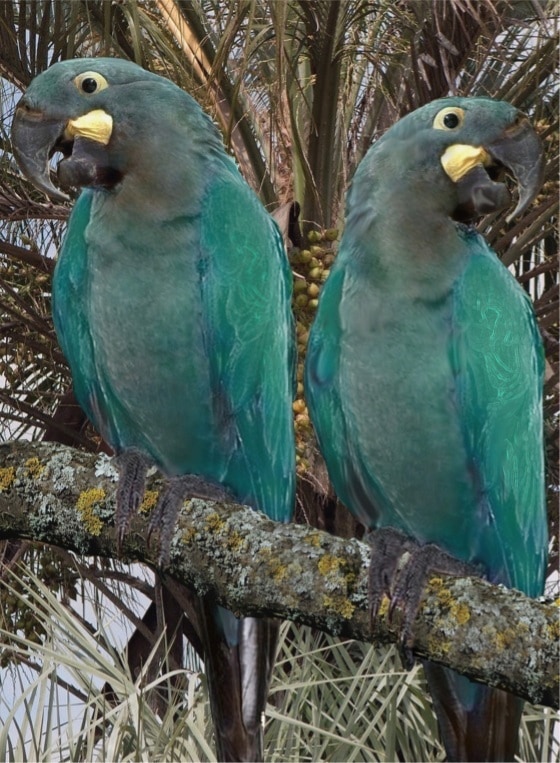
- ›Its plumage is mainly pale turquoise-blue with a large, greyish head and a long tail.
- ›Distinctive features include a yellow, bare eye ring and half-moon shaped lappets bordering the mandible.
- ›Historically, it was found in parts of Argentina, Paraguay, Bolivia, Uruguay, and Brazil.
- ›Habitat loss and trapping for the pet trade are considered the primary reasons for its severe decline.
- ›It is critically endangered and possibly extinct, with no confirmed sightings in the wild for decades.
Gua'A Hovy
South America
Areas With Yatay Palm, Chaco and Llano Regions
Pale Turquoise-Blue, Greyish
- Yellow, Bare Eye Ring
- Half Moon-Shaped Lappets Bordering the Mandible
Nuts of the Yatay Palm
Known For Its Vocalizations
About Glaucous macaw
The glaucous macaw (Anodorhynchus glaucus), also known in Guarani as gua'a hovy, is a large species of South American parrot that is now critically endangered or possibly extinct. This macaw is distinguished by its predominantly pale turquoise-blue plumage, a large greyish head, and a long tail. The term "glaucous" refers to this characteristic coloration.
Description and Features
Measuring approximately 70 cm (28 inches) in length, the glaucous macaw possesses a robust build typical of macaws. Beyond its overall blue and grey coloring, notable features include a prominent yellow, bare eye ring and distinctive half-moon shaped lappets that border its mandible. Its bill is large, suited for cracking tough nuts.
Range and Decline
Historically, the glaucous macaw inhabited a wide range across South America, including north Argentina, south Paraguay, parts of Bolivia near Santa Cruz de la Sierra, northeast Uruguay, and Brazil. Its decline began in the 19th century, primarily driven by two factors: intense trapping for the lucrative wild bird trade and the widespread destruction of the yatay palm (Butia yatay), which constituted its main food source. This habitat destruction and loss of food resources led to a drastic reduction in its population.
Conservation Status and Sightings
By the 20th century, the species had become exceedingly rare. Only a few unconfirmed reports of wild birds surfaced during this period. Expeditions in the 1990s to its former range in southwestern Paraguay failed to find any evidence of its existence, and older residents recalled the species last being seen in the 1870s. Despite the existence of suitable habitat in areas like El Palmar National Park in Argentina, no credible rumors of its continued presence have emerged in recent decades. A 2018 study, considering extinction patterns and habitat destruction, recommended that the glaucous macaw be uplisted to Critically Endangered – Possibly Extinct, reflecting the extreme rarity and lack of confirmed sightings since the 1980s. While some anecdotal reports and suggestions of its continued existence in remote areas of Bolivia persist, these have not been scientifically verified.
Source: Wikipedia ↗
Frequently Asked Questions
What does the glaucous macaw look like?
The glaucous macaw is a large parrot, about 70 cm long, with mostly pale turquoise-blue plumage and a large, greyish head. It has a long tail, a large bill, and a prominent yellow, bare eye ring.
Where did the glaucous macaw live?
This species was native to north Argentina, south Paraguay, the Chaco and Llano region of Bolivia, northeast Uruguay, and Brazil. Its range included areas with the yatay palm, which was a key food source.
Why is the glaucous macaw considered critically endangered or extinct?
The glaucous macaw became rare due to extensive trapping for the live bird trade and the widespread felling of the yatay palm, its main food source. There have been no confirmed sightings in the wild for many decades.
What is the glaucous macaw's relationship to other macaws?
The glaucous macaw is closely related to Lear's macaw (Anodorhynchus leari) and the hyacinth macaw (Anodorhynchus hyacinthinus). These species share similarities in their appearance and taxonomic family.
What is the meaning of the name 'glaucous' in relation to this macaw?
The term 'glaucous' describes the pale, bluish-grey color of the parrot's plumage. This coloration is a defining visual characteristic of the species.
Related Parrot species

Broad-billed parrot
The broad-billed parrot, also known as the raven parrot, was a large extinct parrot endemic to the Mascarene island of Mauritius. Distinguished by its unusually large beak and a prominent frontal crest, this species was described as having multiple colors, possibly including a blue head, and was thought to be a weak flier. It became extinct in the late 17th century due to habitat loss, introduced predators, and hunting.

Cacatuini
Cacatuini refers to a tribe of birds characterized by their predominantly whitish, pinkish, or greyish plumage. This group comprises four distinct genera, and they are known for their distinct avian characteristics.

Alexandrine parakeet
The Alexandrine parakeet is a large, predominantly green parrot native to South and Southeast Asia, distinguished by its prominent red shoulder patch and massive red beak with yellow tips. Named in honor of Alexander the Great, who introduced these birds to Europe, they are known for their intelligence, vocal abilities, and long lifespan, making them popular in aviculture. Despite their established presence in some areas, they face conservation challenges due to habitat loss and illegal trade.