
Meek's pygmy parrot
Meek's pygmy parrot (Micropsitta meeki) is a small parrot species endemic to Papua New Guinea, specifically the Admiralty Islands. It is distinguished by its emerald-green plumage, a mid-brown cap and face, and a distinctive yellow throat and underparts. This species is named in honor of naturalist Albert Stewart Meek, who collected numerous specimens from the region.
Key Facts
- ›Meek's pygmy parrot is one of the smallest parrot species.
- ›It is found exclusively in the Admiralty Islands of Papua New Guinea.
- ›Its plumage is primarily emerald green with a brown head and yellow throat and belly.
- ›The species is believed to feed on insects, fungi, lichens, and mosses.
- ›Attempts to keep Meek's pygmy parrot in captivity have not been successful.
- ›It is listed as 'Least Concern' by the IUCN Red List.
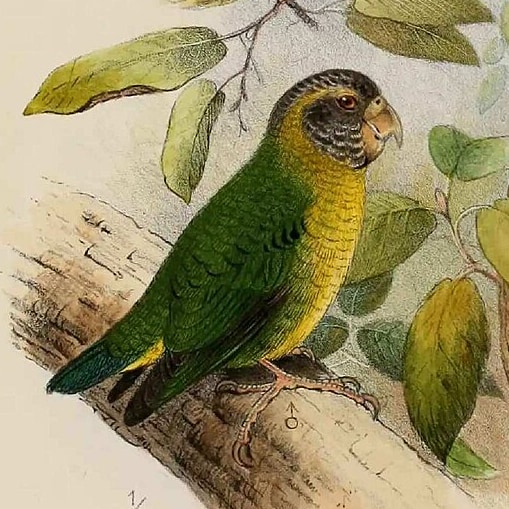
Yellow-Breasted Pigmy Parrot
Papua New Guinea
Forests, Foliage of Trees
Emerald Green, Mid-Brown, Yellow
Small Size, Yellow Throat and Underparts, Mid-Brown Cap, Forehead, Nape, and Face, Stiffened Tail Feathers Used For Support
Insects, Fungi, Lichens, Mosses
About Meek's pygmy parrot
Meek's pygmy parrot, scientifically known as Micropsitta meeki, is a diminutive species of parrot belonging to the family Psittacidae. It is exclusively found in the Admiralty Islands, an archipelago north of Papua New Guinea. The species is named in honor of the English naturalist Albert Stewart Meek, who significantly contributed to the discovery and collection of avian and insect species from the region.
Description and Identification
As one of the smallest members of the true parrots, Meek's pygmy parrot is characterized by its swift movements and vibrant emerald-green plumage. A notable feature is its head, which displays a mid-brown coloration on the cap, forehead, nape, and face. This is complemented by a striking yellow throat and underparts. Subtle variations exist between its two subspecies: M. m. meeki features yellow ear coverts, while M. m. proxima has a narrowing horizontal band of yellow above the eyes, and its face and nape are a paler brown. The rest of its plumage is green, with the back and wings being slightly darker and the belly paler. It possesses brown beak and large feet, and uses its stiffened tail feathers for support while clambering among foliage.
Distribution and Habitat
Meek's pygmy parrot's natural range is confined to the Admiralty Islands, a group of eighteen islands within the Bismarck Archipelago. It is reported to be common on the islands of Lou and Manus. The parrot inhabits arboreal environments, spending its days navigating the foliage of trees.
Biology and Conservation
Little detailed study has been conducted on Meek's pygmy parrots. Their diet is presumed to consist of insects, fungi, lichens, and mosses. The species' population is considered stable, leading to its classification as 'Least Concern' on the IUCN Red List of Threatened Species. Efforts to keep these parrots in captivity have proven unsuccessful, possibly due to stress or insufficient understanding of their specialized dietary and environmental needs.
Source: Wikipedia ↗
Frequently Asked Questions
What is Meek's pygmy parrot?
Meek's pygmy parrot is a species of small parrot belonging to the family Psittacidae. It is known for its small size, emerald-green coloration, and distinctive yellow markings on its throat and underparts.
Where does Meek's pygmy parrot live?
This parrot species is endemic to Papua New Guinea, specifically found in the Admiralty Islands, which are a group of islands located to the north of mainland Papua New Guinea.
What does Meek's pygmy parrot eat?
The diet of Meek's pygmy parrot is believed to consist of insects, fungi, lichens, and mosses. They spend their days clambering among tree foliage to forage for these food sources.
Are Meek's pygmy parrots easy to keep as pets?
No, attempts to keep Meek's pygmy parrots in captivity have not been successful. This lack of success may be due to stress experienced by the birds or a lack of understanding regarding their specific dietary needs.
What are the different subspecies of Meek's pygmy parrot?
There are two recognized subspecies of Meek's pygmy parrot: M. m. meeki and M. m. proxima. Subtle differences exist in the extent of yellow coloring and the shade of brown on the face and nape between these two subspecies.
Why is it called Meek's pygmy parrot?
The species is named in honor of Albert Stewart Meek, an English naturalist. Meek collected many previously unknown birds and insects from Australia, Papua New Guinea, and the Pacific region, with many of his findings now housed in the Natural History Museum in London.
Related Parrot species

Moluccan eclectus
The Moluccan eclectus is a vibrantly colored parrot native to the Maluku Islands (Moluccas) in Indonesia. It is distinguished by its extreme sexual dimorphism, with males being predominantly emerald green and females a striking red and purple/blue. These parrots are known for their unusual social breeding system and their long digestive tracts, which allow them to process a high-fiber diet.

Australian ringneck
The Australian ringneck is a medium-sized parrot native to Australia, found in diverse environments except for extreme tropical and highland regions. It is characterized by a green basic plumage, a distinctive yellow ring around its hindneck, and variations in color across its four subspecies. This gregarious bird is known for its varied vocalizations and is generally not considered a threatened species, though some subspecies face local competition.

Bismarck hanging parrot
The Bismarck hanging parrot (Loriculus tener) is a small parrot species endemic to the forests of the Bismarck Archipelago in Papua New Guinea. It is distinguished by its predominantly green plumage, a bright red throat patch, and a black beak. This species faces threats from habitat loss and is sometimes considered a subspecies of the orange-fronted hanging parrot.