
Moluccan eclectus
Eclectus roratus·Psittacidae·35 cm (14 in)·28.5 - 40.8 years
The Moluccan eclectus is a vibrantly colored parrot native to the Maluku Islands (Moluccas) in Indonesia. It is distinguished by its extreme sexual dimorphism, with males being predominantly emerald green and females a striking red and purple/blue. These parrots are known for their unusual social breeding system and their long digestive tracts, which allow them to process a high-fiber diet.
Key Facts
- ›Native to the Maluku Islands of Indonesia.
- ›Exhibits extreme sexual dimorphism in plumage color: males are green, females are red and blue/purple.
- ›Unusual polygynandrous mating system where females mate with multiple males.
- ›Possesses a long digestive tract, enabling a high-fiber diet.
- ›Can be prone to feather destruction and 'toe tapping' in captivity.
- ›Considered a popular bird for aviculture.

Grand Eclectus, Vosmaer's Eclectus, Vos Eclectus, Westerman's Eclectus
Asia
Rainforests, Emergent Rainforest Trees
Extreme Sexual Dimorphism In Plumage Color, Unusually Long Digestive Tract
Fruits, Wild Figs, Unripe Nuts, Flower Buds, Leaf Buds, Seeds
Calm, Pensive, Neophobic
May Not Talk Clearly Until 1 Year Old
- Nests within hollows in large, emergent rainforest trees
About Moluccan eclectus
The Moluccan eclectus, scientifically known as Eclectus roratus, is a striking parrot species native to the Maluku Islands (Moluccas) in Indonesia. It is particularly notable within the parrot order for its extreme sexual dimorphism, where the male and female exhibit vastly different plumage colors. This characteristic led early European ornithologists to believe they were observing two distinct species.
Morphology and Appearance
Adult Moluccan eclectus parrots are stocky birds measuring around 35 cm (14 inches) in length. The most distinctive feature is the plumage difference between sexes. Males are predominantly a bright emerald green, often with a yellow tinge on the head, blue wing primaries, and red flanks and underwing coverts. Their tails are edged with creamy yellow. In contrast, females are largely bright red, with darker hues on their backs and wings, and often display purple or blue on their abdomen and nape. The beak color also differs, with adult males having an orange-to-yellow upper mandible and a black lower mandible, while adult females possess an all-black beak. Both sexes have yellow to orange irises as adults, with juveniles having dark brown to black irises.
Diet and Digestion
The natural diet of the Moluccan eclectus consists primarily of fruits, wild figs, unripe nuts, flower buds, leaf buds, and some seeds. A unique adaptation of this species is its unusually long digestive tract, which allows it to efficiently process a high-fiber diet. In captivity, this trait means they tolerate and benefit from specially formulated pellets and a diet rich in fruits and vegetables. However, a lower sugar diet is recommended for captive birds due to their reduced activity levels compared to wild counterparts.
Social Structure and Breeding
Moluccan eclectus exhibit a complex and unusual social breeding system. They nest in hollows of large rainforest trees, and suitable nesting sites are highly sought after. Females are known to vigorously defend their chosen nesting sites, sometimes for up to 11 months of the year. Unlike many parrot species, eclectus parrots are polygynandrous; females may mate with multiple males, and males may travel between nesting sites to mate with multiple females. Up to five males may regularly feed a single female via regurgitation, competing for mating rights. This system is thought to contribute to the pronounced sexual dimorphism, with the female's bright red plumage aiding camouflage within the dark nest hollow while the male's green plumage provides camouflage while foraging in trees.
Conservation and Aviculture
While large populations of Moluccan eclectus still exist, some populations on smaller islands are considered rare. They are sometimes viewed as pests due to their consumption of fruit from trees. Their vibrant feathers are also utilized by native tribespeople in New Guinea for decorative purposes. In aviculture, the Moluccan eclectus is a popular choice, with the subspecies E. r. vosmaeri being the most commonly kept. They are relatively easy to breed but can be difficult to hand-feed. In captivity, they are generally calm but can be prone to feather destruction and a condition known as 'toe tapping,' which is believed to be diet-related. Their lifespan in captivity is not precisely known but is estimated to be around 30 years, with some individuals living significantly longer.
Source: Wikipedia ↗
Frequently Asked Questions
What makes the Moluccan eclectus visually distinctive?
The Moluccan eclectus is highly unusual among parrots for its extreme sexual dimorphism in plumage. Males are predominantly bright emerald green with yellow tinges, blue primaries, and red flanks, while females are mostly bright red with darker backs and wings, often featuring purple or blue on their abdomen and nape.
Where do Moluccan eclectus parrots naturally live?
These parrots are native to the Maluku Islands, also known as the Moluccas, located in Indonesia. Specific subspecies are found on islands within this archipelago, such as Buru, Seram, Ambon, and others in the North and South Maluku provinces.
What is the typical diet of a Moluccan eclectus in the wild?
In their natural habitat, Moluccan eclectus primarily consume fruits, wild figs, unripe nuts, flower and leaf buds, and some seeds. Their long digestive tract is well-suited to processing a high-fiber diet.
How do Moluccan eclectus parrots breed?
Moluccan eclectus have a unique polygynandrous breeding system. Females nest in tree hollows and are defended by multiple males, who provide food through regurgitation. Females may mate with several males, and males may visit multiple nesting sites.
Are Moluccan eclectus parrots easy to keep as pets?
While relatively easy to breed in captivity, hand-feeding Moluccan eclectus can be challenging. They are generally calm birds but can be prone to feather destruction and exhibit neophobia (fear of new things). Their specific dietary needs, particularly a high-fiber diet, are important to consider.
What is the lifespan of a Moluccan eclectus?
The average lifespan in captivity is not definitively known, as they were not widely kept until the 1980s. Some sources suggest around 30 years, with a maximum reliably recorded longevity of 28.5 years, though a lifespan of 40.8 years has also been reported.
What are the different subspecies of Moluccan eclectus?
Three subspecies are generally recognized: E. r. roratus (grand eclectus), E. r. vosmaeri (Vosmaer's eclectus or Vos eclectus), and E. r. westermani (Westerman's eclectus). However, the species as a whole requires further review, and Westerman's eclectus may be extinct and possibly a result of crossbreeding.
Related Parrot species
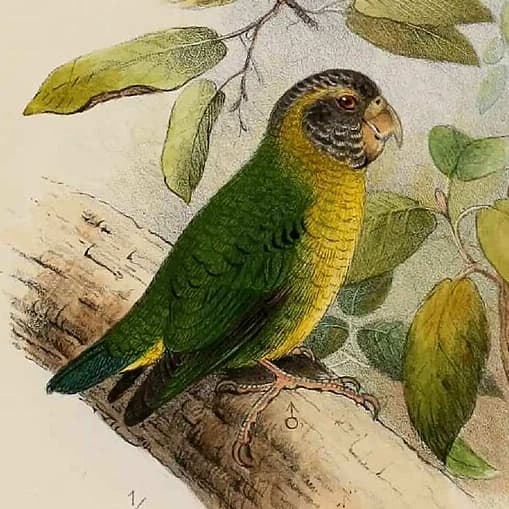
Meek's pygmy parrot
Meek's pygmy parrot (Micropsitta meeki) is a small parrot species endemic to Papua New Guinea, specifically the Admiralty Islands. It is distinguished by its emerald-green plumage, a mid-brown cap and face, and a distinctive yellow throat and underparts. This species is named in honor of naturalist Albert Stewart Meek, who collected numerous specimens from the region.

Duchess lorikeet
The Duchess lorikeet (Vini margarethae) is a species of parrot native to the Solomon Islands archipelago. This vibrantly colored bird, primarily bright red with distinctive yellow and purple markings, inhabits lowland and montane forests, as well as plantations. It is currently listed as Least Concern but faces threats from habitat loss and potential large-scale pet trade.

Fischer's lovebird
Fischer's lovebird is a small parrot species native to a limited area of east-central Africa, south and southeast of Lake Victoria. Named after German explorer Gustav Fischer, this species is distinguished by its vibrant plumage, featuring a green body, yellow neck, orange chest, and a striking red beak. They are known for their strong pair bonds and are popular in aviculture, though they require specialized care.