
Papuan eclectus
Eclectus polychloros·Psittacidae·Larger than Moluccan eclectus (specific range not provided)·Aru Island eclectus specimens can weigh 100 grams or more than E. p. polychloros (specific range not provided)
The Papuan eclectus, also known as the red-sided eclectus or New Guinea eclectus, is a parrot species native to New Guinea and surrounding islands. It is distinguished by its relatively large size and, in males, a predominantly green plumage with a yellow tinge and a distinct yellow tail band. This species is popular in aviculture and can live for up to 50 years in captivity.
Key Facts
- ›Native to New Guinea and widely distributed across its islands and nearby regions.
- ›Males have green plumage with a yellow tinge and a yellow tail band; females are not described in this text.
- ›Nests in tree cavities and breeds between April and September, typically laying two eggs.
- ›Popular in aviculture and can have a captive lifespan of up to 50 years.
- ›Subspecies vary in size and plumage details, with some differing significantly from the nominate form.

Red-Sided Eclectus, New Guinea Eclectus
New Guinea, Australia
Tree Cavities
- Male plumage predominantly green with a yellow tinge
- Male tail tipped with a yellow band
- Male central tail feathers green, lateral ones blue and green
- Vocalization differences noted for subspecies E. P. biaki
Tree Cavities
About Papuan eclectus
The Papuan eclectus, scientifically known as Eclectus polychloros, is a species of parrot native to the island of New Guinea and its surrounding archipelagos, extending its range to the northern Cape York Peninsula of Australia. It is also recognized by common names such as the red-sided eclectus or New Guinea eclectus. This species is noted for its size, being larger than the Moluccan eclectus, and for the distinct sexual dimorphism in its plumage, though only the male's characteristics are detailed here.
Plumage and Distribution
The male Papuan eclectus sports predominantly green plumage with a subtle yellow tinge. A notable feature is the tail, which is tipped with a half-inch yellow band, while the central tail feathers are green and the lateral ones are blue and green. The species has a wide distribution, spanning from the Kai Islands and western islands of the West Papua province in the west, across New Guinea to various island groups like the Trobriands, D'Entrecasteaux Islands, Louisiade Archipelago, Bismarck Archipelago, and Solomon Islands to the east. It has also been introduced to the Goram Islands in Indonesia.
Subspecies and Variations
Several subspecies of Eclectus polychloros have been described, with variations in size and plumage. E. p. polychloros, the nominate subspecies, is widespread. E. p. macgillivrayi, the Australian eclectus, is found on Cape York Peninsula and is larger overall. The Solomon Island eclectus (E. p. solomonensis) is smaller with minor bill differences and paler orange on the male's upper mandible, with greener plumage that has a more yellow tint. The Aru Island eclectus (E. p. aruensis) is distinguished by rich yellow on the tail tip of the male, often infused with pink, orange, or bright red, and is also notably larger. The Biak Island eclectus (E. p. biaki) is considered a distinct subspecies by some due to differences in size, vocalization, and behavior.
Breeding and Aviculture
The Papuan eclectus nests in tree cavities and its breeding season typically occurs from April to September, with clutches usually containing two eggs. This species is popular in aviculture and can thrive in captivity, with a potential lifespan of up to 50 years. Aviculturalists recommend enclosures with a minimum length of 3 meters for keeping these parrots. It is noted that many captive Papuan eclectus in Australia may be hybrids between different subspecies.
Source: Wikipedia ↗
Frequently Asked Questions
What are the common names for Eclectus polychloros?
The Papuan eclectus is also commonly referred to as the red-sided eclectus or the New Guinea eclectus. These names reflect its geographic origin and some of its distinctive plumage features.
Where is the Papuan eclectus found naturally?
This parrot species is native to New Guinea and is widely distributed across its islands. Its range extends from the Kai Islands and western West Papua in the west, eastwards through New Guinea to the Trobriands, D'Entrecasteaux Islands, Louisiade Archipelago, Bismarck Archipelago, and Solomon Islands. It also reaches south to the northern Cape York Peninsula of Australia.
What distinguishes the male Papuan eclectus plumage?
The male Papuan eclectus is characterized by its green plumage, which has a slight yellow tinge. It also features a distinct half-inch yellow band at the tip of its tail, with the central tail feathers being green and the lateral ones blue and green.
When does the Papuan eclectus breed, and how many eggs do they lay?
The breeding season for the Papuan eclectus is typically from April to September. During this period, females usually lay a clutch of two eggs.
What is the lifespan of a Papuan eclectus?
In captivity, the Papuan eclectus can have a significant lifespan, with recommendations suggesting it may live for up to 50 years. Information on their lifespan in the wild is not detailed in this text.
What are the nesting habits of the Papuan eclectus?
The Papuan eclectus nests in tree cavities. This provides a safe and sheltered environment for laying eggs and raising young.
Related Parrot species
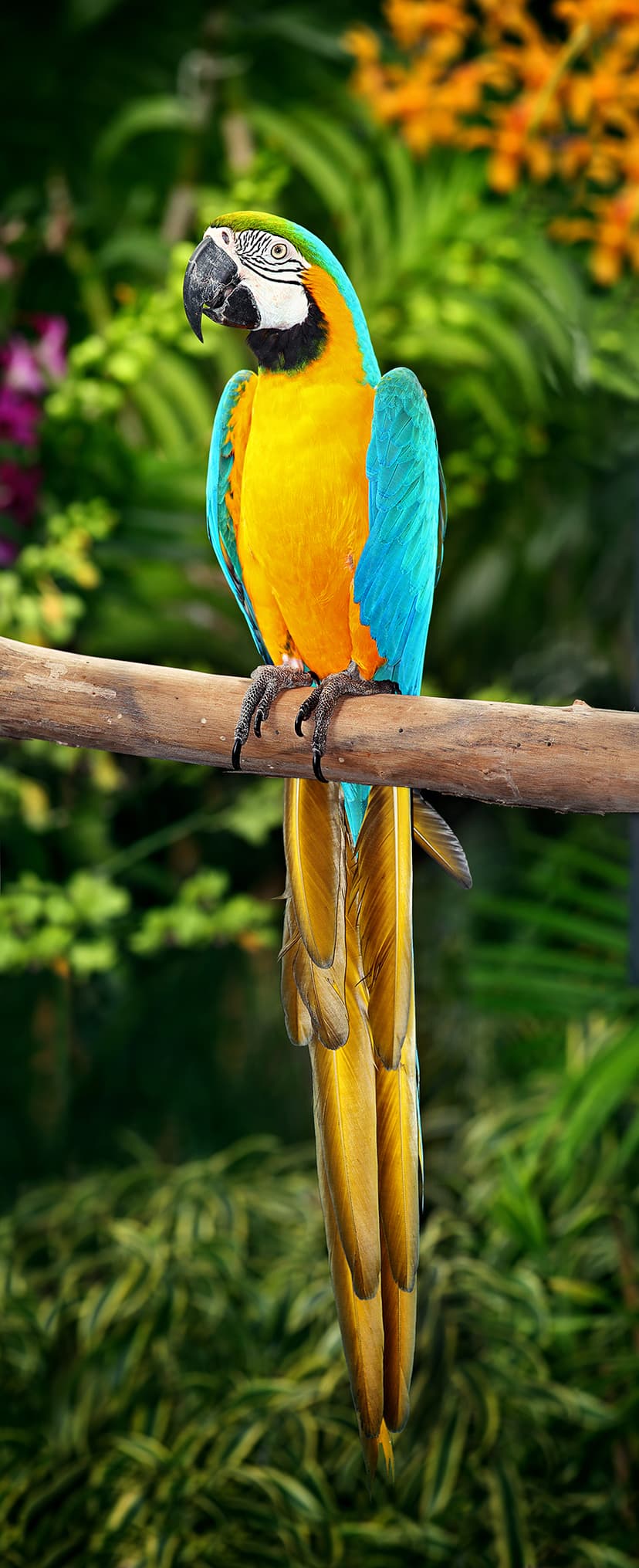
Arinae
The Arinae, commonly known as neotropical parrots or New World parrots, encompass approximately 150 species found across South and Central America, Mexico, the Caribbean, and the southern United States. These parrots are distinguished by their diverse forms, including iconic macaws, conures, and amazons, and have a long history of interaction with Europeans since their discovery in the late 15th century.

Australian king parrot
The Australian king parrot is a striking parrot species native to the humid, forested eastern regions of Australia. It is distinguished by the vibrant red plumage of the adult male, contrasting with the predominantly green female. These parrots are known for their relatively quiet nature and devotion to their human companions when kept as pets.

Australian ringneck
The Australian ringneck is a medium-sized parrot native to Australia, found in diverse environments except for extreme tropical and highland regions. It is characterized by a green basic plumage, a distinctive yellow ring around its hindneck, and variations in color across its four subspecies. This gregarious bird is known for its varied vocalizations and is generally not considered a threatened species, though some subspecies face local competition.