
Psittaculidae
Psittaculidae·Psittaculidae
Psittaculidae, commonly referred to as Old World parrots, is a large family of parrots comprising six subfamilies and 200 species. While the common name suggests a solely Old World distribution, this is a misnomer as some members are found elsewhere, and the Psittacinae subfamily also inhabits the Old World. This diverse family includes numerous genera and even species that have gone extinct in historical times.
Key Facts
- ›Psittaculidae is a family of parrots, commonly known as Old World parrots.
- ›It encompasses six subfamilies: Psittrichasinae, Agapornithinae, Loriinae, Platycercinae, Psittacellinae, and Psittaculinae.
- ›The family contains 200 species and is organized into 47 genera.
- ›Thirteen species within Psittaculidae have become extinct during historical times.
- ›Its taxonomic classification has been subject to revision, with some proposals for separating genera into different families not being adopted by major ornithological bodies.
- ›Molecular phylogenetic studies have identified some genera within the family that are not monophyletic.
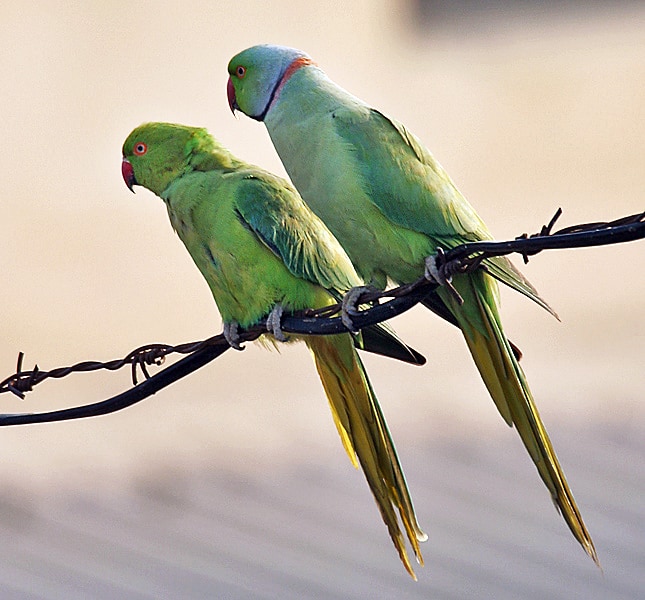
Old World Parrots
Old World
About Psittaculidae
Psittaculidae, commonly known as Old World parrots, represents a significant family within the order Psittaciformes. This classification is a broad designation that encompasses six distinct subfamilies: Psittrichasinae, Agapornithinae, Loriinae, Platycercinae, Psittacellinae, and Psittaculinae. The family is characterized by its substantial diversity, comprising 200 species organized into 47 genera. However, the common name "Old World parrots" is a misnomer, as the geographical distribution of its members is not exclusively confined to the Old World; some species are found in other regions, and the Psittacinae subfamily, which is part of Psittaculidae, also occurs in the Old World.
Taxonomy and Classification
The taxonomic placement of Psittaculidae has been a subject of scientific study and revision. While some researchers have proposed that certain genera, such as Psittrichas and Coracopsis, should form their own family (Psittrichasidae), this view has not been universally adopted by major ornithological authorities. Instead, these genera are currently included within the expanded Psittaculidae family. Molecular phylogenetic studies have further explored the relationships among the genera within Psittaculidae. These analyses have indicated that some pairs of genera might not be monophyletic, suggesting complexities in their evolutionary history and classification. The family's considerable size and diversity mean that it has also unfortunately seen species lost to extinction; thirteen species within Psittaculidae have become extinct in historical times, highlighting the vulnerability of avian populations.
Source: Wikipedia ↗
Frequently Asked Questions
What are Old World parrots?
Old World parrots are a family of parrots known as Psittaculidae. The term 'Old World parrots' is somewhat misleading as not all members are exclusively found in the Old World, and other parrot subfamilies also inhabit this region.
How many species are in the Psittaculidae family?
The Psittaculidae family includes a substantial number of species, totaling 200. These species are further divided into 47 distinct genera.
Has Psittaculidae experienced extinctions?
Yes, the Psittaculidae family has unfortunately seen extinctions. Thirteen species within this family have been documented as becoming extinct in historical times.
What are the subfamilies of Psittaculidae?
Psittaculidae is divided into six subfamilies. These are Psittrichasinae, Agapornithinae, Loriinae, Platycercinae, Psittacellinae, and Psittaculinae.
How are the genera within Psittaculidae related?
Molecular phylogenetic studies have been conducted to understand the generic relationships within Psittaculidae. These studies have revealed that some pairs of genera are not monophyletic, meaning they do not form a single, distinct evolutionary group.